When Children See Themselves, They Show Up: Culturally Responsive and Multilingual Learning in PreK & TK
Children learn best when they see their language, culture and family in the classroom every day, not just on heritage day. In this session, Dr. Dean Tagawa, former Executive Director of Early Childhood Education at LAUSD, and Dr. Erica Dallas, Learning Genie’s Director of Professional Development, show PreK and TK teams how to make culturally and linguistically responsive teaching part of daily instruction, and how to co-create lessons with children instead of for them.
More than 70 early educators joined the second session of the California Early Learning Webinar Series, from TK and preschool classrooms, family child care homes and county offices across the state. The message was clear: a child’s home language and culture are resources to build on. When teachers treat them that way, children speak up, connect with each other and feel they belong.
Who presented this culturally responsive teaching webinar?
- Dr. Dean Tagawa, former Executive Director, Early Childhood Education Division, Los Angeles Unified School District. In a 13-year tenure he led LAUSD’s early education and TK programs, brought 47 early education dual language classrooms and 220 preschool inclusion programs to the district, and championed outdoor classrooms and green space across its campuses.
- Dr. Erica Dallas, Director of Professional Development, Learning Genie. An early childhood educator with 26 years in the field, including opening programs in other countries, and host of the California Early Learning Webinar Series.
What is culturally and linguistically responsive teaching in early childhood?
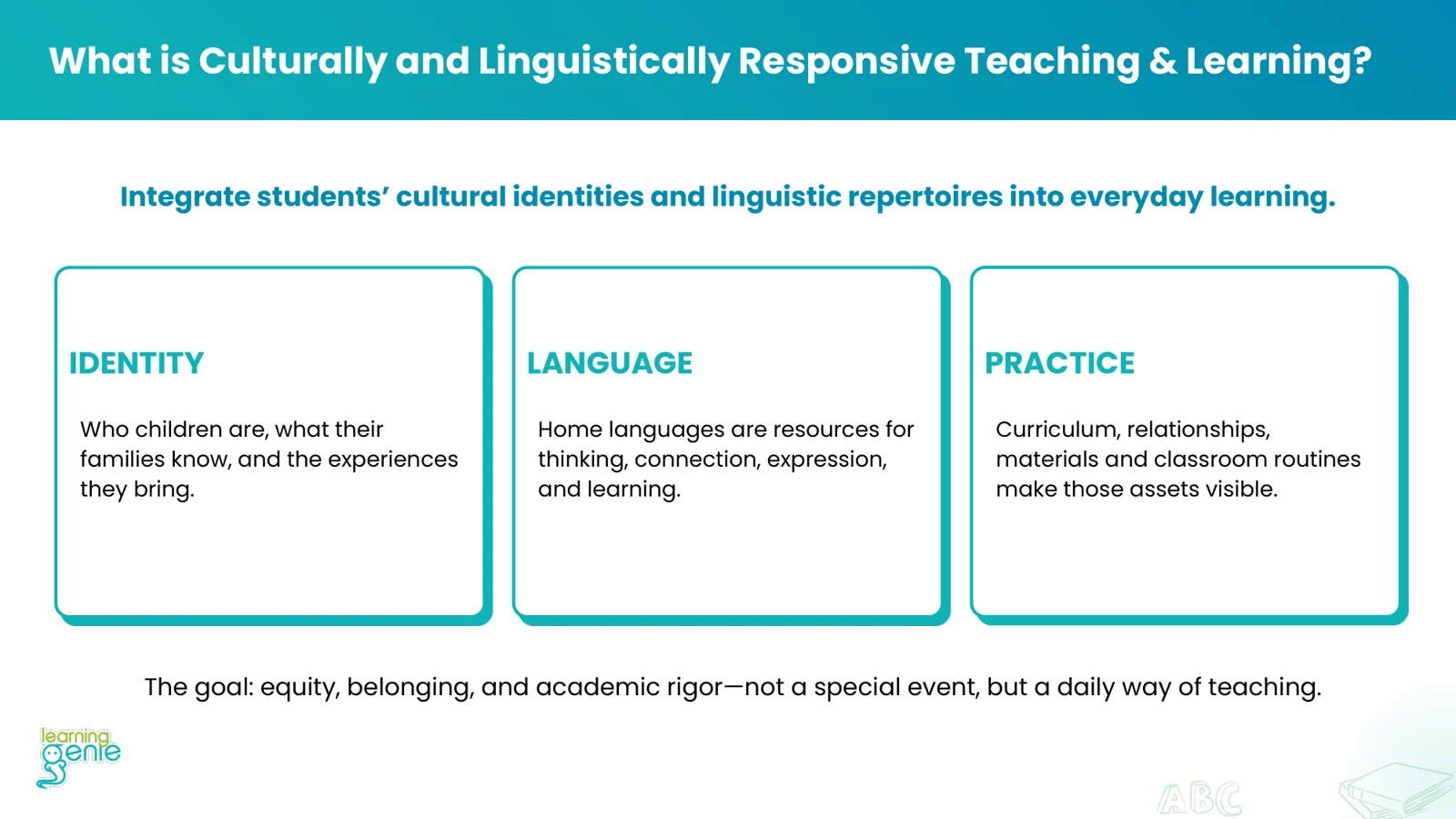
Culturally and linguistically responsive teaching integrates children’s cultural identities and their full language repertoire into everyday learning. It rests on three things Dr. Tagawa laid out: knowing each child’s identity and what their family brings, treating home language as a resource for making connections and expressing ideas, and building curriculum, relationships and materials that make those assets visible. The goal is equity, belonging and academic rigor.
That rules out the one-day approach of flags, food and festivals. Celebrations have their place, but responsive teaching honors what children bring to school every day. Dr. Dallas added the teacher’s side: cultural competency means learning about each child’s subculture too, who they are at home and what their family values, not only a broad label.
Why does home language matter so much for young children?
Language carries memory, humor and relationships, not just vocabulary. Dr. Tagawa, a fourth-generation Japanese American, shared how his family stopped speaking Japanese in public after World War II incarceration. Within one generation the language was gone, and with it his ability to really talk with his grandparents. He only saw how lively his grandfather was when an uncle spoke with him in Japanese.
Heritage language can be a bridge to grandparents, family history and a stronger sense of self. At one LAUSD state preschool, a mother told him her daughter now talks with her grandfather in Spanish more easily than she ever could. Early education is often a family’s first contact with school, which makes it the best place to protect home language so it does not skip a generation.
Does learning two languages confuse young children?
No. Dr. Tagawa addressed this myth directly: children who arrive with one language and learn another are not confused, and building both supports their cognitive development. Teachers can make language visible through storytelling, play, songs and purposeful vocabulary. At one center that welcomed newly arrived Russian-speaking families, staff learning a few words in Russian made families feel so welcome that some stayed after moving out of the area.
Dr. Dallas shared a four-year-old she met who moved easily between Portuguese, Spanish, Lao and English, often ahead of his parents. Multilingual children are not behind; they bring a resource most adults wish they had.
What do children gain when they see themselves in the classroom?
In an Armenian dual language program, a contractor’s son came home and named a hammer in Armenian, a word he had learned in his class building study. It turned out the father had been using the wrong word for years, and the grandparents confirmed the son was right. The father was beaming. That one moment shows what children gain when they see themselves:
- Language development: more chances to listen, speak and expand vocabulary.
- Family connections: real conversations at home about what children learn.
- Confidence and cultural pride: children see their knowledge valued.
- Belonging: the outcome early education strives for most.

Teachers benefit too. When they are validated to bring in their own heritage and invite families to share, they reconnect with why they teach, sharpen their academic vocabulary and reimagine their classrooms.
How do you build culturally responsive teaching into good first instruction?
Plan for language and culture up front, not as an afterthought. In a culturally and linguistically responsive MTSS framework, teachers start by noticing early: what they know about each family’s heritage, language exposure and context. Then they make intentional instructional decisions that build on what children already know, so fewer children need intervention later. As Dr. Tagawa framed it, equity is not lowering expectations; it is making access, assessment and support more accurate.
The same applies to families. When a child or older sibling translates at a parent conference, speak directly to the parent, not the translator, and thank the child for helping. It keeps parents valued and coming back.
How can PreK and TK teachers co-create lessons with children?
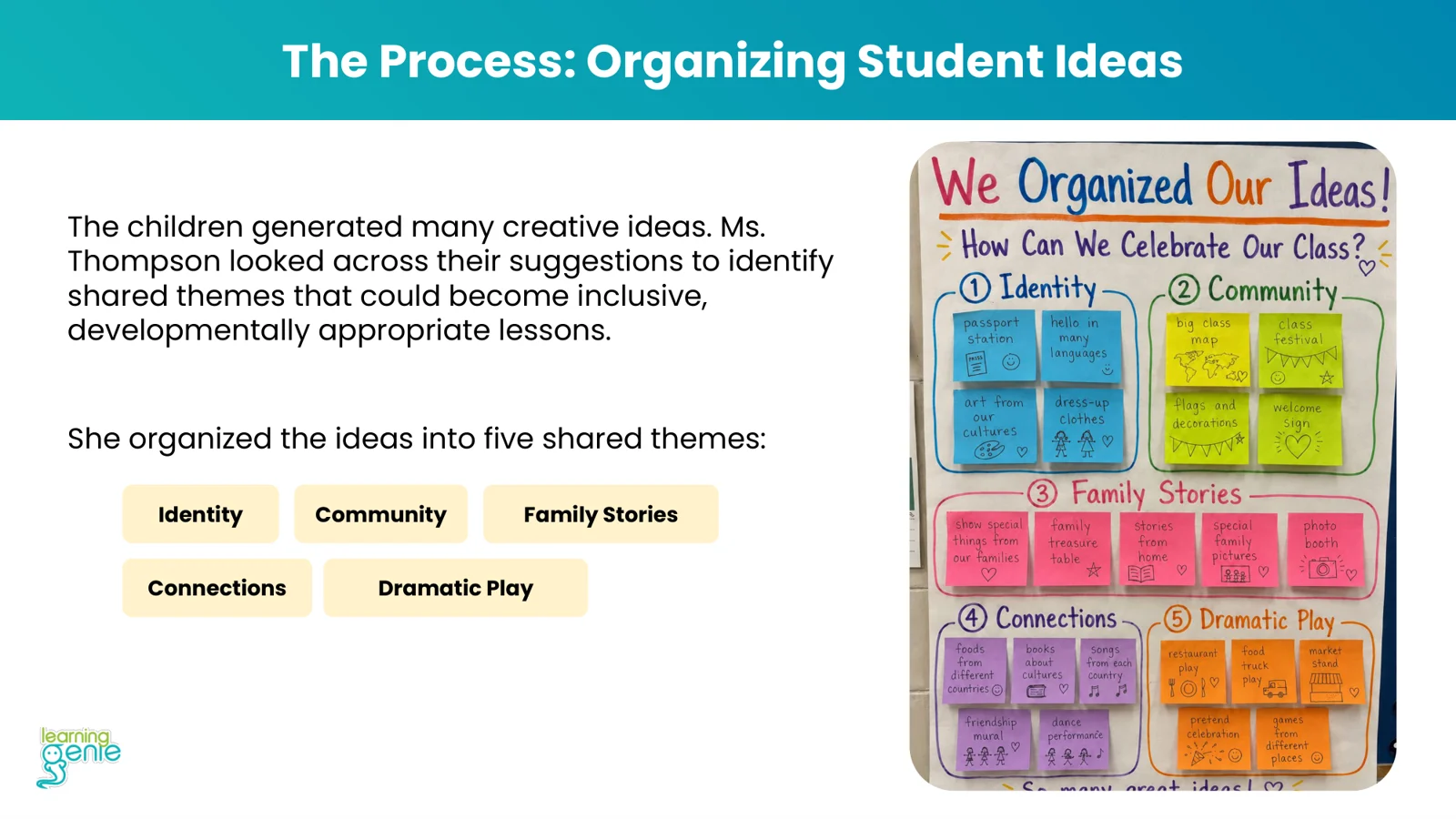
Start with children’s voices. Dr. Dallas walked through the example of Ms. Thompson, a California teacher whose class included children from Mexico, El Salvador, China, Japan, Vietnam and California, speaking English, Spanish, Chinese, Japanese and Vietnamese. Instead of planning a week of costumes and foods, she asked children what they wanted to see and do. They shared ideas with partners, drew pictures and offered words in their home languages, and she captured everything on sticky notes grouped into five themes: identity, community, family stories, connections and dramatic play.
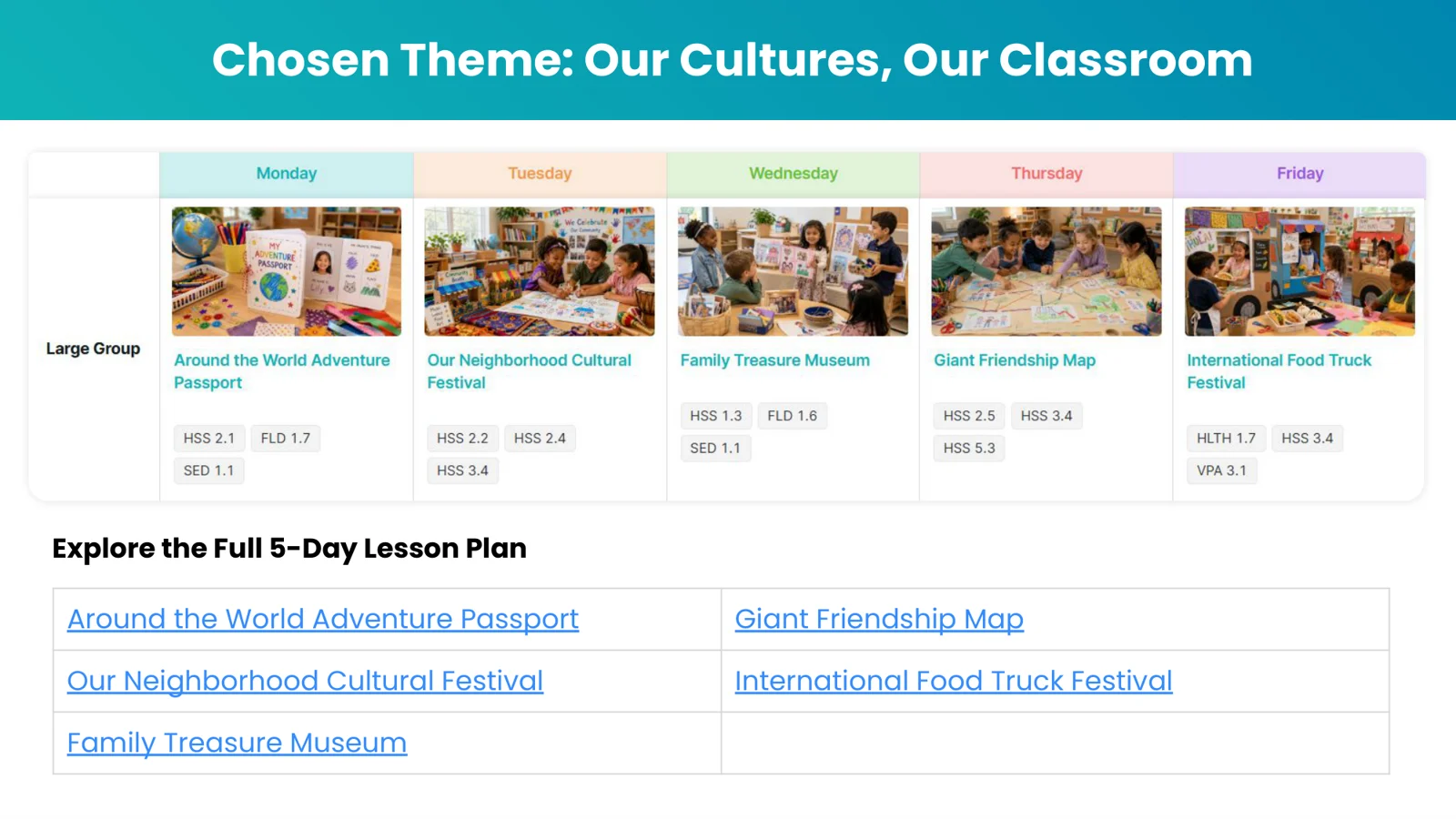
She entered those real ideas into Learning Genie’s AI lesson planner, chose the PTKLF strands and DRDP 2025 measures she wanted, and generated play-based, standards-aligned activities such as Around the World Adventure Passports, a Neighborhood Cultural Festival and a Family Treasure Museum, where families drew pictures at home and toured the museum with their children. Children supplied the ideas, the teacher set the learning goals and cultural safeguards, and the planner turned both into lessons with implementation steps, differentiation and family engagement built in.
Where can I view the slides from this webinar?
Click through the full deck below, from the definition of culturally and linguistically responsive teaching and Dr. Tagawa’s family story to Ms. Thompson’s five co-created lessons. Use the arrows to move between slides, or open it full screen.
What this means for leaders, coaches and teachers
For leaders and coaches, equity in action means giving early educators the knowledge, training, recognition and resources to build classrooms where every child feels seen, valued and heard. For teachers, start with the next unit: ask children what they know from home, plan around it, and invite families in. When children see themselves, they show up: they speak, connect, belong and learn.
Missed the first session? Watch Applying the Pyramid Model for self-regulation in PreK and TK.
Frequently Asked Questions
It is teaching that integrates children's cultural identities and home languages into everyday learning. Teachers learn what each family brings, treat home language as a resource, and build curriculum, relationships and materials that make those assets visible, aiming for equity, belonging and academic rigor.
No. Children who arrive with one language and learn another are not confused, and building both languages supports their cognitive development. Teachers can make language visible through storytelling, play, songs and purposeful vocabulary.
Honor what children bring every day instead of one celebration day. Plan for language and culture up front, invite families to share, and build lessons from children's own ideas, family stories and home languages.
Learn a few words of the family's language, and when a child or sibling translates at a conference, speak directly to the parent and thank the child for helping. These small moves keep parents valued and involved.
Ask children what they want to see and do, capture their ideas and home-language words, group them into themes, then plan standards-aligned activities around them. Learning Genie's AI lesson planner can turn those ideas into play-based lessons aligned to the PTKLF and DRDP 2025.
Plan lessons around the children in your classroom
Learning Genie turns children's ideas, home languages and family stories into play-based lessons aligned to the PTKLF and DRDP 2025.