California's New TK Law: Understanding the Definition of Developmentally Appropriate Curriculum and What It Means for Practice
California has clarified what developmentally appropriate TK means. Assembly Bill 126 amended Education Code Section 48000(d) on July 9, 2026, removing "modified kindergarten" and defining a strengths- and play-based curriculum grounded in the PTKLF. Dr. Julie Nicholson, early childhood education expert and author, and Dr. Erica Dallas, Learning Genie's Director of Professional Development, explain what changed and what it means for classrooms, schools and districts.
More than 270 educators joined this third session of the California Early Learning Webinar Series live, from TK classrooms, preschools, districts and county offices of education across the state. The session starts from what TK programs have already built: many teachers and leaders have been moving toward play-based practice for years, and the new language gives that work firmer ground.
Who presented this California TK law webinar?
- Dr. Julie Nicholson, Ph.D., MBA, early childhood education expert, author and consultant. A former preschool and kindergarten teacher with more than 25 years of leadership experience, she was a professor of practice at Mills College for 17 years. She is co-author of 16 books, including lead author of three California Department of Education publications.
- Dr. Erica Dallas, Director of Professional Development, Learning Genie, and host of the California Early Learning Webinar Series.
What is California's new TK law?
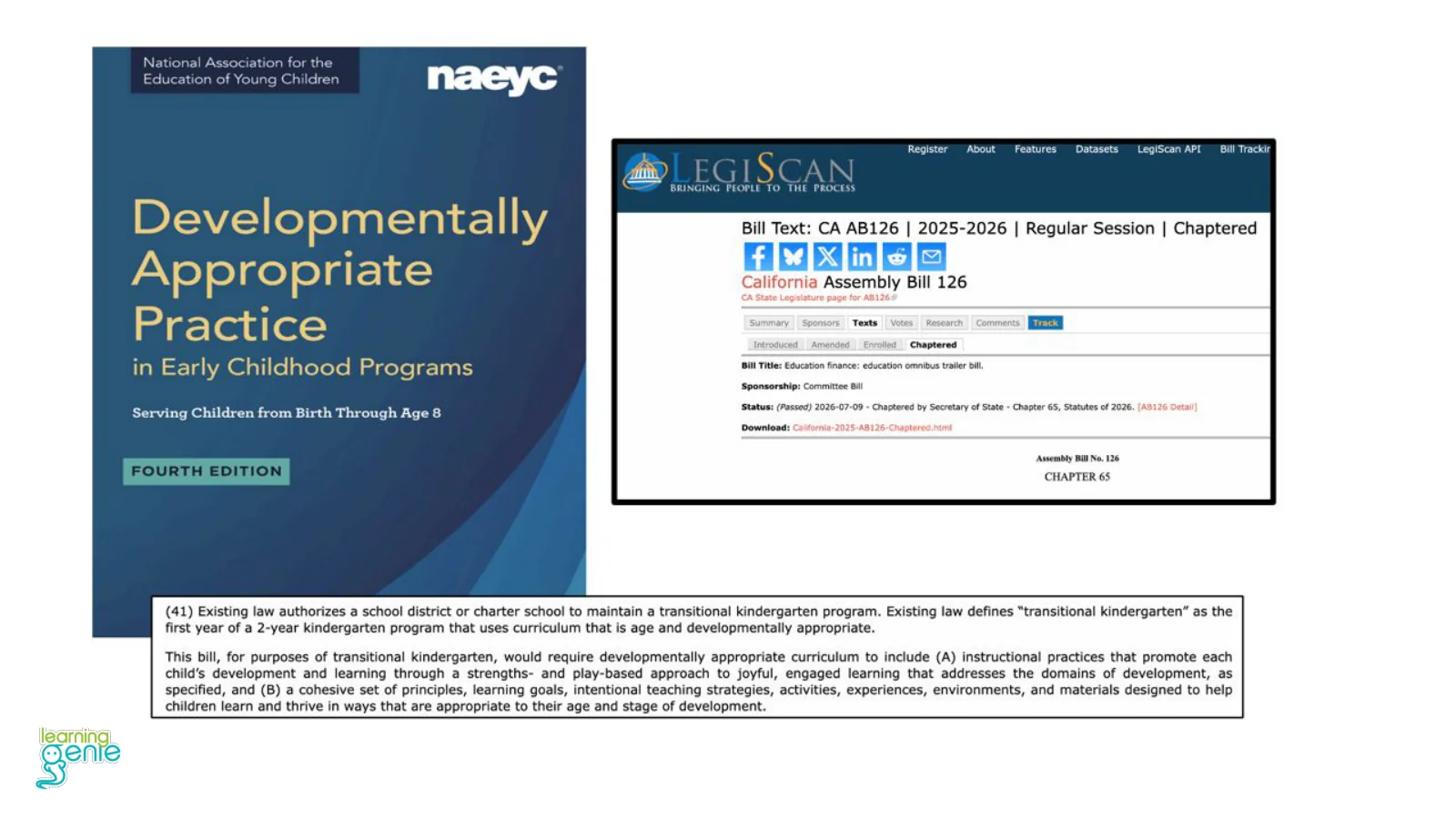
The new TK law is Assembly Bill 126, the education omnibus trailer bill chaptered on July 9, 2026 (Chapter 65, Statutes of 2026). It amended Education Code Section 48000(d), the section that defines transitional kindergarten.
TK was established through the Kindergarten Readiness Act in 2010 and first implemented in 2012, always with the intent of being developmentally appropriate. The earlier code described it as the first year of a two-year kindergarten with a modified kindergarten curriculum, and never defined what developmentally appropriate meant. Districts were left to interpret it, and many adapted kindergarten materials downward.
How does the law define developmentally appropriate curriculum for TK?
The definition has two parts that work together:
- Instructional practices that promote child development and learning through a strengths- and play-based approach to joyful, engaged learning that addresses the domains of development in the Preschool/Transitional Kindergarten Learning Foundations (PTKLF).
- A cohesive set of principles, learning goals, intentional teaching strategies, activities, experiences, environments and materials designed to help children learn and thrive in ways appropriate to their age and stage of cognitive, social, emotional and physical development, and to their individual needs, home languages and cultural experiences.
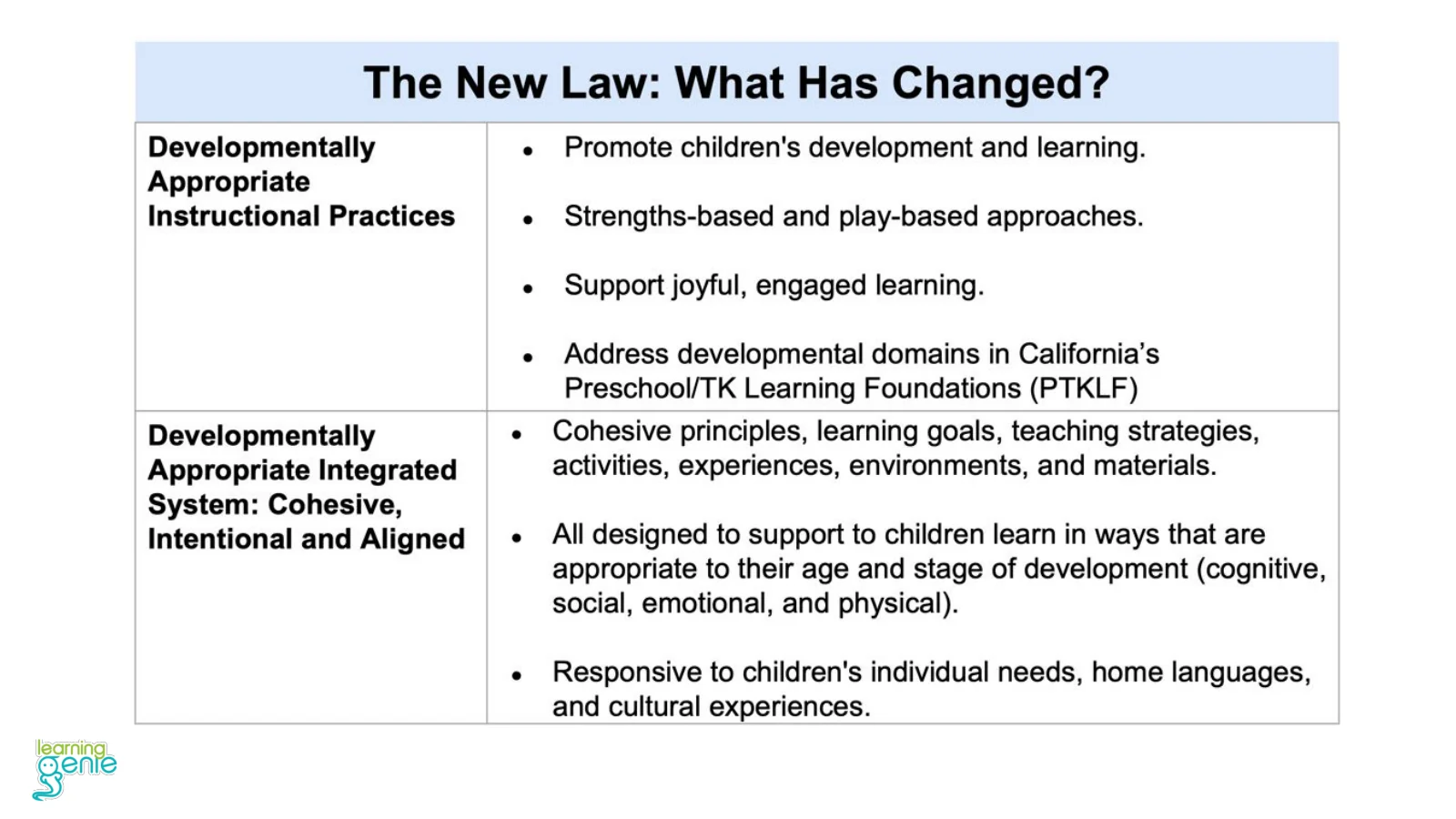
Dr. Nicholson walked through what that looks like. Joyful, engaged children have agency: they move, interact, explore, test ideas and express their emotions, rather than sitting still and working quietly on worksheets. Strengths-based means moving away from judging whether a child met or fell below a grade-level mark. The curriculum also has to be responsive, so children can see themselves in it, with room for children and teachers to influence what is learned, not rigid scripts or pacing guides.
What did the State Superintendent's letter say about the change?
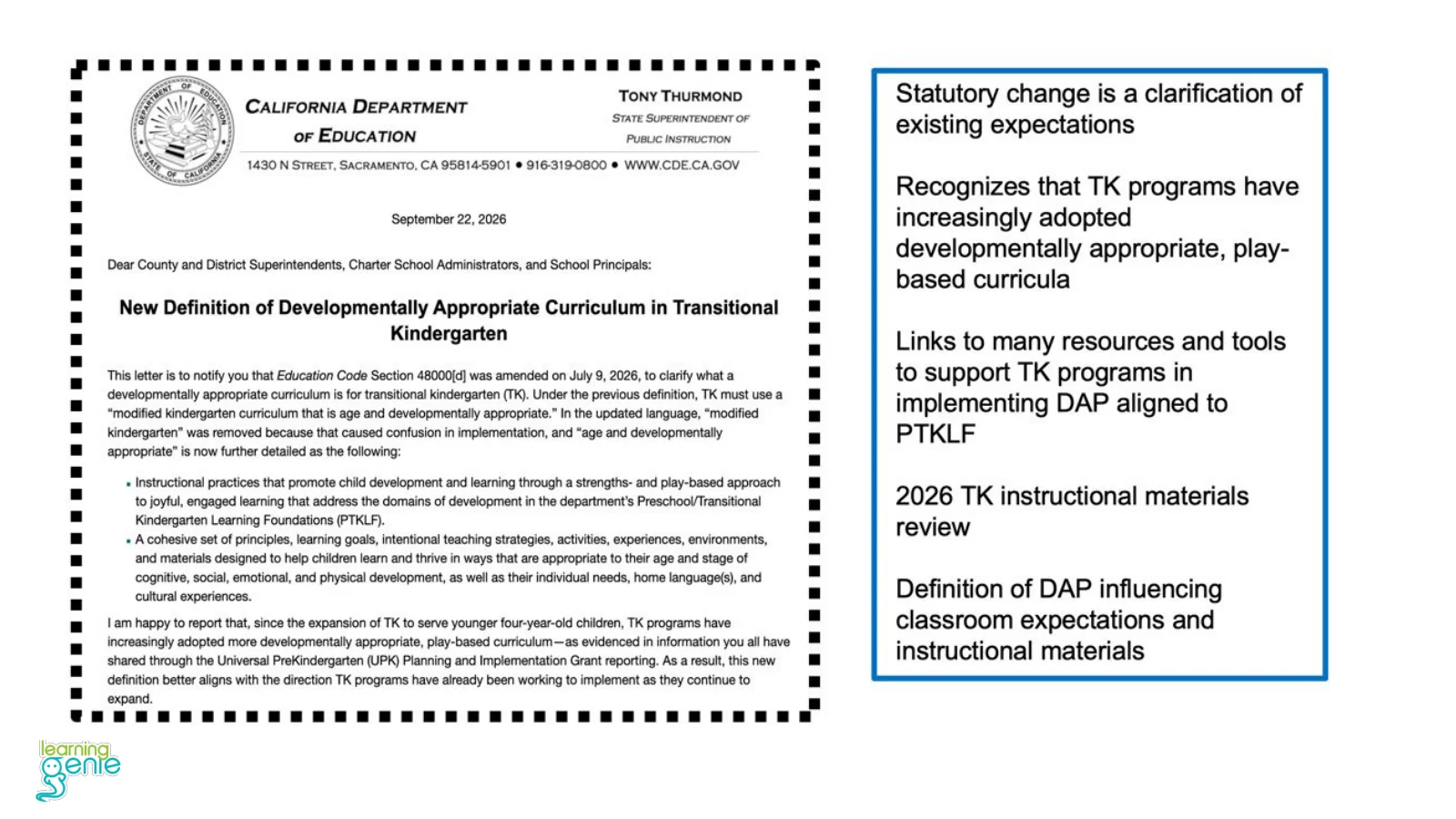
On September 22, 2026, State Superintendent of Public Instruction Tony Thurmond notified county and district superintendents, charter school administrators and principals in a letter on the new definition. It explains that "modified kindergarten" was removed because it caused confusion in implementation, and frames the amendment as a clarification of existing expectations.
The letter also recognizes progress: TK programs have increasingly adopted developmentally appropriate, play-based curricula. It links to implementation resources, and it shows the definition reaching other parts of the system. The state's 2026 TK English language arts and English language development instructional materials review is one example.
What does the new TK law not require?
As Dr. Nicholson presented it, the law does not mandate a particular commercial curriculum or curriculum approach, establish a daily schedule, or create a comprehensive state monitoring and compliance system. That does not make it optional. The statute sets an obligation and leaves districts considerable discretion in how they meet it.
Attendees also asked about assessment. There is no mandate to use the DRDP, though the classroom expectations in the law mean TK assessment and reporting practices have to align with a strengths-based, play-based approach. Developmental variation is the norm, which is why a report card marking a child as meeting a target on a set date is a poor fit.
What is playful learning, and why does it matter for TK?
Playful learning is a research framework describing the kinds of experiences in which children learn most deeply. It has six qualities: active, engaging, meaningful, socially interactive, iterative and joyful. Children do not need all six in every activity, but they offer a practical lens for looking across the day.
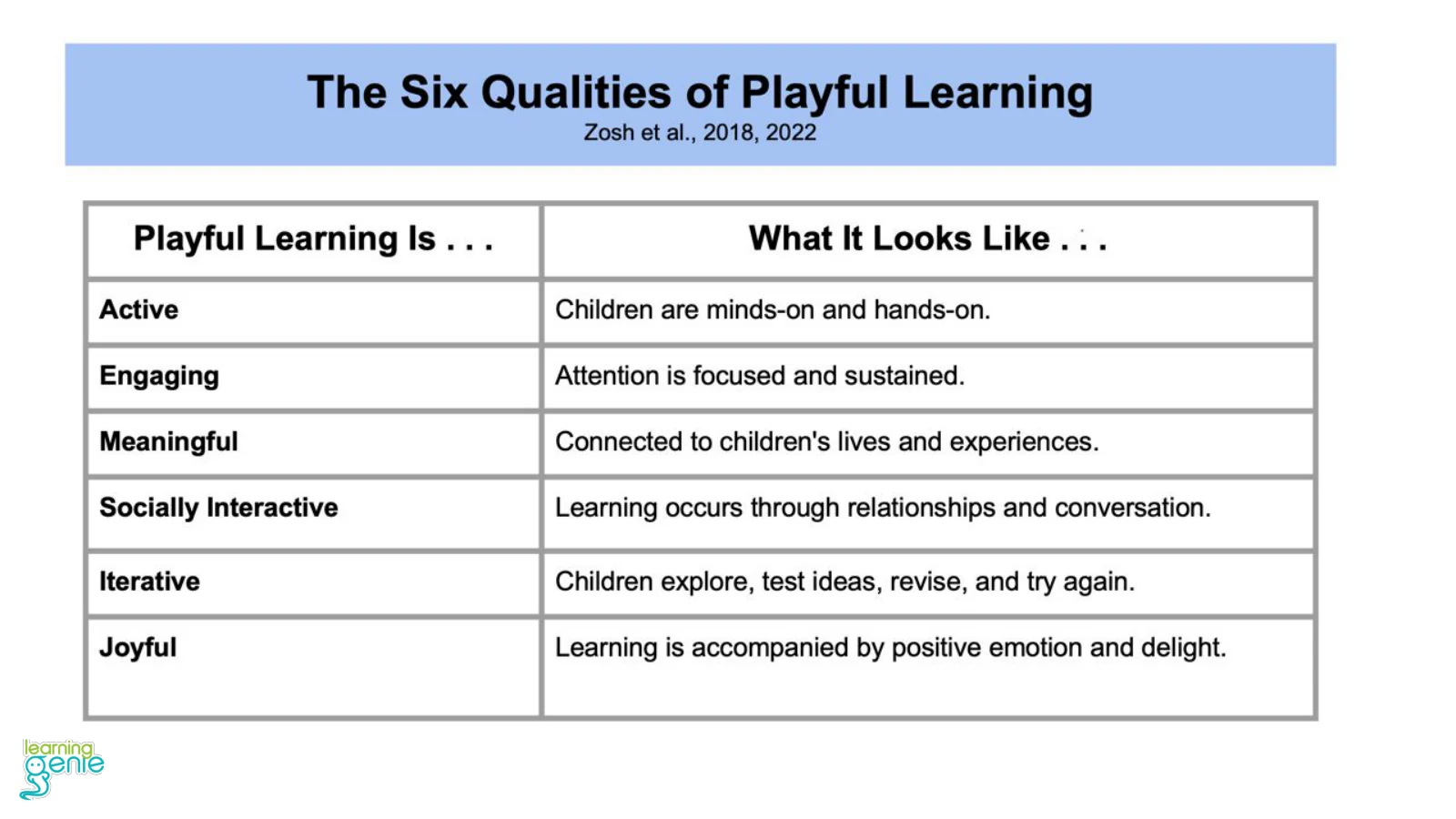
The evidence goes beyond preschool. The National Academies' vision for high-quality preschool curriculum moves past the play-or-academics debate toward rich content taught through playful, responsive experiences. Year 2 results from the Active Playful Learning project, published by the Brookings Institution, suggest the approach is implementable across different curricula, that coaching matters, and that it can support academic and 21st century skills through fourth grade.
How do teachers use guided play in a TK classroom?
Guided play pairs children's agency with light adult guidance. The teacher has a learning goal, then gently steers toward it without taking over. Alongside child-led play, it is the approach Dr. Nicholson highlighted as most developmentally appropriate for TK. The strategies span before, during and after play, and all of them can be learned and coached.
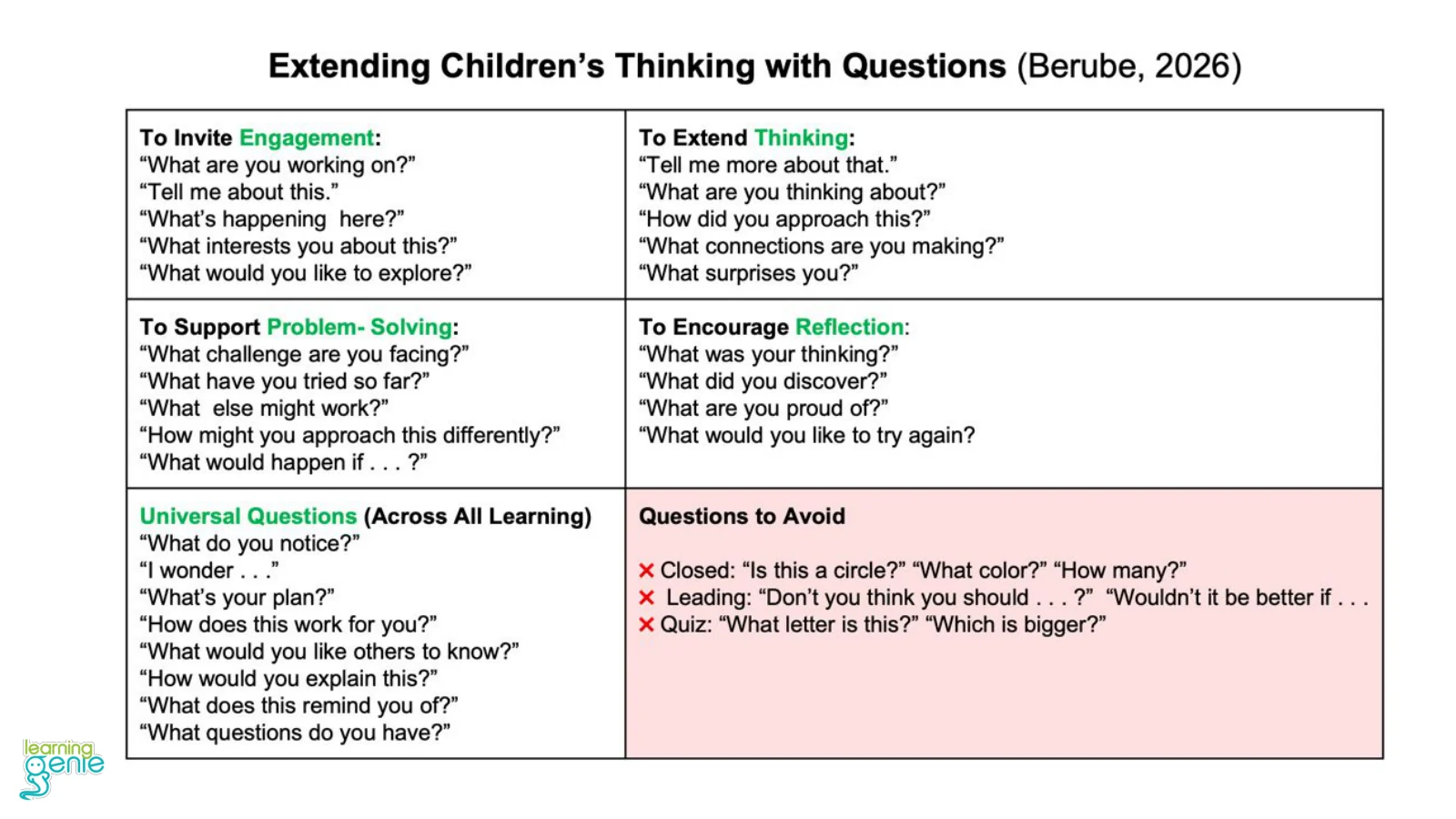
Questions are one of the simplest places to start. Open-ended prompts invite engagement, extend thinking, support problem solving and encourage reflection, while closed, leading and quiz-style questions tend to shut that down.
How much direct instruction belongs in a play-based TK day?
Dr. Nicholson did not offer a ratio. She prefers the term teacher-created playful instruction, because a teacher-defined goal does not remove what helps children learn. Teacher-led time still needs engagement, connections to children's lives and social interaction.
Her suggestion is to carry the playful learning qualities across the whole continuum, from child-directed play to guided play to adult instruction, then look for gaps. Long stretches of stillness, silence and worksheets show where more room for children's agency can be made.
What does the new TK law mean for schools and districts?
Teachers cannot do this alone. The session named six areas for leaders to review, from curriculum and classroom environments to equity and P-3 coherence. Principals play a particular role: protecting time and space for play, and treating it as rigorous pedagogy that is expected, not merely permitted.
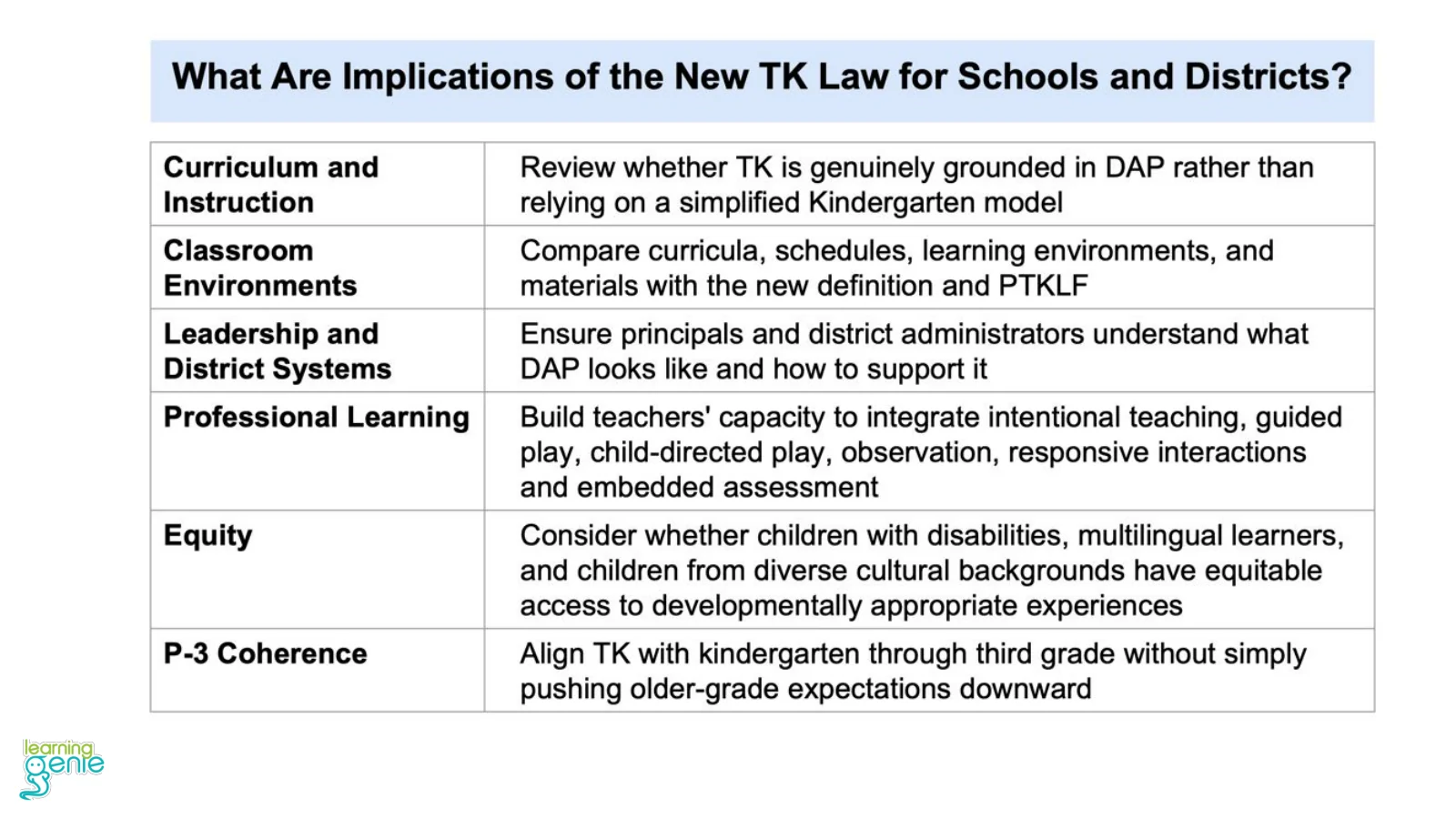
Three issues stood out. Some adopted curricula were not designed with four- and five-year-olds in mind, so principals and teachers will need to review them against the definition and decide what can be adapted. Equity matters too: Dr. Nicholson pointed to Dr. Jennifer Adair's research in Segregation by Experience, which finds that children of color and children from low-income families have less access to agency-rich classrooms. And the direction across P-3 is to push developmentally appropriate practice up through third grade, not push older-grade expectations down.
How can districts fund developmentally appropriate TK?
California's 2026-27 budget and education trailer legislation renews $250 million in one-time Proposition 98 funds: $200 million in Prekindergarten Planning and Implementation Grants for local educational agencies, including professional learning and developmentally appropriate environments, and $50 million in Universal Preschool Planning Grants for countywide planning. Funds are available for encumbrance through June 30, 2032.
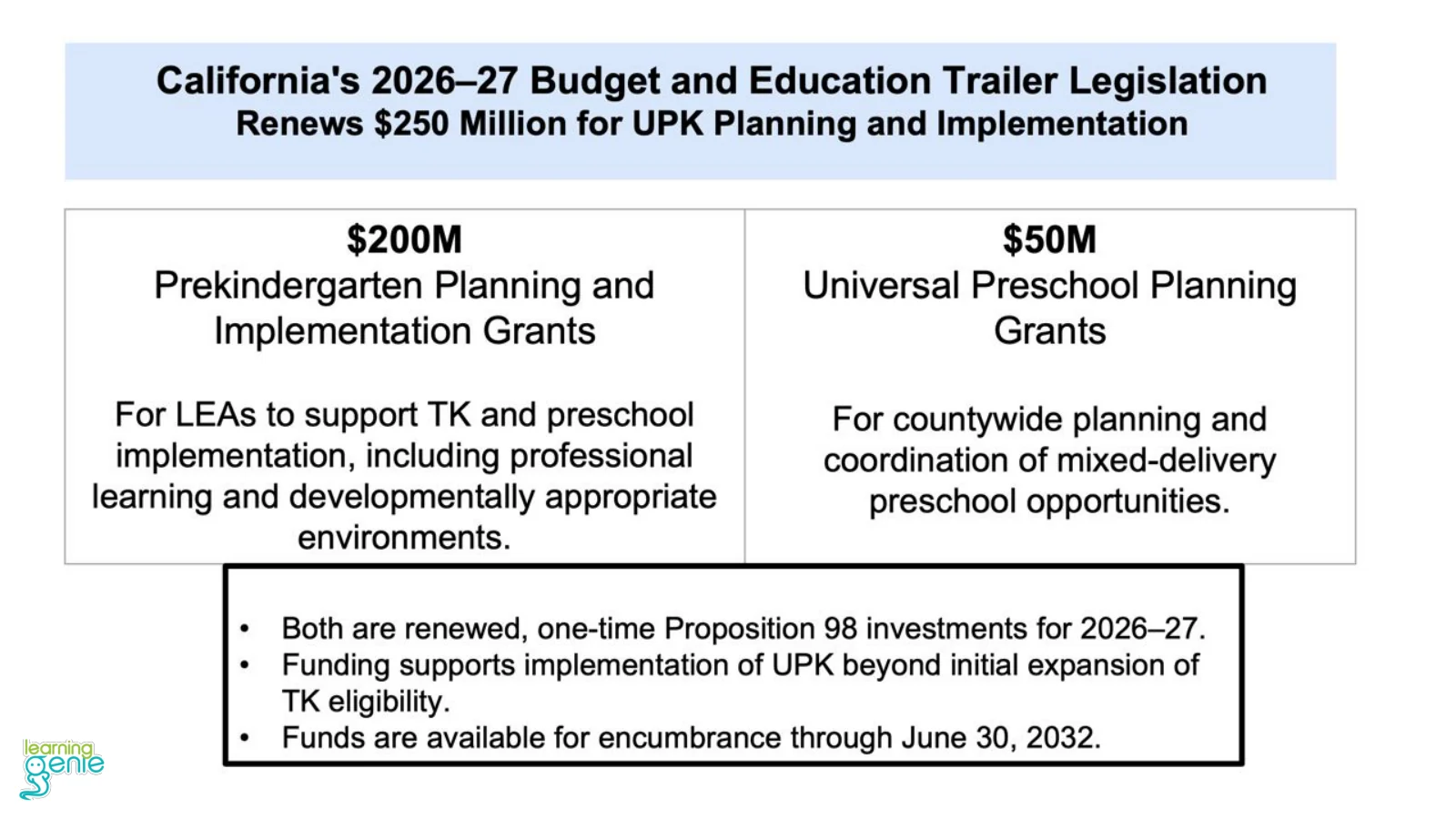
Because the grant is one-time, Dr. Nicholson pointed to Local Control and Accountability Plans for sustainability: embedding early childhood actions and developmentally appropriate metrics in the LCAP helps the work last beyond the grant.
What should high-quality instructional materials for TK include?
Dr. Dallas looked at the question from the classroom. High-Quality Instructional Materials (HQIM) should reach children, families, educators and the community, and connect curriculum to assessment and culture so teachers are not left to make those links alone. They should also act as embedded professional development, helping a teacher scaffold, differentiate and support every learner in the room.
How does Learning Genie connect curriculum and assessment in TK?
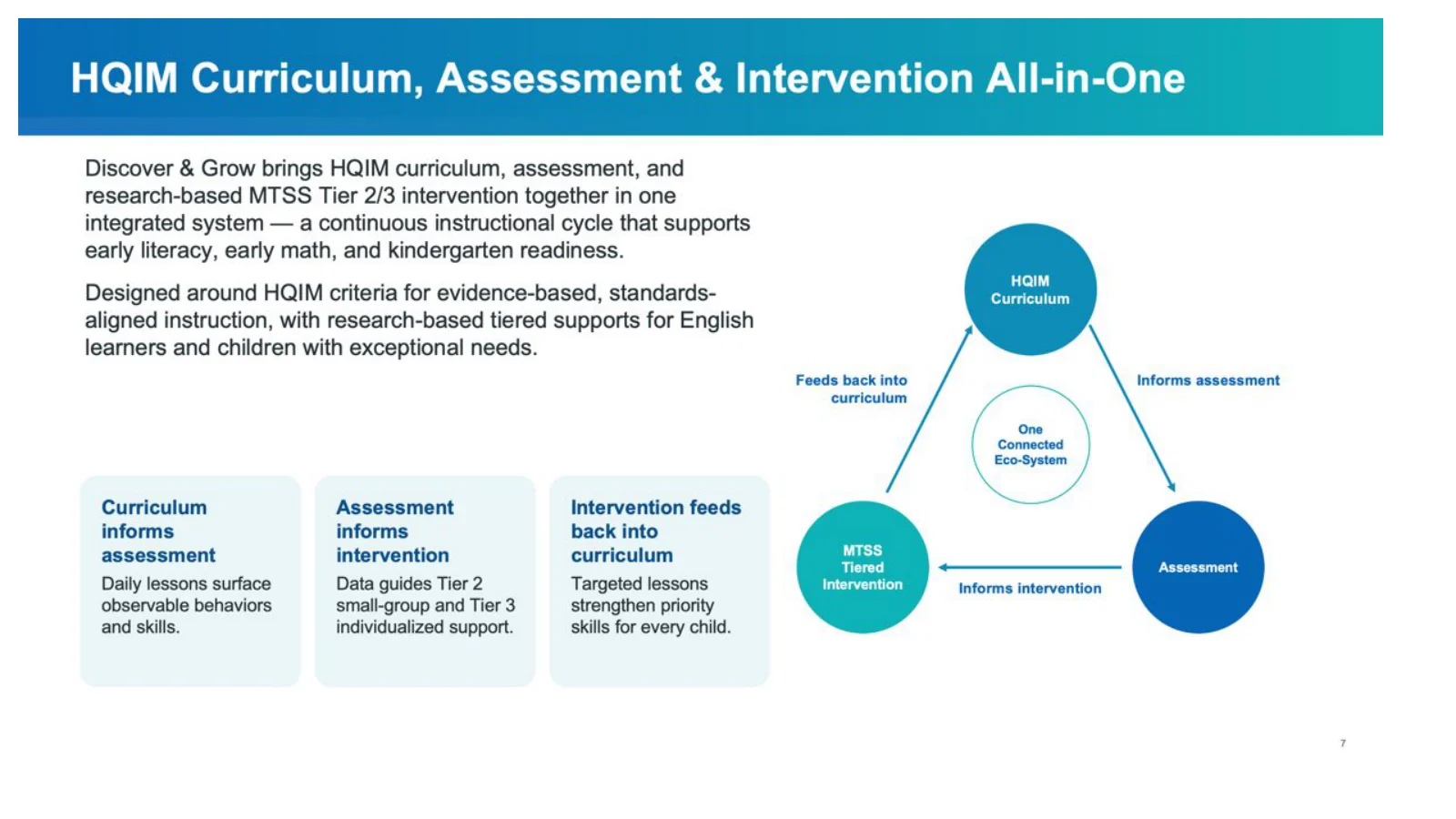
Learning Genie connects them through Discover & Grow, its play-based PreK and TK curriculum built on California's PTKLF. Each activity maps to PTKLF foundations and DRDP 2025 measures, so what a teacher observes during play informs what they plan next.
For years, curriculum, assessment and professional development have lived in separate worlds, leaving educators to connect the dots. Discover & Grow brings them into one connected solution, built around a continuous cycle of inquiry with each child's development at the center:
- Observe: Each lesson names typical behaviors and observation tips, so teachers know what to look for during play.
- Assess: Observations connect to PTKLF portfolios or DRDP 2025. DRDP is not mandated for TK, so programs choose the path that fits.
- Plan: What teachers learn about each child shapes the next experience, including small-group and individualized support.
- Teach: Play-based lessons carry UDL, IEP and dual language learner supports and culturally responsive practices, woven in rather than added on.
- Reflect: Job-embedded professional development supports teachers as they plan, teach and adjust, with AI-powered guidance that empowers the teacher's own judgment.
What is the Discover & Grow curriculum?
Discover & Grow is Learning Genie's PreK and TK curriculum: High-Quality Instructional Materials built on California's PTKLF for joyful, whole-child, play-based learning. It includes 8 units, 31 weeks and 301 activities in print and digital, with all 8 units available in Spanish.
A Pyramid Model unit supports self-regulation and social-emotional development from the start of the year, and Science of Reading practices run through the weeks. Family resources are available in more than 100 languages, so learning can continue at home in the language a family uses. See how it works for California TK and PreK classrooms.
How does a play-based curriculum support California's TK definition?
The definition describes what a developmentally appropriate curriculum has to do. This is how Discover & Grow approaches each part. Each district still makes its own review against the statute.
| What the definition describes | How Discover & Grow approaches it |
|---|---|
| Strengths- and play-based, joyful, engaged learning | Hands-on, play-based activities with room for children's own ideas and choices |
| The domains of development in the PTKLF | Built directly on the PTKLF across 8 integrated units |
| A cohesive set of goals, strategies, activities, environments and materials | One curriculum connected to assessment and job-embedded professional development |
| Age and stage of cognitive, social, emotional and physical development | Whole-child units, including a Pyramid Model unit for self-regulation |
| Individual needs | UDL strategies and IEP and IFSP supports in the lessons |
| Home languages and cultural experiences | Culturally and linguistically responsive practices, all 8 units in Spanish, family resources in more than 100 languages |
What this means for teachers and leaders
California's definition affirms what many TK educators have been working toward. A good next step is to compare your current curriculum, schedule, environment and assessment against the definition, name what is already strong, and pick one place to make more room for children's agency.
Watch the earlier sessions in the series: Applying the Pyramid Model for self-regulation in PreK and TK and culturally responsive and multilingual learning in PreK and TK.
Where can I view the slides from this webinar?
Click through the full deck below, from AB 126 and the State Superintendent's letter to the six qualities of playful learning, guided play strategies and funding. Use the arrows to move between slides, or open it full screen.
Frequently Asked Questions
Assembly Bill 126, the 2026 education omnibus trailer bill, amended California Education Code Section 48000(d) on July 9, 2026. It removes the phrase "modified kindergarten" from the definition of transitional kindergarten and spells out what a developmentally appropriate TK curriculum includes: strengths- and play-based instruction that addresses the PTKLF domains, and a cohesive set of principles, goals, strategies and materials suited to each child's age, stage, needs, home languages and cultural experiences.
No. The updated Education Code no longer uses "modified kindergarten." The California Department of Education's September 22, 2026 letter explains that the phrase caused confusion in implementation. TK now starts from how four- and five-year-olds learn and from the California Preschool/Transitional Kindergarten Learning Foundations (PTKLF).
Dr. Julie Nicholson addressed this in the session: there is no mandate to use the DRDP. The law does ask for strengths-based, play-based, developmentally appropriate classrooms, so TK assessment and reporting practices need to align with that, and report cards that mark a child as meeting or missing a target on a set date are a poor fit.
The session did not set a ratio. Dr. Nicholson's guidance is to treat it as teacher-created playful instruction: a teacher can set the learning goal and lead the experience while children stay active, engaged and socially interactive. Sitting still, working silently and completing worksheets are the practices that do not fit the definition.
No. As presented in the session, the law does not mandate a commercial curriculum or curriculum approach, set a daily schedule, or create a comprehensive monitoring and compliance system. Districts still have to meet the definition and have considerable discretion in how they implement it. Check the statute and your counsel for legal questions.
Learning Genie connects them through Discover & Grow, its play-based PreK and TK curriculum built on California's PTKLF. Each activity maps to PTKLF foundations and DRDP 2025 measures, so what a teacher observes during play informs what they plan next, in one continuous cycle: observe, assess, plan, teach, reflect.
Discover & Grow is Learning Genie's PreK and TK curriculum: High-Quality Instructional Materials (HQIM) built on California's PTKLF. It includes 8 units, 31 weeks and 301 play-based activities, with all 8 units available in Spanish, plus UDL, IEP and dual language learner supports in the lessons.
See a TK curriculum built on the PTKLF and play
Discover & Grow connects play-based lessons, DRDP 2025 and PTKLF assessment, UDL supports and family engagement in one connected solution.