Portrait of a Graduate (PoG) Implementation — From Vision to Action
Embed your PoG across every subject and grade level—empowering every teacher to transform a static vision into daily student achievement.
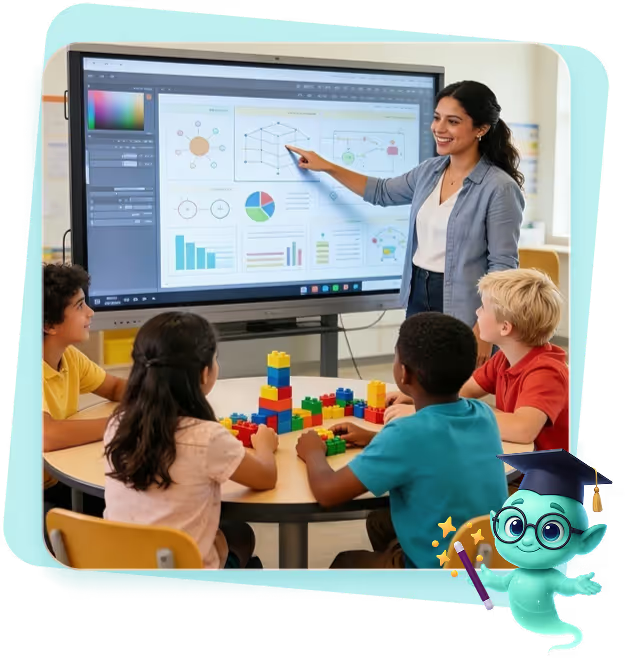
Curriculum-Embedded & Standards-Integrated
Curriculum Genie weaves PoG competencies into academic standards-based unit design from the start. This ensures an organic combination where academic outcomes and PoG growth happen simultaneously inside the same unit flow (discussion, inquiry, reflection, revision, performance)—not retrofitted after the unit is written.
Gamify Growth With Milestones And Badges
Milestones, badges, and progress views make competency growth visible and game-like, helping students track “what’s next,” celebrate small wins, and build momentum across the year.
What Is a Portrait of a Graduate (PoG)?
A Portrait of a Graduate (PoG)—also called a Graduate Profile or Learner Profile—is a district’s shared definition of the transferable skills, mindsets, and competencies students should master for college, career, civic engagement, service, and life.
Observable Student Behaviors
(what students say/do/produce)
Shared Success Criteria
(rubrics + look-fors)
Repeatable Classroom Practices
Embedded in daily units and lessons
Portfolio-ready Evidence
Can be reviewed over time
How a District PoG Is Created—and Why It Matters
Most districts create a Portrait of a Graduate through strategic planning, community engagement, and Board priorities. The process typically surfaces a shared set of durable outcomes—skills and mindsets the community agrees should outlast any single curriculum cycle: communication, critical thinking, innovation, civic responsibility, and reflection.

A strong PoG matters because...
It provides a common definition of “graduate readiness” that is broader than standards alone. When implemented well, it helps districts:
Build coherence across schools and grade levels,
Align instruction to transferable skills that show up in real-world success,
And communicate a clear, shared promise to students and families.
But a PoG becomes meaningful only when it is visible in what students actually do and produce—not just in a vision document. That is where most districts encounter the implementation gap described below.
Current State: Why PoG Often Stays Abstract
In many districts, the PoG is well-designed and widely celebrated—then it becomes a static artifact. Leaders can point to the poster; teachers can describe the traits; students may even recite them. Yet the PoG is not consistently present in unit planning, curriculum mapping (scope and sequence), classroom routines, or assessment decisions.
The Root Cause
This gap is rarely about motivation. It happens because the PoG is expressed as aspirational language, while daily instruction runs on operational language: objectives, tasks, criteria, and evidence. Without a repeatable translation process, teams are left to interpret traits independently, which produces “pockets of practice”—a few classrooms embed the PoG deeply while others cannot find a practical path to teach and measure it.
The result is predictable
the district has a vision, but not a system that turns that vision into instruction-ready expectations and reviewable student evidence.

Why PoG Implementation Breaks Down in Practice
Across districts, PoG rollout tends to stall in three familiar patterns:
The retrofit trap
Competencies are added after units are already written, so the PoG becomes an overlay rather than a design constraint. Teachers are asked to “include” the portrait in units, but the unit’s tasks and assessments remain unchanged—so evidence never becomes consistent.
Poster compliance
The portrait is referenced in presentations, documents, and slogans, but it is not embedded into the places that actually drive learning: lesson objectives, student tasks, success criteria, and feedback routines. The PoG stays visible in communications, not in instruction.
Silos across grades and subjects
Even with strong leadership support, implementation becomes uneven. Different teams define “good evidence” differently, scoring norms drift, and the PoG shows up strongly in some subjects while disappearing in others.
Master Your PoG Implementation
Dive into our curated library of implementation resources. From strategic planning to daily instruction, these tools provide the actionable insights your district team needs to succeed at every stage.
PoG Implementation Playbook (4-Step Model)
Embedding PoG Throughout Your Curriculum

From Poster to Classroom Practice (Evidence & Routines)
A 4-Phase Roadmap to Embedded PoG
Transform a static vision into a measurable reality where students demonstrate observable growth through multi-modal evidence—embedded into every lesson and every discipline.
Implementation chain:
1
Student Expectations: Make PoG Observable
Curriculum Genie converts each PoG attribute into grade-band-specific Student Expectations—clear, instruction-ready indicators of what students should be able to do.
PoG isn’t a vague label—it’s a shared, teachable set of behaviors that can show up naturally in authentic tasks and experiential learning opportunities.

2
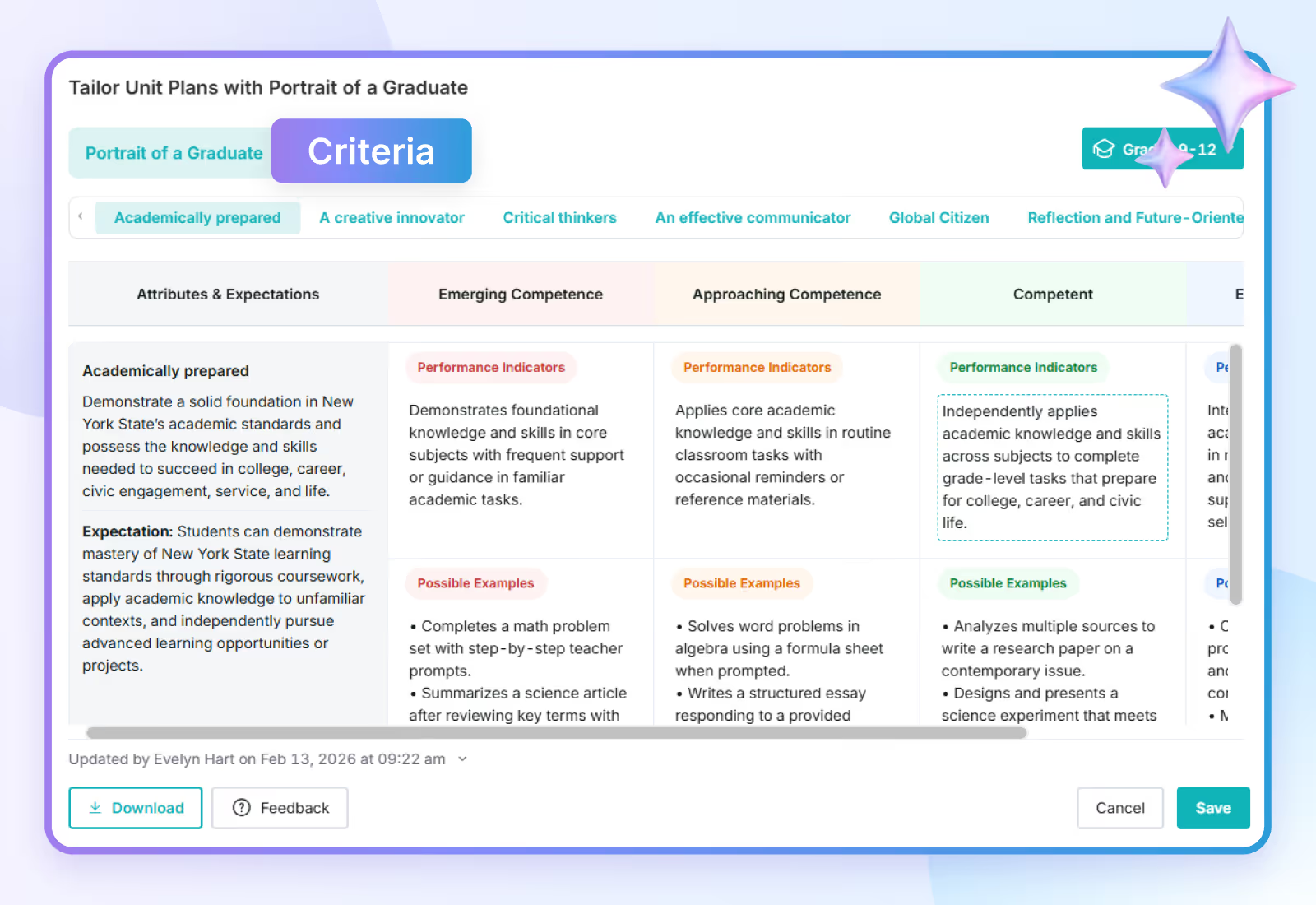
4-Level Competency Rubrics: Make PoG Measurable
Curriculum Genie generates fixed, shared Success Criteria so teams have consistent success language across classrooms.
Once the Portrait of a Graduate is measurable, it becomes trackable over time.
3
Embedding PoG into Daily Curriculum & Instruction
Instead of asking teachers to “add PoG,” Curriculum Genie enables a curriculum-embedded approach by building PoG directly into the unit flow teachers already teach.
As a result, PoG lives in the tasks students already do—discussion, research, reflection, revision, and performance—turning everyday learning into observable, repeatable demonstrations of graduate competencies.
Unit Level: Performance-based Assessment
Curriculum Genie extends each unit with a unit-level, stage-by-stage performance assessment plan—so PoG evidence is collected across the learning journey, not only at the end.
Stage-by-stage assessment plan:
- Project Launch
- Research and Inquiry
- Apply and Create
- Feedback and Revision
- Present & Reflect
Lesson Level: Mini-masteries
To make PoG growth frequent and manageable, Curriculum Genie turns PoG teaching tips into short, targeted competency-based activities embedded directly in lessons.
- Mini-masteries typically take 5–7 minutes
- Competency growth is captured in small, repeatable moments

4
Make PoG Visible: Score Evidence, Drive Decisions, Gamify Growth
Curriculum Genie turns everyday student work into scored PoG evidence and actionable next steps—then converts results into growth data that supports data-driven decisions, while keeping students engaged through gamified progress.
• Collect, Score and Coach with Multi-modal Evidence
• Turn Evidence Into Growth Data For Data-Driven Decisions
• Gamify Growth With Milestones And Badges

Proof & Usability (What Changes for Students and District Leaders)
District teams don’t need more PoG language—they need evidence-based, HQIM-aligned artifacts they can review, calibrate, and use to strengthen instruction over time. Here’s what PoG implementation looks like when it becomes usable in the workday.
What they experience
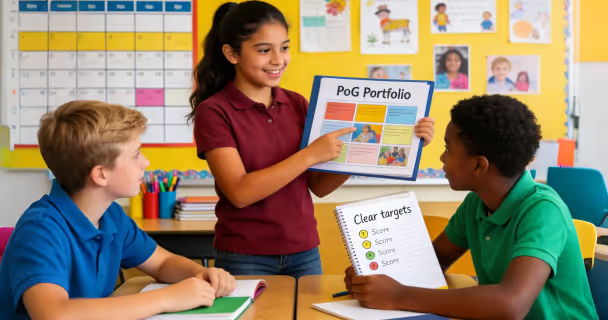
Clear targets
Students know what success looks like for a PoG attribute in that lesson/unit (not just at graduation).
Gamify growth With milestones and badges
Students follow a visible growth journey through the PoG Portfolio. Milestones and badges make progress feel real and motivating, so the graduate profile becomes something students build and own over time.
Feedback that improves performance
Rubric-aligned feedback helps students revise and strengthen their work across short cycles.

How they use it
Reviewable proof, not anecdotes
Leaders can sample portfolio artifacts by grade/subject/attribute to see what PoG looks like in practice.
Consistency checks across schools
Compare evidence patterns and rubric language to identify where implementation is strong or uneven.
Coaching signals
Use artifacts to guide PLC focus—what to strengthen in unit checkpoints, tasks, and look-fors.
Implementation reporting
Summarize what was taught, what evidence was produced, and what growth was observed—ready for cabinet/board updates.
Frequently Asked Questions
We benchmark against published Portrait of a Graduate competency rubrics (e.g., Utah Portrait of a Graduate Competency Model Rubrics) and generate grade-band drafts that reflect a validated progression of performance. In practice, schools confirm "grade-appropriateness" through quick PLC calibration—reviewing a few student artifacts and aligning on what each level looks like in their context.
No. Our approach is "Curriculum-Embedded," meaning PoG competencies are woven directly into the standards-aligned units teachers already teach. Instead of adding "one more thing," we identify natural "competency moments" within existing lessons—like discussions, inquiries, or reflections. By capturing observable growth during daily instruction, PoG becomes a seamless part of teaching rather than an extra initiative.
Want to move beyond the poster?
See how your district’s PoG looks when it’s embedded across every subject and grade level—turning abstract traits into observable student growth.