Implementing Your Portrait of a Graduate: From Unit Planning to Portfolios

Key Takeaways:
- Every teacher, every grade, every subject: Curriculum Genie turns PoG into grade-banded Student Expectations and shared 4-level rubrics, so competencies become teachable, observable, and consistently assessed across classrooms.
- Curriculum-embedded (not “one more thing”): Curriculum Genie weaves PoG competencies into standards-based unit design from the start, so academic outcomes and PoG growth happen together inside the same unit flow (discussion, inquiry, reflection, revision, performance)—not retrofitted after the unit is written.
- Evidence → visibility → action: stage-by-stage performance tasks, mini-masteries (5–7 minutes), and capstones generate rich multimodal artifacts that automatically organize into a living PoG Portfolio—with visual dashboards that surface growth trends and intervention signals at the student, class, school, and district levels.
- Student motivation by design: milestones, badges, and progress views make competency growth visible and game-like, helping students track “what’s next,” celebrate small wins, and build momentum across the year.
What is a Portrait of a Graduate?
A Portrait of a Graduate (PoG)—also known as a Graduate Profile or Learner Profile—is a school district’s collective vision of the transferable, 21st-century skills and mindsets students must master to succeed in college, career, and life. It serves as a North Star, guiding the district toward a future-ready education that prepares every student to thrive in an evolving global landscape.
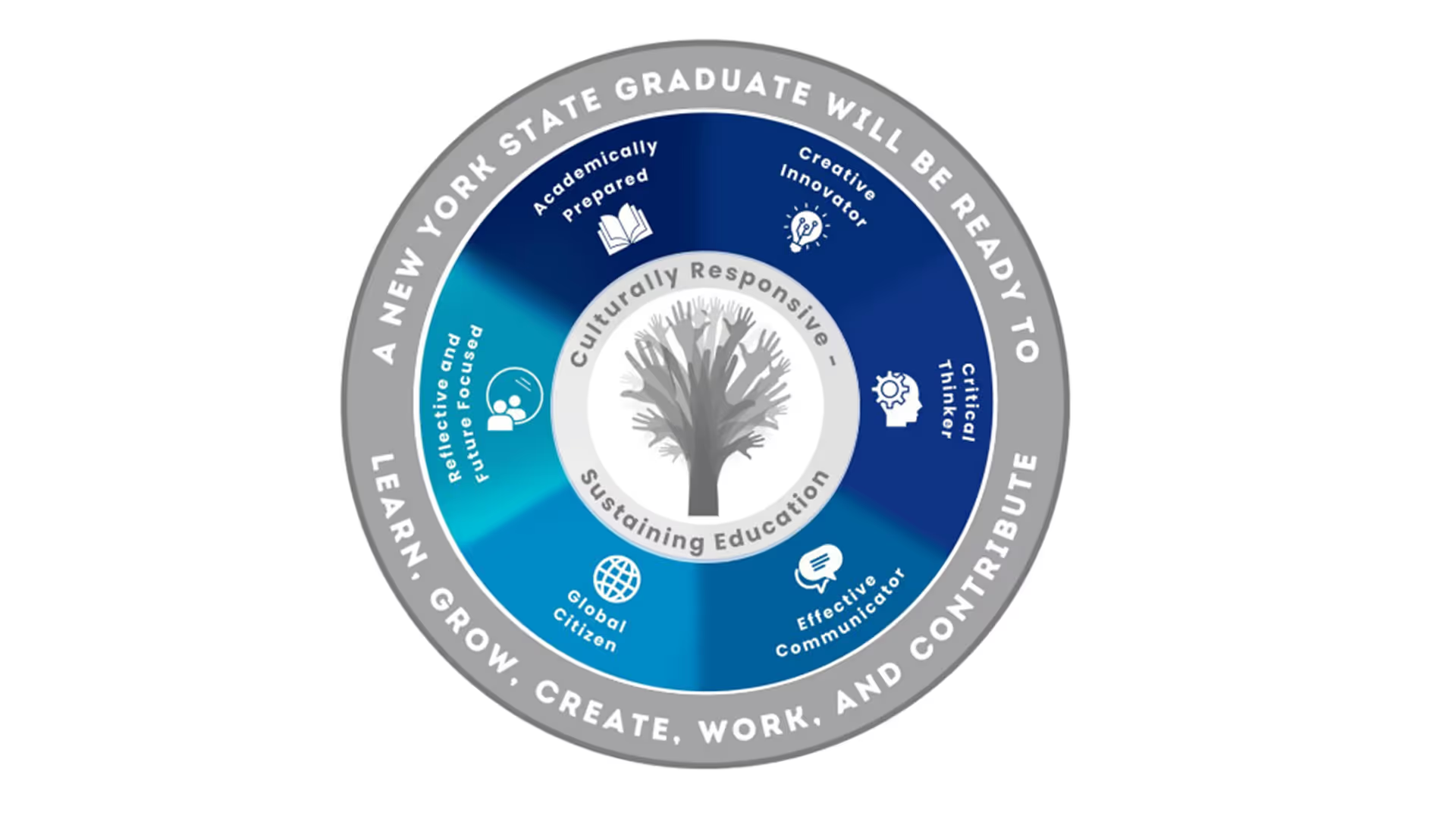
PoG Looks Great—Until You Have to Bring It to Life
Most districts don’t struggle to create a PoG. They struggle to implement it.
You may already have the polished visual, the community-approved language, and the posters on school walls. But once the rollout moment passes, the real work begins—and the most common barriers show up quickly:
- Abstract traits aren’t classroom-ready. “Critical Thinking” and “Responsible Citizen” sound inspiring, but PoG traits aren’t observable until they’re translated into concrete student behaviors.
- Inconsistent interpretation across schools and grade levels. Without shared look-fors and scoring criteria, the same PoG trait can mean very different things from one classroom to the next.
- Implementation capacity is uneven. Without embedded routines and shared tools, PoG work often gets retrofitted after units are written—or handled by a small set of champions—leading to inconsistent classroom practice.
- Evidence is hard to capture and track over time. Districts want to show skill growth, but most systems collect only isolated artifacts—not a coherent, longitudinal story that leaders can use to guide support and communicate progress.
Curriculum Genie bridges this gap with an AI-assisted workflow for curriculum and assessment—making PoG intentional in instruction, visible in evidence, and measurable over time—so every teacher, across every grade and subject, can embed and capture PoG growth as part of standards-based instruction.
How Curriculum Genie Makes PoG Work in Real Classrooms
Curriculum Genie brings PoG to life through a practical step-by-step workflow:
- Translate vision into observable, measurable behaviors
- Embed practice intentionally into unit planning and daily instruction
- Assess growth through unit performance + mini-masteries + capstone
- Turn evidence into growth data for data-driven decisions—and gamify progress with badges.
This isn’t about adding new work—it’s about making PoG the way curriculum work gets done, so the district vision reliably reaches classrooms.
Step 1. Translating Vision into Measurable Student Behavior
In two moves, Curriculum Genie turns “poster language” into classroom-proof evidence—so implementation starts with clarity, not reinvention.
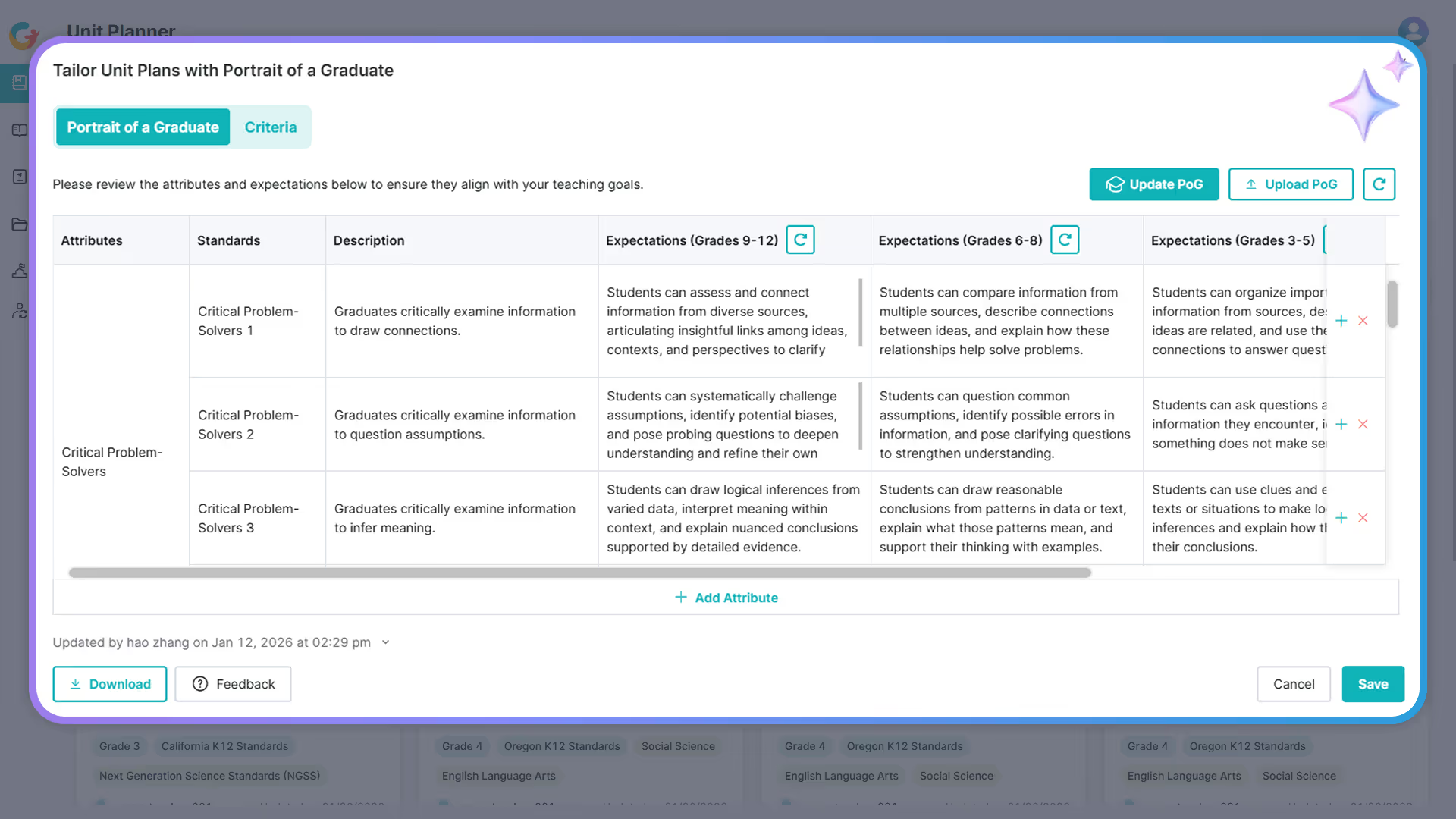
1) Student Expectations: Make PoG Observable
A PoG trait isn’t teachable until it becomes a student behavior teachers can actually look for.
Curriculum Genie converts each PoG attribute into grade-band-specific Student Expectations—clear, instruction-ready indicators of what students should be able to do.
- For K–Grade 2: Critical thinking might mean "finding the important details and saying why I chose an idea—based on what I saw, heard, read, or did."
- For Grades 6–8: It might mean "using reliable sources, considering different perspectives, and backing up my decisions with evidence."
Now PoG isn’t a vague label—it’s a shared, teachable set of behaviors that can show up naturally in authentic tasks and experiential learning opportunities.
2) 4-Level Competency Rubrics: Make PoG Measurable
Once expectations are observable, they can be assessed consistently.
For each PoG competency, Curriculum Genie generates an editable 4-level rubric with clear performance descriptors that define growth over time. This gives educators common criteria that can be applied across classrooms—then efficiently adapted to local context when needed.
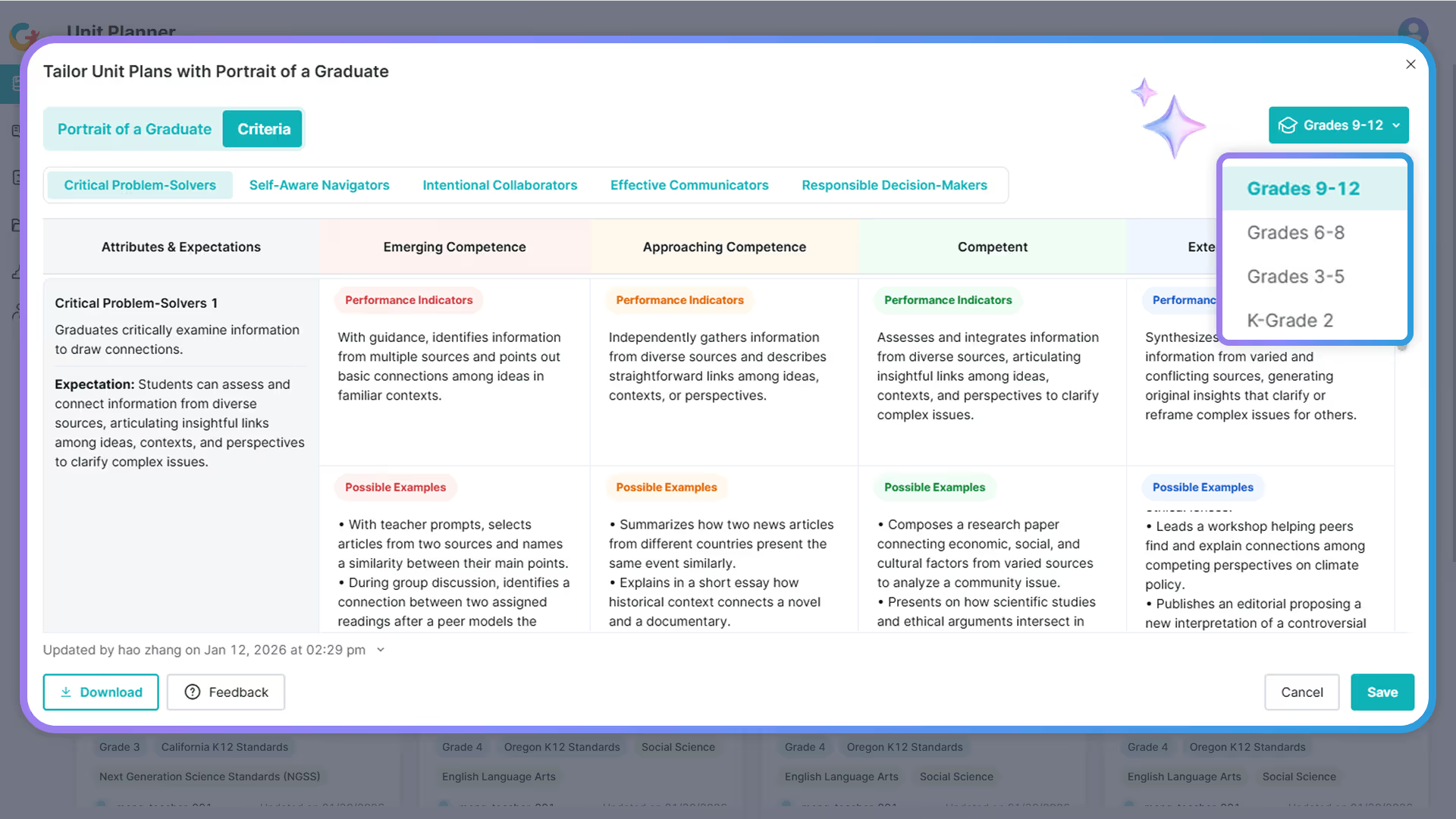
Once the Portrait of a Graduate is measurable, it becomes trackable over time. When these rubrics are used consistently across units, schools can build a PoG Portfolio: a multi-year evidence trail that documents student growth longitudinally—rather than a one-time snapshot tied to a single assignment.
Step 2. Embedding PoG into Daily Curriculum & Instruction
Instead of asking teachers to “add PoG,” Curriculum Genie enables a curriculum-embedded approach by building PoG directly into the unit flow teachers already teach. As a result, PoG lives in the tasks students already do—discussion, research, reflection, revision, and performance—turning everyday learning into observable, repeatable demonstrations of graduate competencies.
But “embedded” shouldn’t be a buzzword. Here’s what that actually looks like in practice:
1) Embed PoG into the Unit Flow (Intentional Practice, Not Extra Work)
Curriculum Genie helps teams embed PoG intentionally within the unit’s learning sequence—not as a separate initiative or an extra project. Instead of mapping competencies after the unit is written, CG brings PoG into the planning process early, so teachers can design where and how students will practice key competencies inside the standards-aligned learning experiences that already exist in the unit.
Practically, that means CG supports teachers to:
- Identify the natural “competency moments” already present in the unit (e.g., collaborative sense-making, investigating sources, explaining reasoning, peer critique, revising work, presenting an outcome)
- Strengthen those existing activities so they explicitly develop PoG skills—without changing the curriculum or adding new lessons
- Make practice repeatable across the unit, so students don’t “touch” a competency once; they practice it, get coached, and try again in increasingly complex ways
- Clarify what to look for during those moments, so PoG becomes observable in real time (what students say, do, and produce), not only in hindsight
The result is an intentional unit design where PoG is practiced continuously inside day-to-day instruction—so it feels like better teaching, not more work.
2) Practical Teaching Tips (Consistent Implementation Across Classrooms)
Even with strong learning experiences, teachers still ask: What does proficiency look like in the moment—and how do I coach it without slowing the lesson down?
Curriculum Genie provides practical, competency-specific teaching tips aligned to the Student Expectations and rubric language from Step 1—so teachers know what to look for, what to say, and how to give consistent feedback.
Because the guidance is anchored in shared, grade-banded expectations and common rubrics, every teacher across every grade and every subject can coach the same PoG competency with consistent language—during the standards-based lessons they already teach, in real time, without adding extra activities or “PoG-only” lessons.
Step 3. Performance-Based Assessment & The Continuous PoG Portfolio
Once PoG is observable (Student Expectations) and measurable (rubrics), Curriculum Genie helps districts capture evidence of growth at scale—without turning PoG into an extra workload. This is competency-based assessment in practice—grounded in evidence, feedback, and growth.
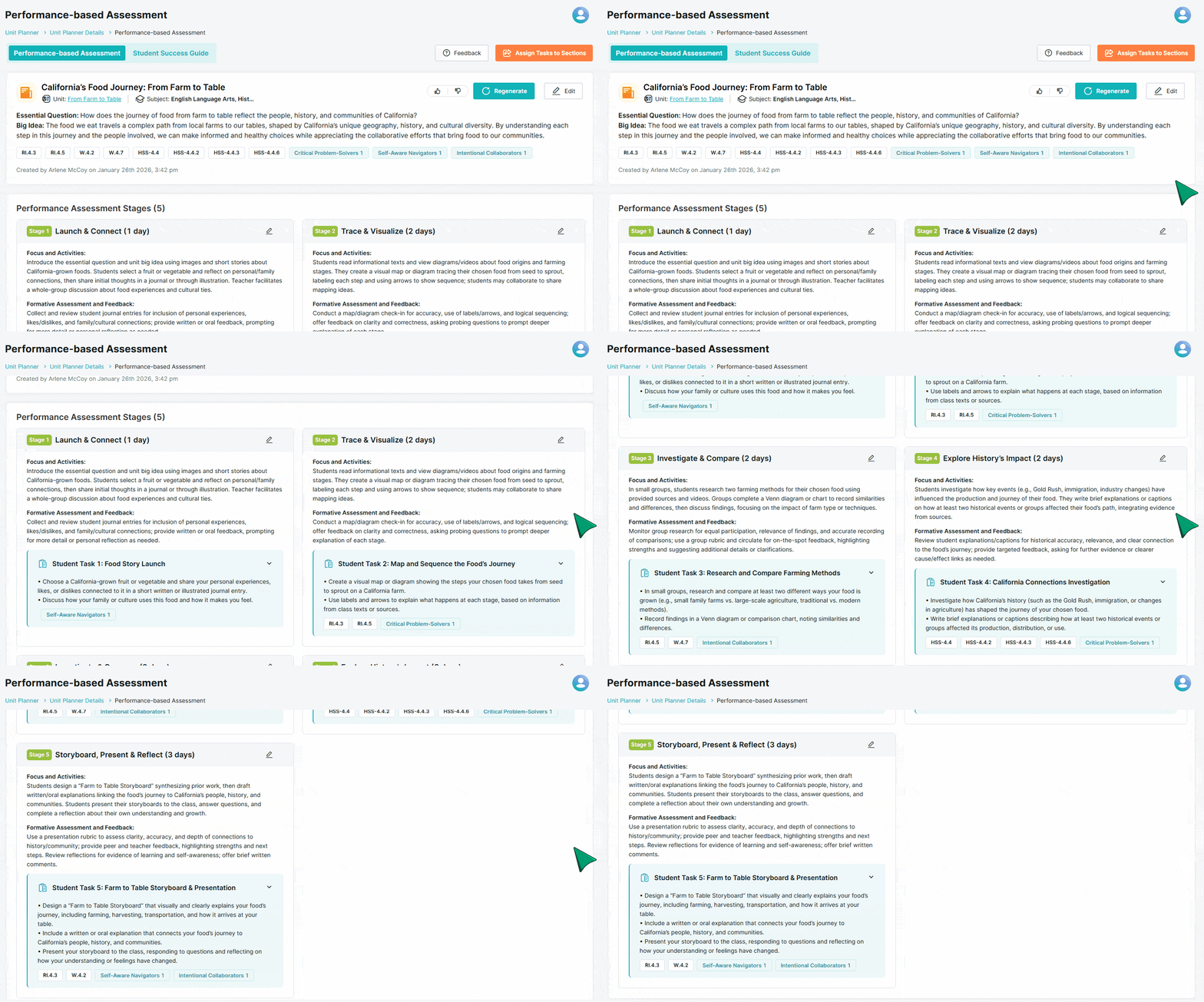
1) Unit-Level Performance-Based Assessment (Stage-by-Stage Plan + Student Tasks)
Curriculum Genie extends each unit with a unit-level, stage-by-stage performance assessment plan—so PoG evidence is collected across the learning journey, not only at the end. The plan sequences meaningful student tasks and checkpoints throughout the unit (e.g., early sense-making, research/inquiry, draft work, peer critique, revision, and final performance), each intentionally aligned to targeted PoG competencies.
Each task includes a student-facing success guide so students know exactly what quality looks like and what evidence to submit. The workflow also supports peer review and revision, turning assessment into a learning cycle—students submit, receive feedback, improve their work, and demonstrate growth over time. Teachers can then review submissions efficiently and document learning consistently across classrooms.
2) PoG Mini Masteries (5–7 Minute Embedded Practice)
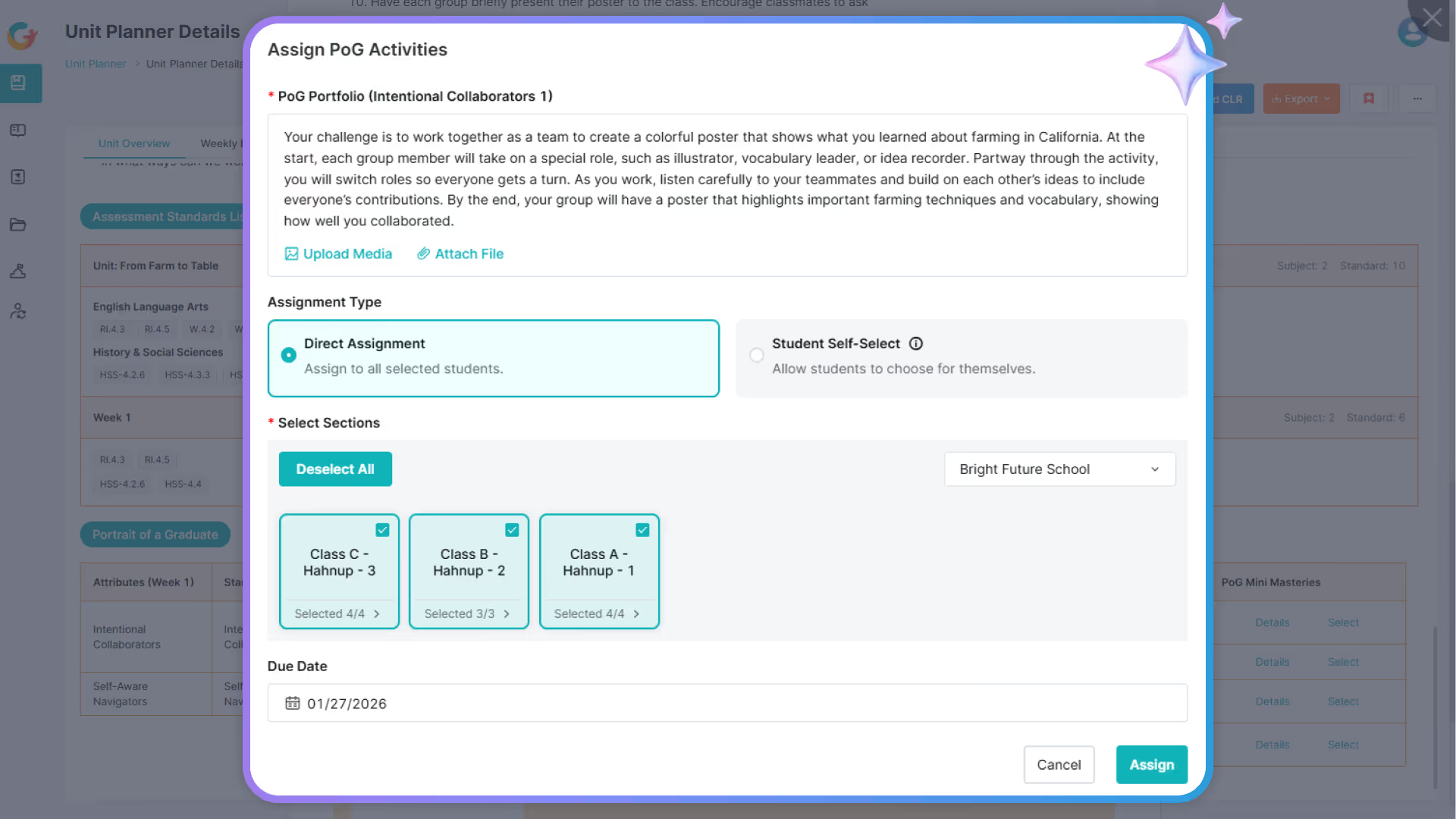
To make PoG growth frequent and manageable, Curriculum Genie turns PoG teaching tips into short, targeted competency-based activities embedded directly in lessons. Mini-masteries typically take 5–7 minutes and ask students to complete an authentic reflection or micro-demonstration of a PoG trait—so competency growth is captured in small, repeatable moments, not only in major projects.
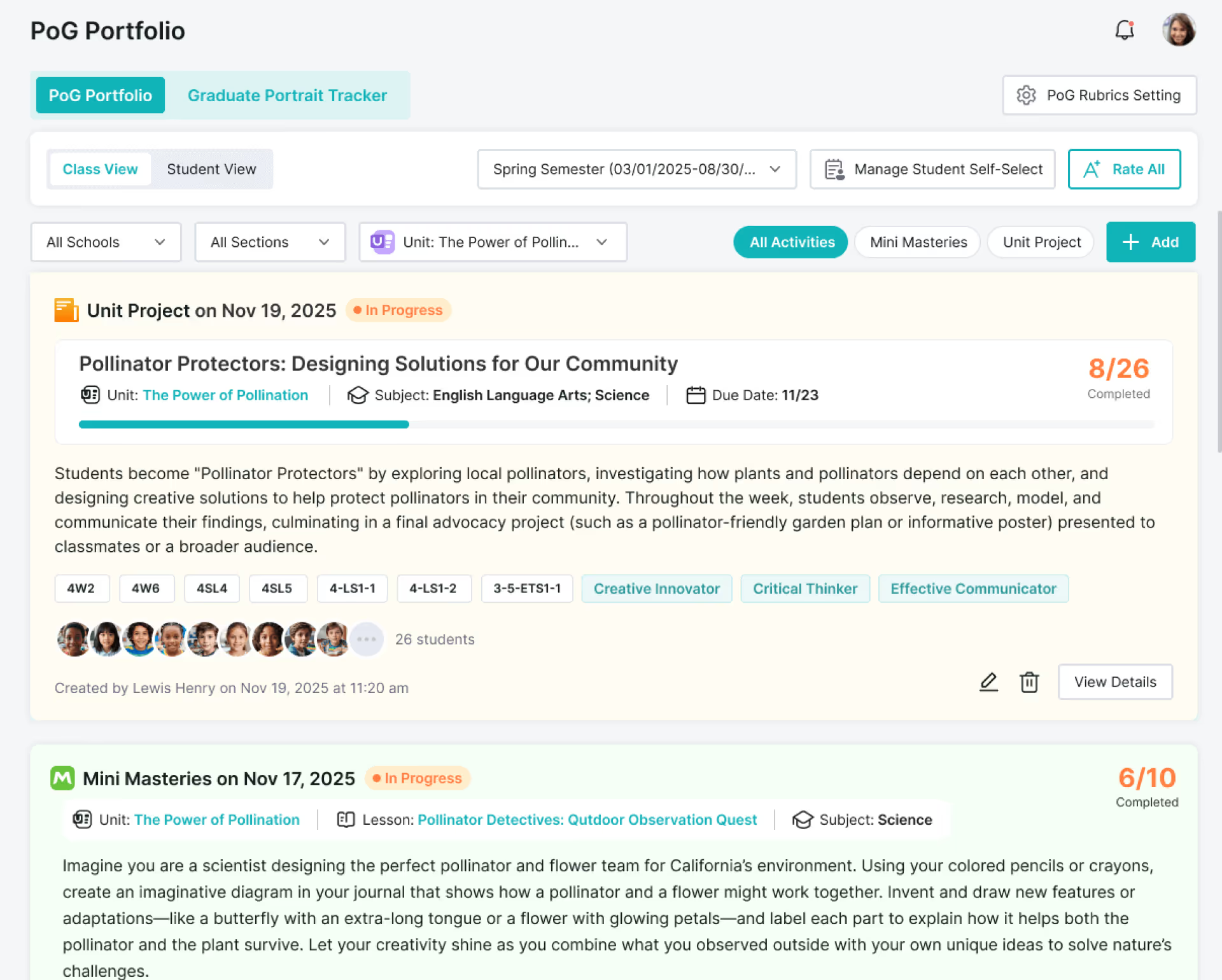
3) Capstone Projects (Culminating Demonstration of Growth)
Capstones serve as a culminating PoG demonstration—students synthesize district competencies into an authentic product or presentation. Curriculum Genie aligns capstones to the same PoG expectations and rubrics used across units and mini-masteries, strengthening the portfolio with a high-impact final artifact that reflects year-long growth.
Step 4. Make PoG Visible: Score Evidence, Drive Decisions, Gamify Growth
Curriculum Genie turns everyday student work into scored PoG evidence and actionable next steps—then converts results into growth data that supports data-driven decisions, while keeping students engaged through gamified progress.
1) Collect, Score and Coach with Multimodal Evidence
PoG competencies don’t always show up in a worksheet—they show up in what students create, say, and do. Curriculum Genie lets students submit rich multimodal artifacts (writing, images, audio/video, presentations, project files), auto-scores them with your district’s 4-level PoG rubrics, and generates rubric-aligned feedback plus “what to do next” action steps—so students know how to level up and teachers know what to reteach, model, and support.
2) Turn Evidence Into Growth Data For Data-Driven Decisions
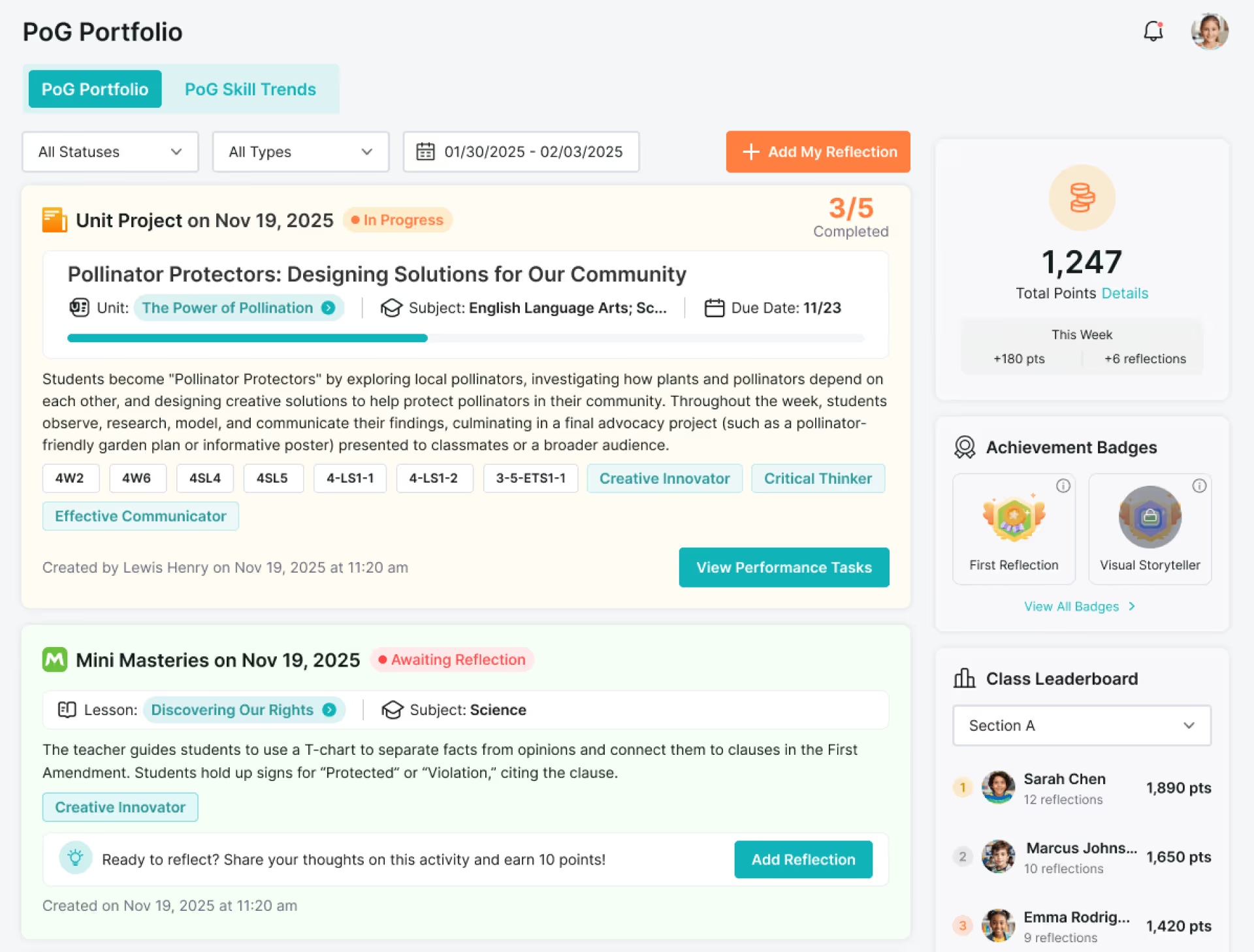
Scored evidence automatically organizes into a living PoG Portfolio and rolls up into longitudinal growth views across students, classes, grade bands, schools, and the district. Teams can spot patterns over time—plateaus, recurring low performance, widening gaps—and prioritize supports while monitoring whether interventions improve trends.
3) Gamify Growth With Milestones And Badges
Students follow a visible growth journey through the PoG Portfolio. Milestones and badges make progress feel real and motivating, so the graduate profile becomes something students build and own over time.
When PoG Moves Off the Wall
A strong PoG is only the starting point. What matters next is an implementation model that holds up in the real world: limited time, uneven capacity, and competing priorities across schools.
Curriculum Genie helps you operationalize PoG end to end: educators get clear targets and embedded practice inside the units they already teach, assessment generates usable evidence through authentic tasks and mini-masteries, and leaders gain visibility through portfolios and dashboards. That’s how PoG becomes scalable and sustainable—less dependent on individual interpretation, and more supported by a shared system that makes competency growth visible for every student.
If you’re ready to see what this looks like with your district’s PoG, start with a draft today.
Frequently Asked Questions (FAQs)
Q1: What is a 4-level PoG competency rubric?
A: A 4-level Portrait of a Graduate (PoG) competency rubric defines progression for PoG skills using clear, classroom-ready descriptors at each level—helping teachers assess evidence consistently as students grow over time (e.g., Emerging Competence → Approaching Competence → Competent → Extending Competence).
Q2: How do you keep expectations grade-appropriate?
A: We benchmark against published Portrait of a Graduate competency rubrics (e.g., Utah Portrait of a Graduate Competency Model Rubrics) and generate grade-band drafts that reflect a validated progression of performance. In practice, schools confirm "grade-appropriateness" through quick PLC calibration—reviewing a few student artifacts and aligning on what each level looks like in their context.
Q3: Will this add more work for teachers—or replace what they already do?
A: No—because it’s curriculum-embedded, it’s designed to reduce planning, scoring, and tracking burden. Curriculum Genie builds PoG into the unit flow teachers already teach (discussion, inquiry, drafts, peer critique, revision, performance), so teachers don’t have to invent “extra PoG lessons.” The same learning experiences generate PoG evidence—supported by student-facing success guides, teaching tips, and faster review workflows—so PoG becomes part of instruction, not an additional initiative.