WHITE BELT
Aware
Understand the PoG and recognize opportunities in existing instruction.
Curriculum mapping &
Mini-Mastery planning
Mini-Mastery planning
A guided pilot with professional learning to help your district design, launch, and sustain performance-based assessment.

Explore how community ownership, classroom practice, and district visibility fit together. Select a chapter to look inside.
Let's connect the model to your curriculum, community priorities, and next steps.
The superintendent convenes a district coalition to build shared vision, governance, resources, and public accountability.

Create a District PoG and Local Assessment Design Council with educators, teacher unions, students, families, employers, higher education, community organizations, and BOCES.
| Stakeholder | Contribution |
|---|---|
| Superintendent and School Board | Establish shared vision, priorities, governance, resources, and public accountability |
| District Curriculum Leaders and Principals | Coordinate implementation, quality expectations, professional learning, and PLC support |
| Teachers and Teacher Unions | Co-design feasible practices, protect instructional integrity, address workload and scheduling, and sustain professional trust |
| Students | Shape relevant learning experiences, provide feedback, and take ownership of portfolios |
| Parents and Families | Articulate community aspirations, provide feedback, and support meaningful learning opportunities |
| Industry and Employer Partners | Define authentic career-readiness applications, contribute projects, mentoring, and workplace experiences |
| Higher Education and Community Organizations | Support authentic assessment, postsecondary readiness, civic engagement, and local learning partnerships |
| BOCES and Regional Partners | Provide professional development, moderation, resource sharing, and cross-district collaboration |
Goal: Make competency development a natural part of existing instruction—not a separate curriculum.
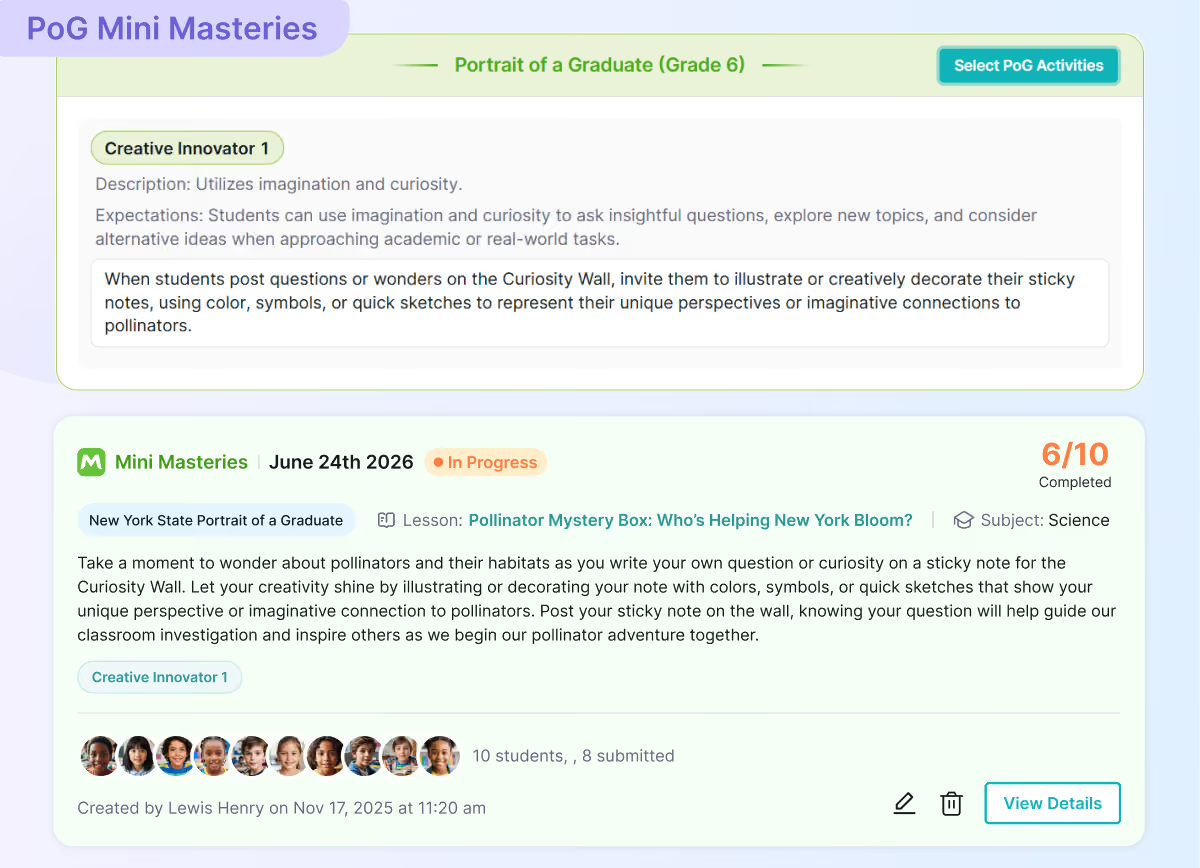
Brief, purposeful activities embedded in regular lessons strengthen teachable PoG micro-skills without interrupting academic instruction.
Teachers begin by reviewing their existing curriculum, lessons, academic standards, and instructional activities.
With AI-assisted planning, teachers can:
For example
A mathematics lesson might incorporate a five-minute activity in which students explain their reasoning and respectfully critique alternative solutions. This builds critical thinking and effective communication while reinforcing mathematics learning.
Mini-Mastery activities are repeated and progressively strengthened throughout the year.
Goal: Transform selected traditional unit tests into authentic demonstrations of academic learning and PoG skills.
Teachers identify units where students can meaningfully apply knowledge and demonstrate competencies through projects, presentations, investigations, problem-solving tasks, or other authentic assessments.
Each performance-based assessment (PBA) includes:
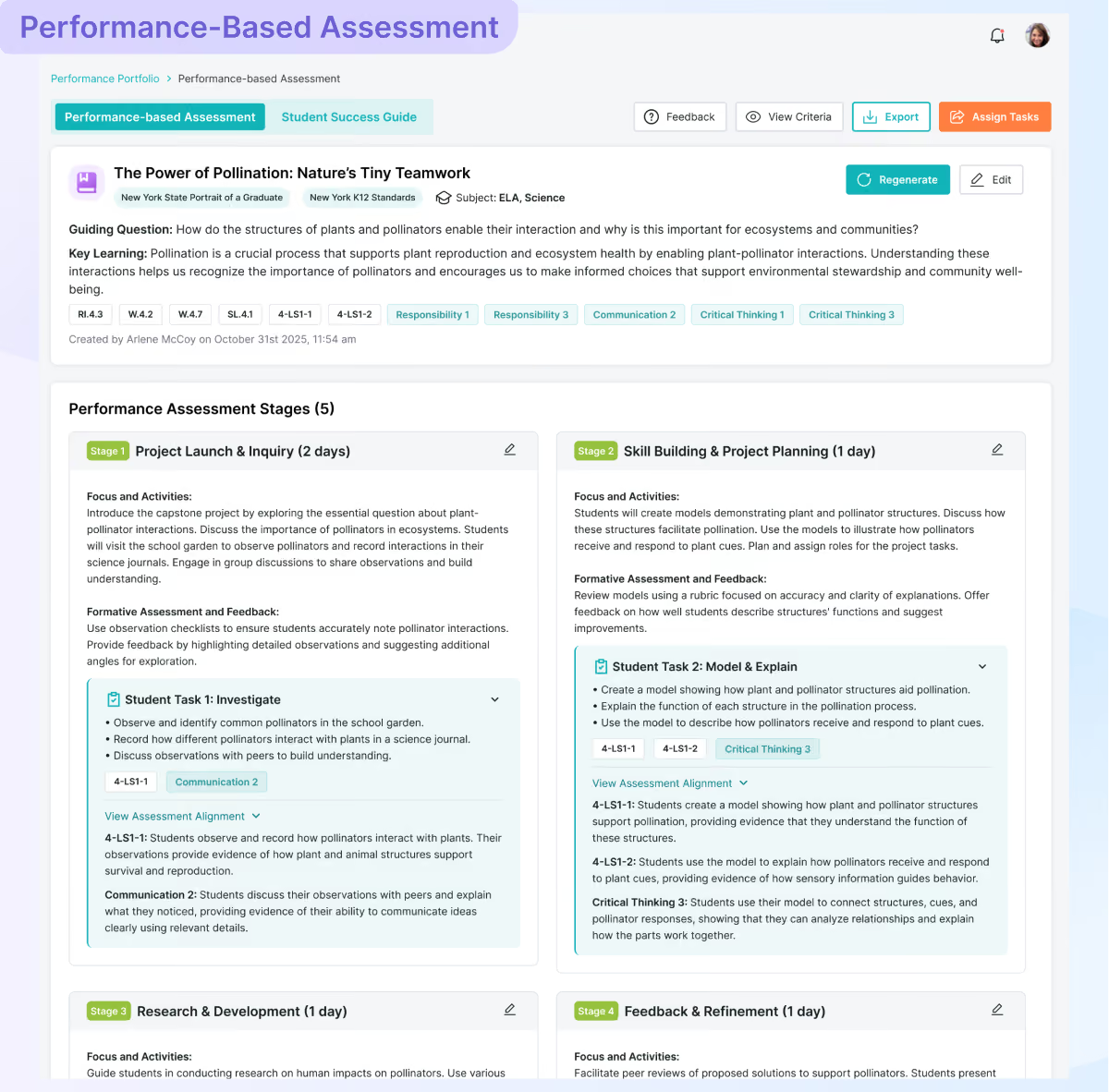
Per subject teacher, per year → approximately 8–10 meaningful PBAs per student annually.
Goal: Create coherent, comprehensive competency development across subjects without forcing every teacher to assess every PoG attribute.

Teachers teaching the same grade level collaborate through Professional Learning Communities (PLCs).
The PLC reviews planned instruction, Mini-Mastery opportunities, and PBAs across disciplines to map coverage of New York's six PoG attributes:
For example
Goal: Provide an advanced pathway for teachers who receive further professional development to design rigorous, interdisciplinary learning experiences.
These projects engage students in authentic, meaningful challenges that require them to apply knowledge from multiple subjects and demonstrate several PoG competencies together.
A capstone may include:
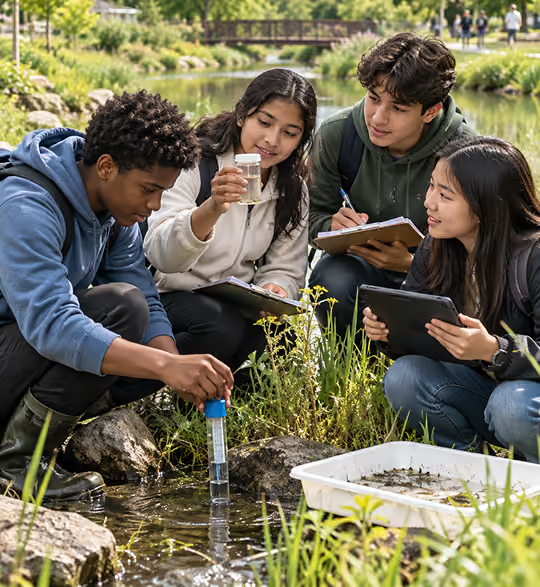
Example: Designing a More Sustainable Community
Implementation principle: Capstones are an advanced option, not an immediate expectation for every teacher. Districts may begin with one capstone per participating grade-level team or interdisciplinary cohort each year. Where appropriate, a capstone can fulfill an existing unit-level PBA rather than adding another assessment.
Goal: Connect PoG competencies with the practical skills students need for employment, postsecondary education, civic participation, and lifelong learning.
At the high school level, districts can extend the PoG assessment framework into Career and Technical Education (CTE) and broader career-connected learning opportunities.
The district identifies specific career-readiness skills that complement and operationalize the PoG attributes, such as:

| Pathway | Example learning experience | Competency evidence |
|---|---|---|
| CTE Programs | Industry-aligned technical projects and practical demonstrations | Technical proficiency, collaboration, problem-solving |
| Career-Connected Learning | Career exploration, job shadowing, employer challenges, industry mentorship | Career awareness, communication, future-focused thinking |
| Community-Based Learning | Civic projects, service learning, local problem-solving | Global citizenship, leadership, reflection |
| Work-Based Learning | Internships, supervised workplace experiences, authentic employer projects | Professionalism, applied competencies, workplace performance |
Goal: Build educator capacity gradually, recognizing different levels of readiness and expertise.
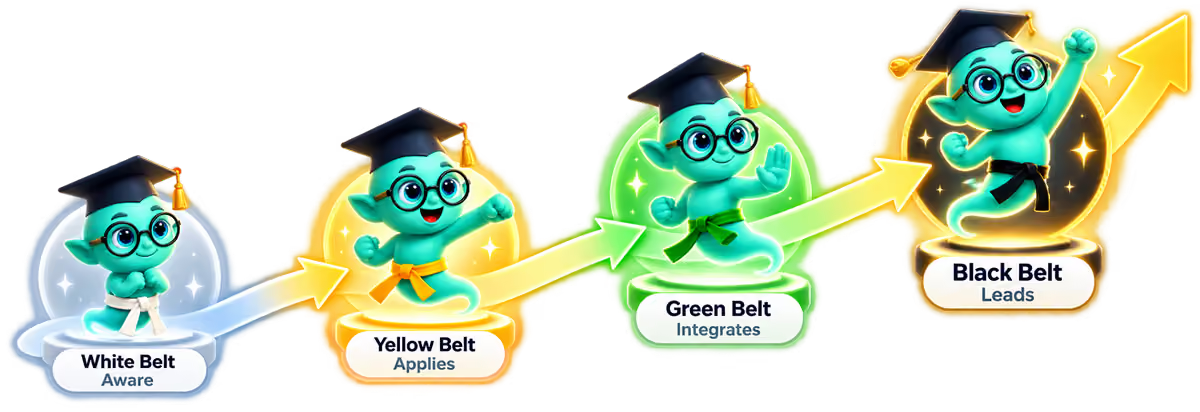
| Development level | Teacher capability | Demonstrated practice |
|---|---|---|
| White Belt — Aware | Understand the PoG and identify opportunities in existing instruction | Curriculum mapping and Mini-Mastery planning |
| Yellow Belt — Applies | Design, implement, and evaluate curriculum-embedded performance tasks | Standards- and PoG-aligned unit PBAs with student evidence |
| Green Belt — Integrates | Facilitate sustained deeper learning, interdisciplinary PBAs, or authentic inquiry | A complete advanced learning and assessment cycle, potentially including a capstone |
| Black Belt — Leads | Sustain high-quality implementation and support colleagues | Coaching, assessment calibration, shared exemplars, and leadership |
Goal: Automatically connect everyday learning, authentic performance, and reflective growth into a longitudinal body of evidence.
The system brings together evidence from:
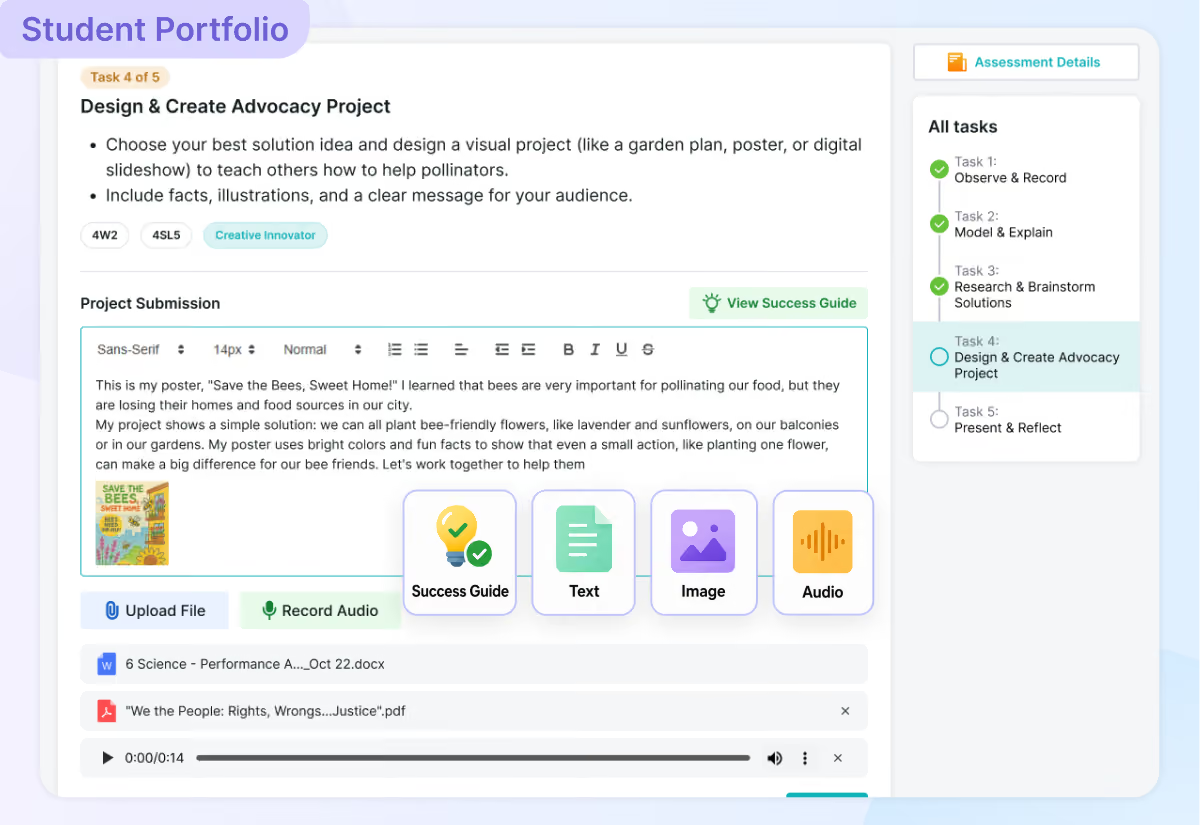
Classroom workflows automatically create or recommend portfolio entries, keeping the link to the lesson, standards, PoG competency, and rubric.
Students add artifacts, select their strongest work, and reflect on their growth.
AI-assisted assessment functions include:
Teachers decide
Teachers review and validate consequential competency ratings. Shared exemplars and periodic calibration help strengthen consistency across classrooms and schools.
Three separate measures
The system should distinguish a student's participation, evidence completeness, and demonstrated proficiency rather than treating them as interchangeable.
Goal: Give district leaders visibility into implementation quality, student learning, competency coverage, and growth—similar in usefulness to existing ELA and Mathematics dashboards.
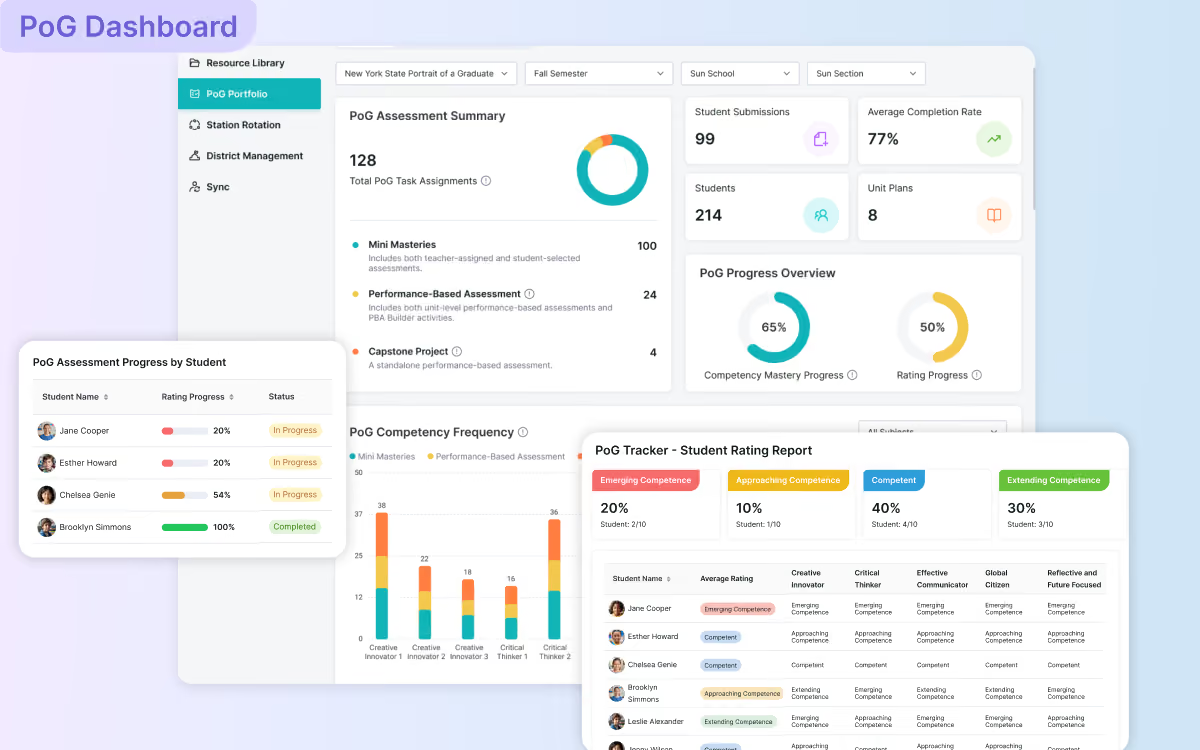
Student Level
Teacher and Classroom Level
Grade-Level and PLC Level
School and District Level
Districts can implement the model progressively rather than attempting every component simultaneously.
| Phase | District priorities | Expected deliverables |
|---|---|---|
| Launch · First 90 Days | Superintendent convenes coalition; review curriculum and PoG framework; assess readiness; identify pilot teams | Shared vision, governance structure, baseline competency map, pilot plan |
| Year 1 · Establish Foundations | Teacher professional learning; Mini-Mastery integration; initial unit PBAs; PLC coordination; pilot portfolios | Classroom examples, initial student evidence, common rubrics, pilot dashboard |
| Year 2 · Build Coherence | Expand unit PBAs; strengthen grade-level coverage; refine rubrics and scoring; pilot advanced capstones | Coordinated assessment maps, validated exemplars, expanded portfolios, advanced teacher teams |
| Year 3 · Expand and Institutionalize | Scale interdisciplinary capstones and career-connected pathways; strengthen community partnerships; refine district accountability | Sustainable professional learning, districtwide visibility, longitudinal profiles, annual improvement cycle |
The pace should depend on district readiness and evolve with NYSED's official competency, rubric, and reporting requirements.

Over time, students build a personalized body of evidence showing:
Shows academic knowledge and skills mastered; critical thinking, communication, innovation and contribution; development across years; application to interdisciplinary and real-world challenges; and preparation for college, careers and civic life.
Supports student-led conferences, high-school transitions, college applications, career decisions, internship applications and appropriate postsecondary opportunities. Students curate evidence that reflects their strengths and aspirations.
Rather than receiving only grades and test results, students develop a demonstrable story of learning, growth, contribution, and future readiness.
A digital portfolio brings together Mini-Mastery activities, unit assessments, capstones, and career-connected experiences in a longitudinal body of evidence.
A progressive pathway meets teachers where they are and develops the internal leadership needed to sustain the work.
Understand the PoG and recognize opportunities in existing instruction.
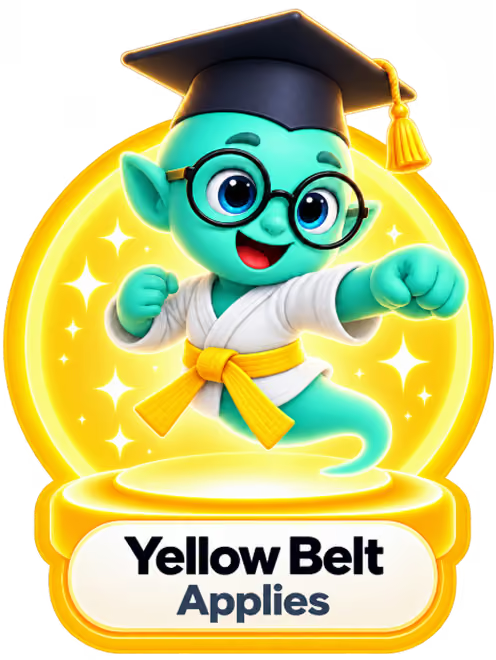
Design, implement, and evaluate curriculum-embedded performance tasks.
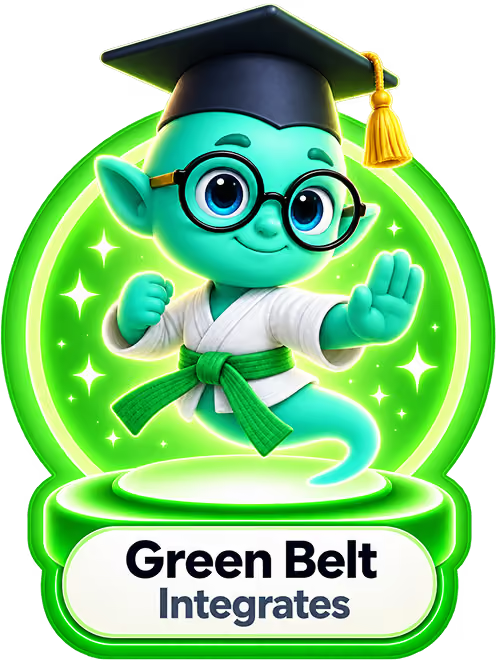
Facilitate deeper learning, interdisciplinary assessment, or authentic inquiry.
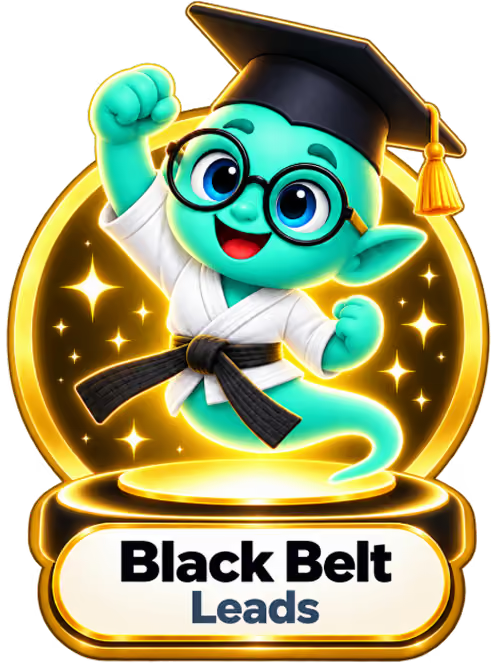
Support colleagues and sustain high-quality implementation across the district.
Let's map a development pathway that fits your district's pace and priorities.
A superintendent-led District PoG and Local Assessment Design Council connects educators, teacher unions, students, families, employers, higher education, community organizations, and regional partners.
Teachers and union representatives participate from the earliest design stage. Student and family voice shapes decisions. Shared ownership helps the system evolve through leadership transitions.
Students build a personalized body of evidence showing what they know, how they think, how they contribute, and how they have grown across years.
They curate work that reflects their strengths and aspirations—for student-led conferences, high-school transitions, college applications, career decisions, and future opportunities. Longitudinal student evidence can inform learning analytics, helping districts understand competency development and growth over time.
"A demonstrable story of learning, growth, contribution, and future readiness."District Local Assessment Design Model