The 2027 Countdown: How New York Districts Can Prepare for NY Inspires Today
Key Takeaways
- New York's Initial Implementation phase begins fall 2027, reaching all 37 BOCES regions and 700-plus school districts statewide.
- The shift replaces a single Regents Exam score with a continuum of evidence, from short applied tasks to full capstone exhibitions.
- At Rachel Carson High School, 60% of students in the ELA PLAN pilot passed the Regents exam after previously failing it, through performance-based assessment, not a retest.
- Curriculum Genie's Gradual Transition Model and PoG Belt System (Yellow live today, Green and Black coming) give every teacher a low-disruption path into competency-based instruction.
- New AI calibration research shows multi-model scoring (GPT-5.1 and Gemini 3.1 Pro) can support the interrater reliability performance-based assessment requires, without hundreds of trained human evaluators.
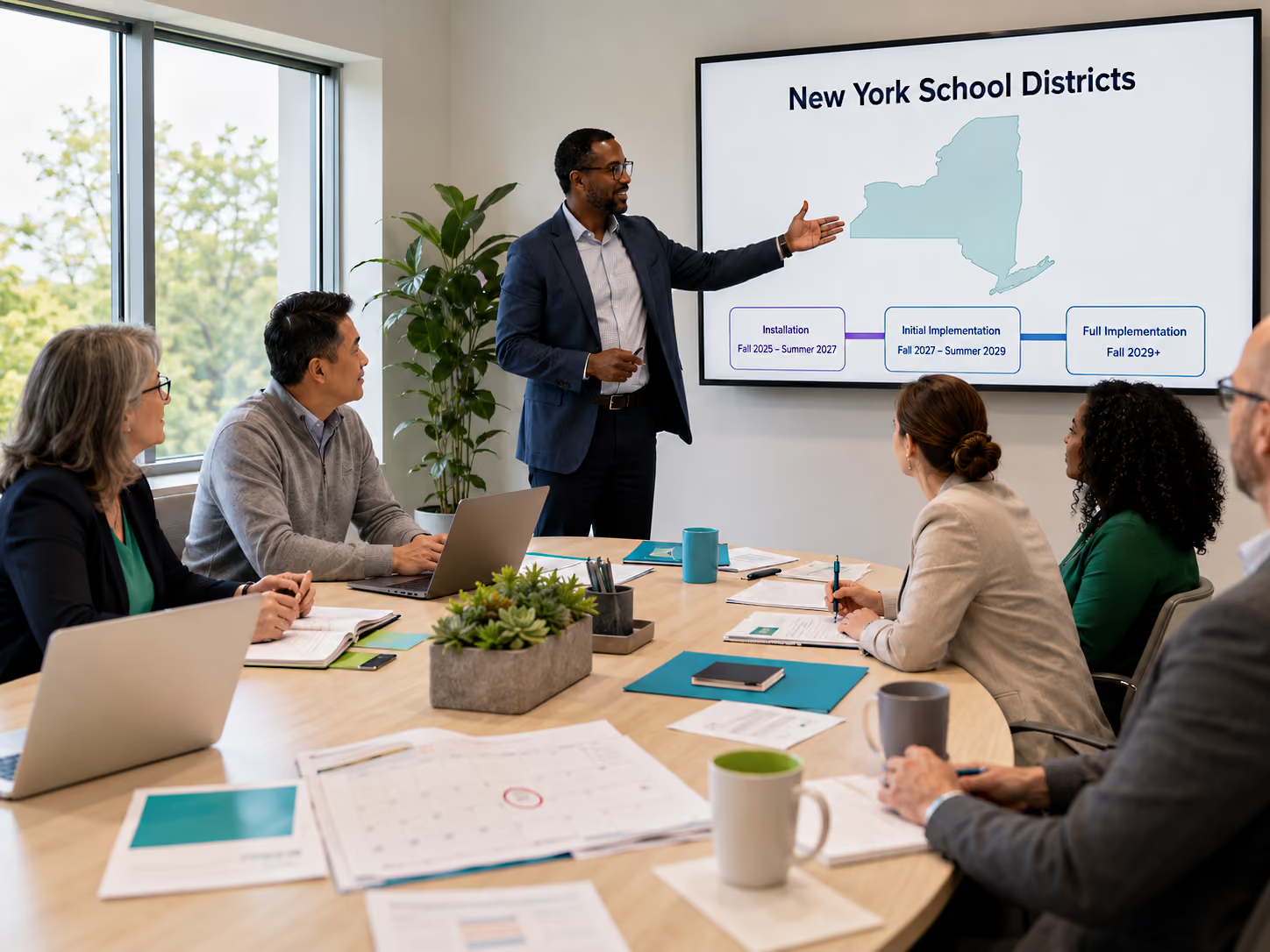
This isn't a pilot happening in one place. It's a mandate landing on all 37 BOCES regions and 700-plus school districts across New York State, and most district leaders have a little over a year of real runway left before New York's Initial Implementation phase begins in Fall 2027.
At the 2026 CCSSO Spring Collaboratives in Austin, Texas, Learning Genie CEO Dr. Gene Shi joined New York State Education Department Assistant Commissioner Dr. Zachary Warner for a session on exactly this shift: New York is moving away from the Regents Exam as a graduation requirement, replacing it with something harder to fake, a portfolio of evidence that shows what a student can actually do.
We already covered the fundamentals, the four transformations, the Phase 1 readiness checklist, what BOCES does, in From Policy to Practice: Is Your District Ready for NY Inspires? This piece picks up from there. It's a recap of what actually happened on stage: the reasoning behind the design, live results from the field, and new research on keeping AI scoring consistent across classrooms.
A Quick Refresher: New York's Four Transformations
New York's NY Inspires initiative restructures how students earn a diploma around four changes. (For the full breakdown of what each one requires district by district, see the companion post linked above.)
- Adopt the NYS Portrait of a Graduate. Students must demonstrate evidence of readiness in both PoG attributes and NYS learning standards, not just one or the other.
- Sunset Diploma Assessment Requirements. Students may continue to take State exams to satisfy requirements, but they won't be required to pass Regents Exams to earn a diploma. In place of a single test score, a multi-measure system takes over.
- Move to One Diploma. All students who satisfy the new requirements will earn a single NYS high school diploma. Advanced designation becomes a seal or endorsement rather than a separate diploma track.
- Redefine Credits and Learning Experiences. Work-based learning and internships, project-based learning, CTE pathways, and portfolios of performance tasks all count toward a diploma, with Financial Literacy and Climate Education named as required components.
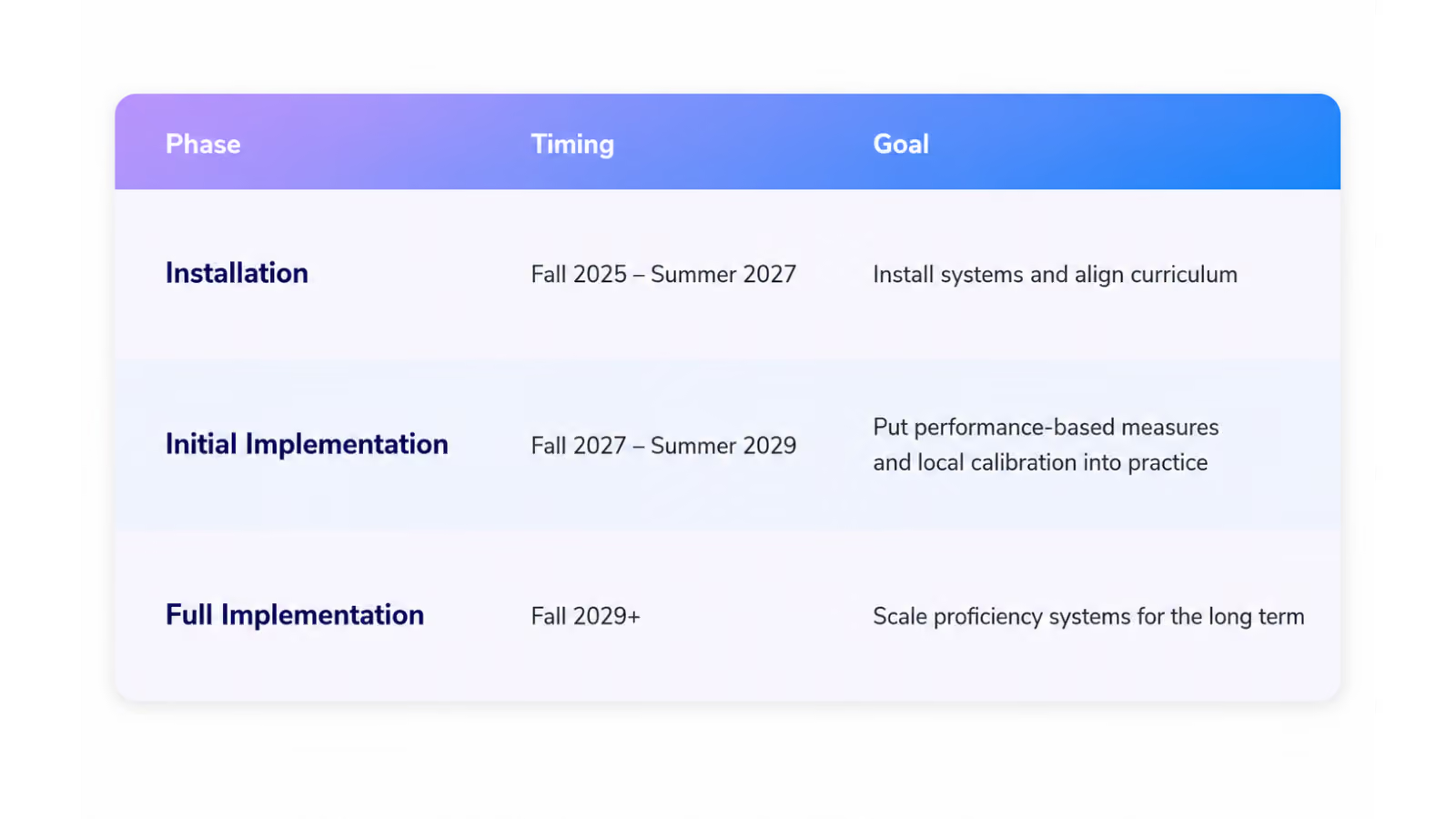
New York's Initial Implementation phase, when these measures take effect, begins fall 2027.
The NYS Portrait of a Graduate
At the center of it all is the NYS Portrait of a Graduate: six co-equal competencies every student is expected to demonstrate.
Academically Prepared. Creative Innovator. Critical Thinker. Effective Communicator. Global Citizen. Reflective and Future Focused.
None of these show up on a bubble sheet, and that's exactly the point.
Why New York Designed It This Way
Here's the reasoning underneath those four changes, boiled down to one sentence: a diploma should certify what a student can do, not just what a student sat through.
For a century, "ready to graduate" has meant time-based credits, earned in siloed subjects, certified by an end-of-course test. NY Inspires flips all three of those assumptions.
.avif)
That's the paradigm shift. As Dr. Warner explained it during the session, performance-based assessment asks a student to demonstrate or apply what they know by creating a response, a product, or doing a task, judged against a rubric that captures stages of skill development rather than a simple right-or-wrong answer.
The design underneath the shift is a continuum of assessments, not one new test swapped in for an old one. The table below lays out that continuum with real examples from New York's own assessments.
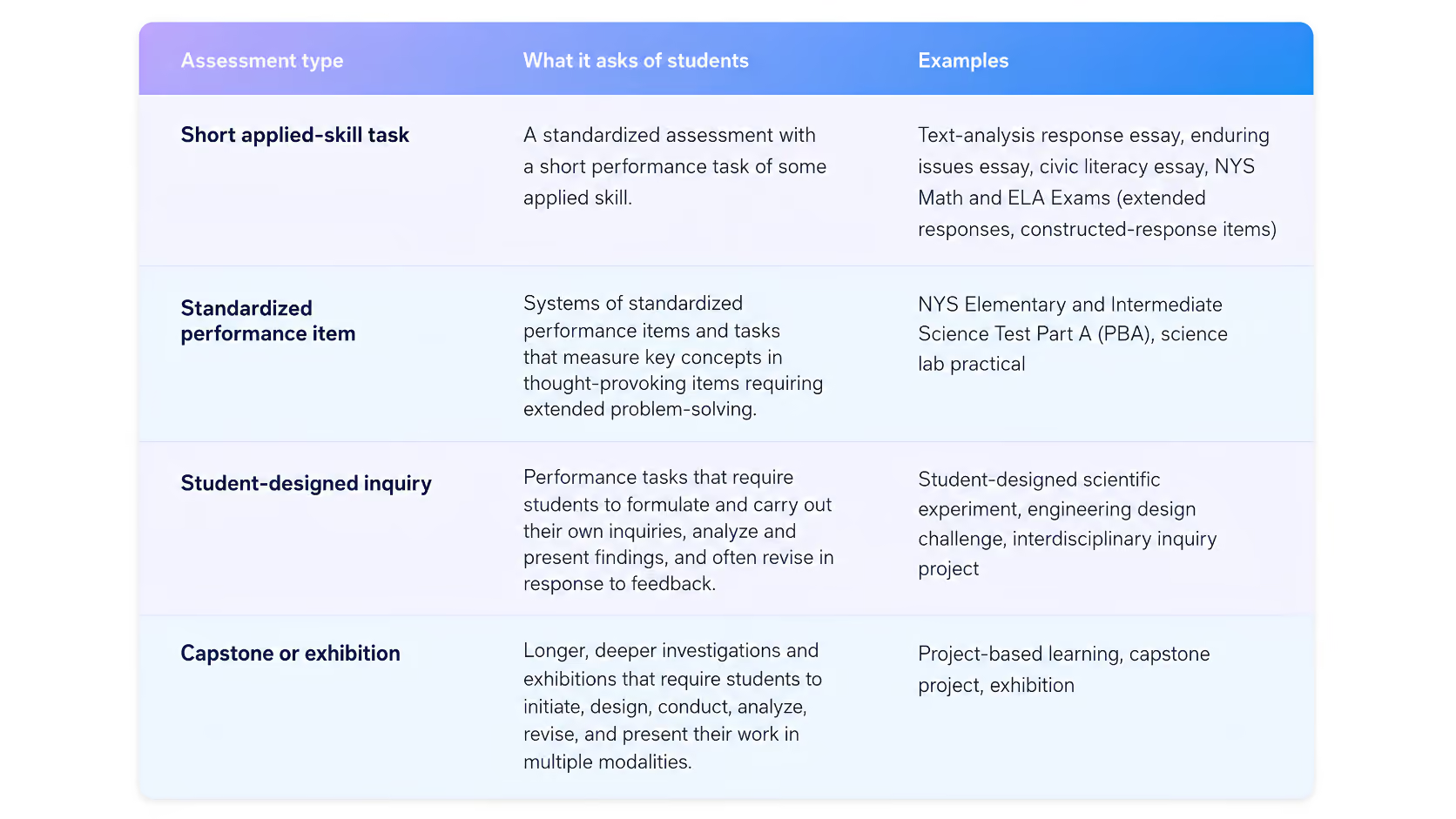
Districts decide where a given unit of instruction sits on that continuum, and evidence builds up across all of them over a student's K-12 career.
The PLAN Pilot: Building the Infrastructure
The PLAN Pilot is how New York is building capacity for this transition. It runs on three pillars.
- Build Capacity: establishing a shared vision across students, families, and schools to embrace project-based learning and performance artifacts.
- Professional Learning: equipping educators with advanced skills in rubric design, inter-rater reliability, and inquiry-driven instructional methods.
- Systemic Sustainability: aligning policy, budgets, and district resources to support long-term, proficiency-based graduation pathways.
More than 20 schools across the state are already piloting this approach, and it's showing results. At Rachel Carson High School, 60% of students in the ELA PLAN pilot passed the Regents exam after previously failing it, not through a retest, but through performance-based learning and assessment.
Where Curriculum Genie Fits In
Ask a superintendent what worries them most about NY Inspires, and the answer usually isn't the policy itself. It's the teachers. Curriculum Genie's model for NY Inspires is built around that exact problem: a Gradual Transition Model paired with a PoG Belt System, designed to power every teacher, in every subject and every grade, to build the language of PoG and performance-based tasks into the curriculum instruction flow they already have.
The Gradual Transition Model
There are two ways to prepare a district's teaching staff for competency-based learning. One is to train every teacher as a PBL expert overnight: full rubric design, inter-rater calibration, inquiry-based unit redesign, on top of an already full plate. The other is Curriculum Genie's Gradual Transition Model, small to no change to a teacher's current curriculum instruction flow, with confidence building over time instead of all at once.
In practice, that comes down to a few experiences a teacher adds per year, each one layered onto instruction that's already happening:
- A small, formative Mini Mastery at the lesson level
- A unit-level performance task built on the existing curriculum, academic standards plus PoG, not academic standards instead of PoG
- A direct connection to a student's growing portfolio, with AI-assisted evidence-finding and grading so teachers aren't scoring everything by hand
That's the actual cultural shift NY Inspires needs. Not "become a different kind of teacher." Just "see the competency work already happening in your classroom, and make it visible," one small addition at a time, until it adds up to a genuinely different practice.
The PoG Belt System
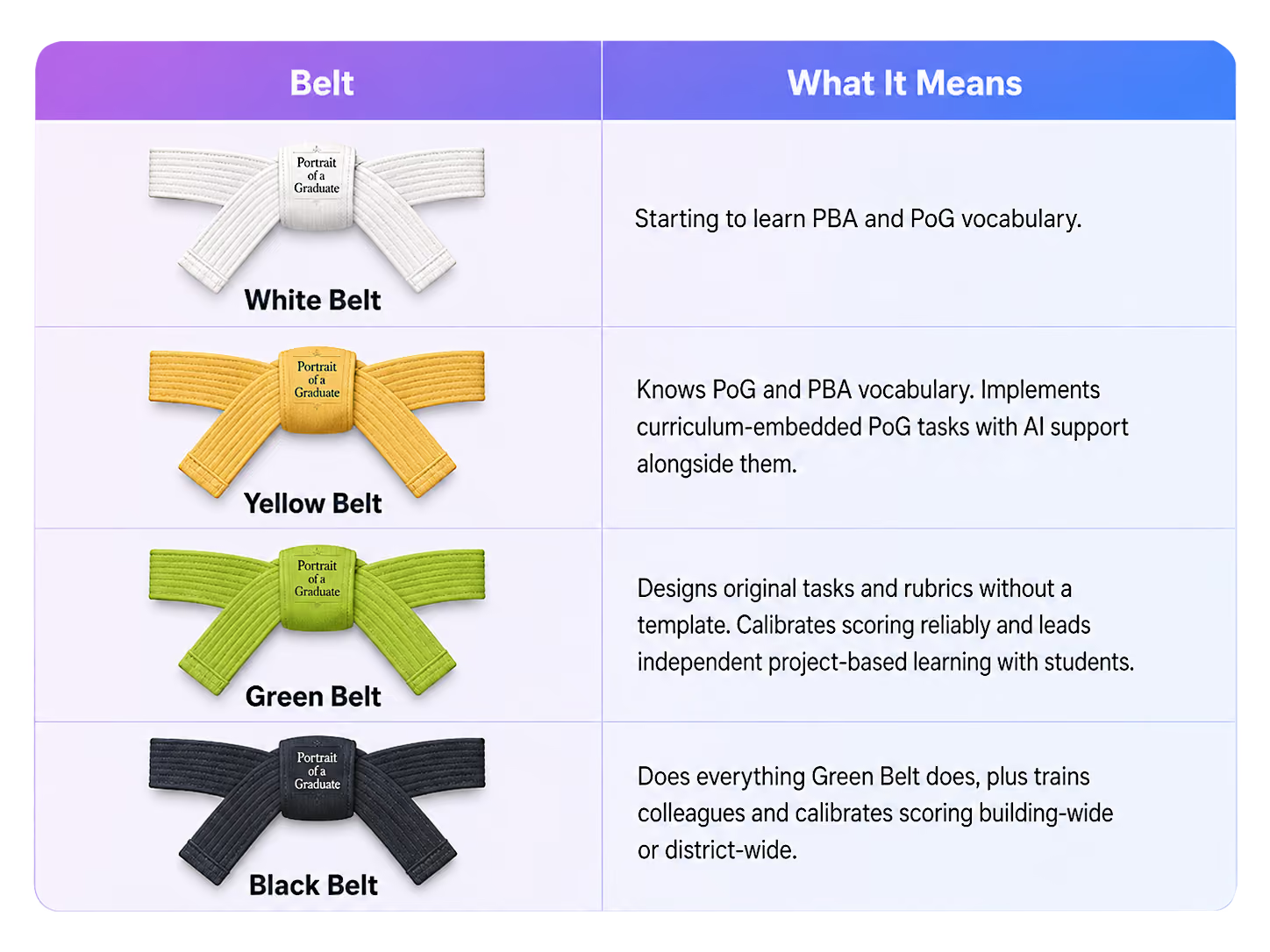
Curriculum Genie structures that growth as a four-tier belt system, built to make teachers feel confident adopting PoG and PBA while bringing academic skills and PoG skills together: each level builds on the last, and no one is expected to start at black.
Inside the Workflow
The Yellow Belt walkthrough above runs on the same Performance-Based Assessment engine every Curriculum Genie district uses. Mapped against New York's own language, it lines up directly with what NY Inspires is asking for.
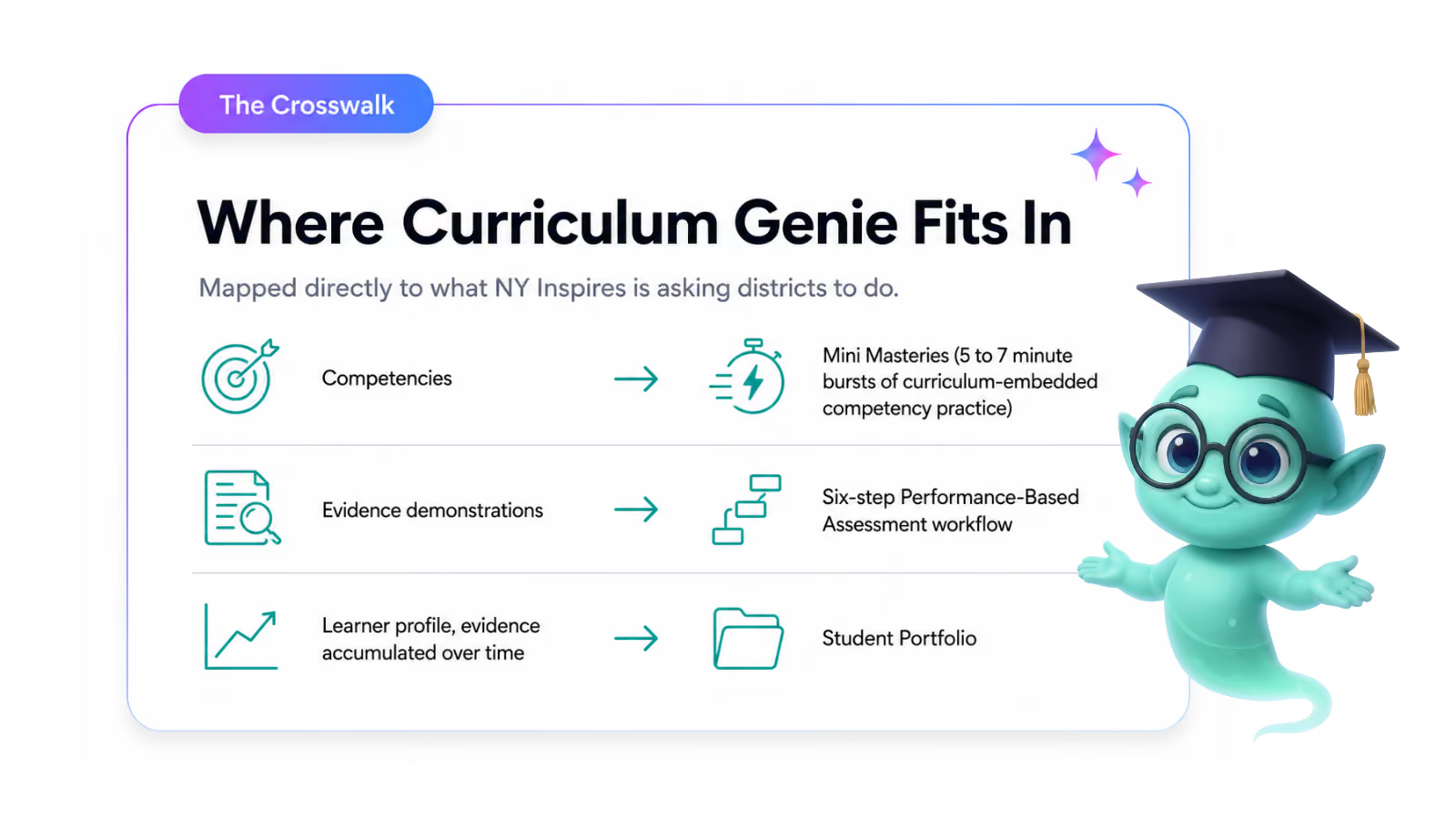
Every performance task the platform generates comes from a multi-model LLM approach, the same principle behind the AI calibration research further down, applied here to authoring the tasks rather than scoring them. Here's what the six-step workflow actually looks like:
1. Locate the core standards and PoG traits. The platform auto-analyzes an existing unit plan and surfaces the academic standards and PoG traits already embedded in it. Teachers review, edit, and confirm, then the platform generates four to six targeted performance steps with student-facing success criteria (Emerging Competence, Approaching Competence, Competent, Extending Competence).
%20(1).gif)
2. Map the week. Stage-by-stage entries are generated with focus, activities, and formative feedback, each one clearly tied to the performance task it advances.
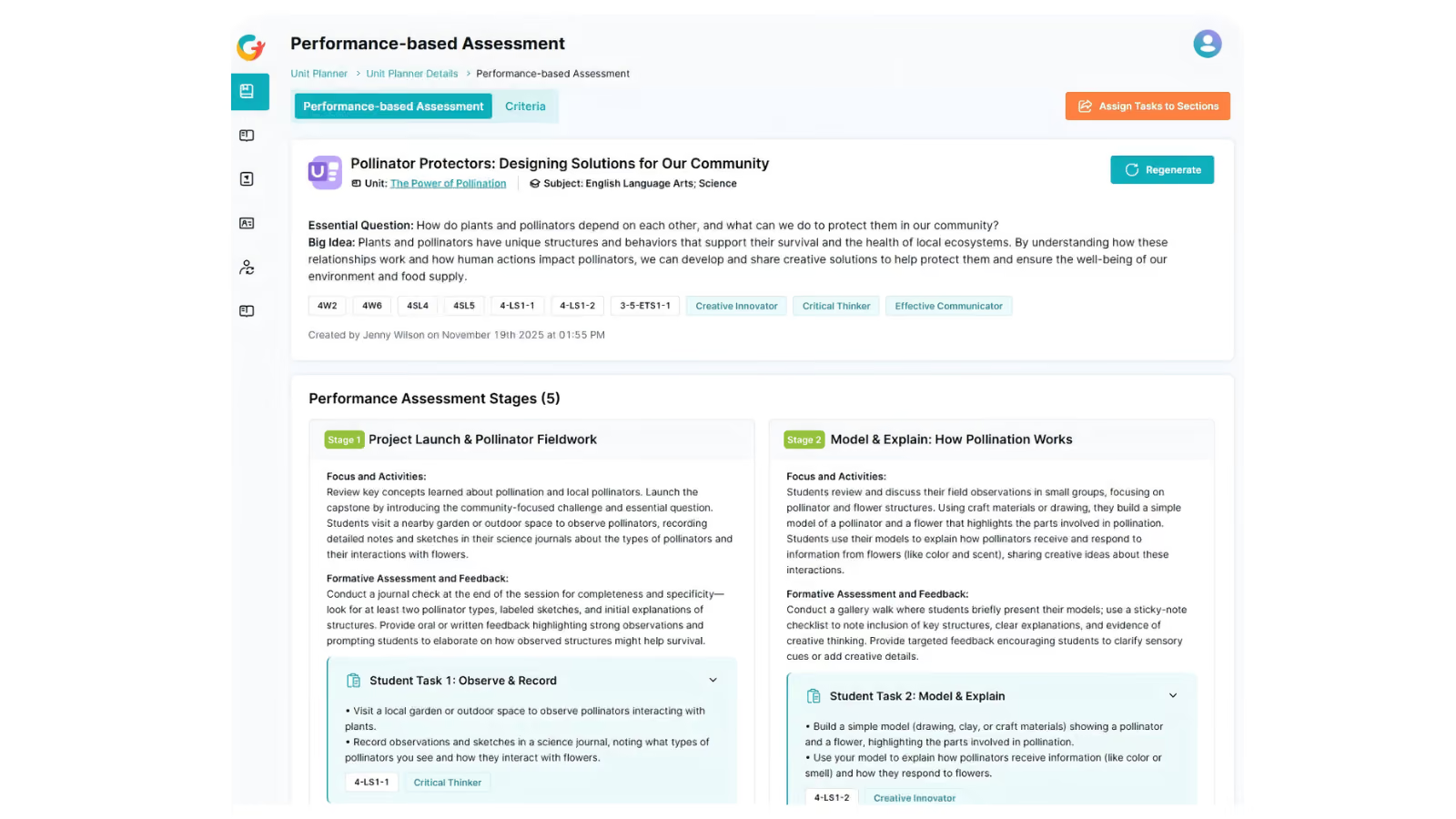
3. Assign tasks to sections. Tasks push to classes in one click, with due dates, checkpoints, and accommodations set as needed.
.gif)
4. Student multimodal submissions. Students submit text, images, audio, or video through a guided workflow aligned to visible success criteria.
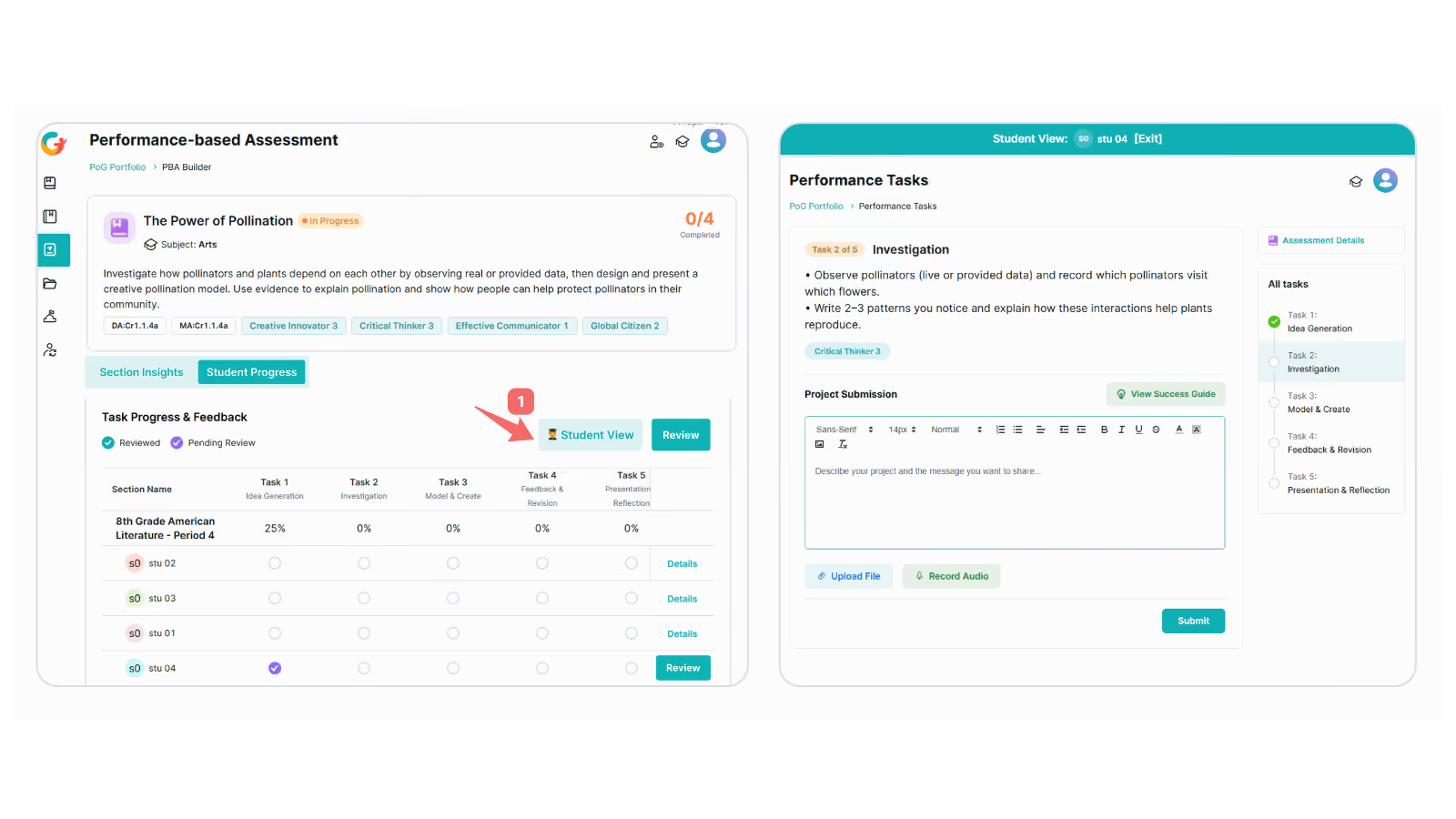
5. Track, support, and assess. Teachers see every student's progress at a glance, identify who needs help, and rate and give feedback directly on completed work.
.gif)
6. Evaluation and feedback. The platform automatically scores each aligned standard and PoG trait using the four-level rubric, generating concrete next steps for students and targeted instructional adjustments for teachers.
.avif)
Here's what that looks like in practice. A teacher doesn't sit down to write a PoG assessment from scratch. In one real example from the session, a ninth-grade unit on frequency tables (built around body measurements and leptin levels) already surfaced Creative Innovator as a trait the students were practicing simply by generating and refining their own data analysis. The teacher just confirms it, in under a minute.
For smaller, everyday moments, Mini Masteries do the same job at a lighter weight. A teacher converts one PoG competency into a short embedded activity, students submit multimodal evidence, and it all rolls up into the same growth portfolio as the bigger performance tasks.
See Curriculum Genie in Action →
Grounded in Real Research
None of this is a hunch. Curriculum Genie's instructional design is grounded in an ESSA Tier 3, pseudo-randomized evidence study conducted in fall 2025 by Dr. Alan Reid and Dr. R. Steven Ross at the Johns Hopkins University Center for Research and Reform in Education, the same evidentiary bar ESSA sets for interventions districts need to defend to their boards.
The AI Calibration Research
One of the most interesting parts of the session was a live scoring comparison on a real student submission from a middle school science unit, part of a dual-aligned performance task where a student proposed a plan to reduce plastic bottle waste at school. The team judged that submission against one science standard (MS-ESS3-3) and two PoG traits (Critical Thinker, Effective Communicator), using four approaches: GPT-5.1 and Gemini 3.1 Pro, each tried with rubric-only prompting and with example-supported prompting.
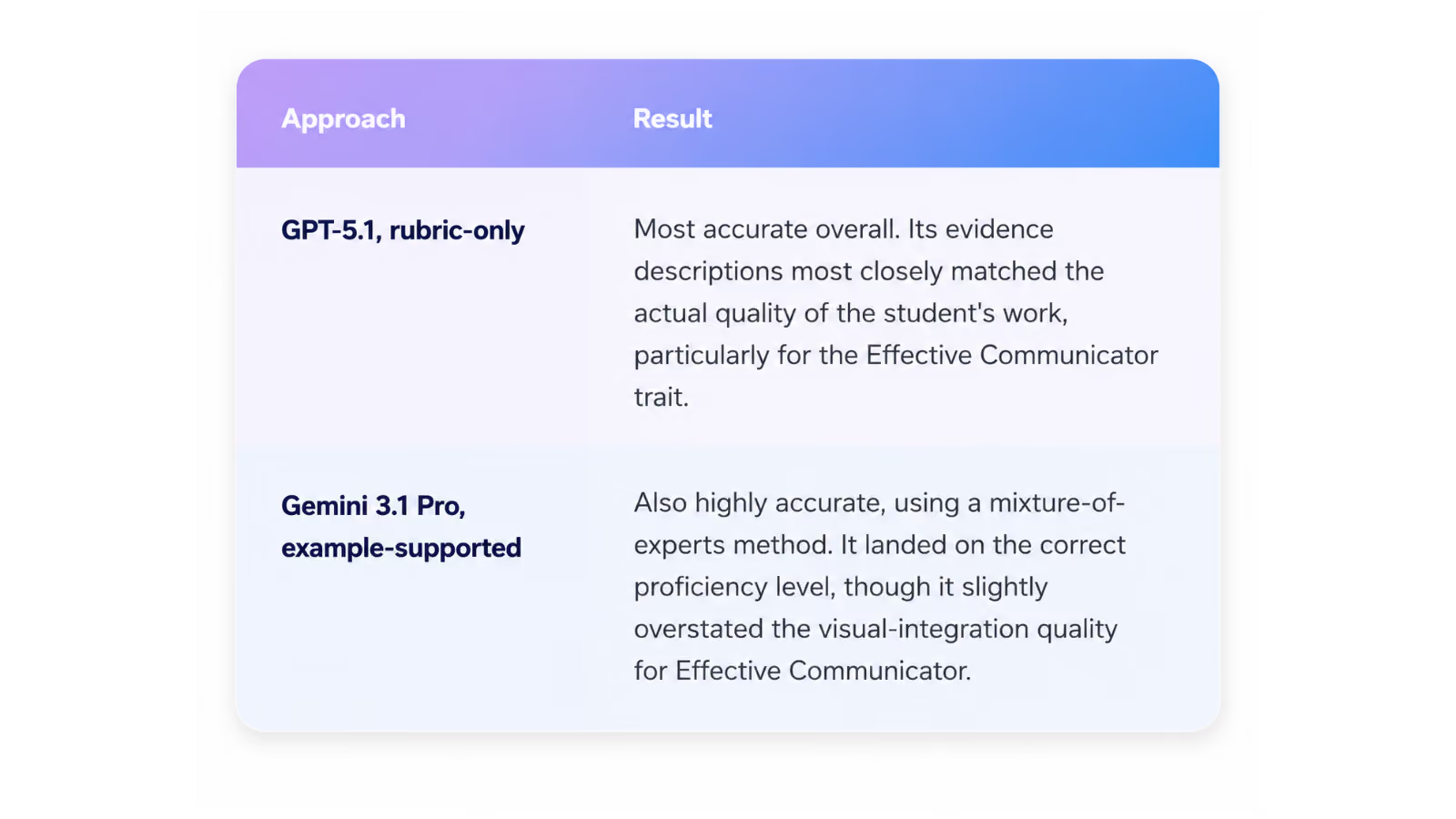
It's early evidence that multi-model AI scoring can support the kind of interrater reliability performance-based assessment requires, without needing hundreds of trained human evaluators to stay consistent at scale.
Case Study: Long Island and New York City
An active case study is underway in public schools across Long Island and NYC, spanning two grade bands (6th through 8th, and 9th through 11th) and three subjects: ELA, Social Studies, and Science. Four curriculum-embedded units are already live: Forces and Motion, Analyzing and Explaining Informational Texts, Comparative World Religions, and Deep Study of Literature. Portrait of a Graduate traits assessed across these units include Creative Innovator, Critical Thinker, and Effective Communicator. Data collection is ongoing.
Teachers already in the pilot describe the shift in exactly the terms that matter most.
"Teaching can feel isolating. This acts like a co-teacher." — Master Teacher, Special Education, Questar III BOCES"Curriculum Genie helped us brainstorm ideas and generate a rubric we could modify to fit our performance task. It organized our thinking while planning the assessment." — William Cullen Bryant High School
The District Roadmap: How Districts Actually Get There
Adopting a Portrait of a Graduate is a policy decision. Operationalizing it is a change management project. Our companion post covers the detailed Phase 1 compliance checklist (curriculum audits, PoG crosswalks, rubric strengthening); the sequence below is the change-management backbone that makes that checklist stick, whether a district builds it alone or with BOCES support.
- Align leadership with the vision. Before a single classroom changes, the board, superintendent, and instructional leaders need a shared definition of what "ready" actually means.
- Build a real roadmap against the state timeline. Tied to the fall 2027 Initial Implementation date, not a vague intention.
- Build teacher capacity. Professional learning that starts with unpacking PoG indicators, moves into designing curriculum-embedded assessments, and ends with calibrating feedback, following the same Yellow-to-Black Belt arc described above. Not a single PD day.
- Create small proof-of-concept implementations. A handful of units in a handful of classrooms become models of success the rest of the district can see and trust.
- Roll out district-wide with internal champions. Teachers who ran the pilot become the ones training their peers, the same role Black Belt teachers play once they're trained.
- Use data to improve, then set the next milestone. Each cycle feeds the next.
New York frames this as three phases districts can plan against:
What's Next
- A formal field study piloting PBA in partner districts to capture implementation evidence and artifact quality
- Interrater reliability calibration using shared rubrics and anchor exemplars
- A teacher PD arc co-designed with BOCES instructional coaches
Why This Matters Beyond New York
It's worth naming the gap directly. NYSED hasn't yet released the finalized graduation requirements, competency rubrics, or the new universal transcript, and plenty of educators are understandably anxious about the window between now and full implementation. That's exactly the gap Curriculum Genie is built to fill. A Working Rubric lets districts run the entire Portrait of a Graduate flow today, then swap in NYSED's official rubric the moment it's released. No stalled planning, no lost year.
The Regents era is ending. The tools to make what comes next work at scale are already in classrooms.
Frequently Asked Questions
Do New York students still take the Regents Exam?
Yes. Students can still take Regents Exams to satisfy requirements, but passing them will no longer be required to earn a diploma once New York's Initial Implementation phase takes effect in fall 2027.
What is the PoG Belt System?
Curriculum Genie's four-tier growth model for teachers moving into competency-based instruction: White Belt (foundation knowledge), Yellow Belt (aware practitioner), Green Belt (independent designer), and Black Belt (lead practitioner). Every educator starts at White, and nobody is expected to redesign their teaching overnight.
What is a Working Rubric, and why does it matter before NYSED finalizes its own?
It's a first-draft rubric districts can use right now to run the full Portrait of a Graduate flow. When NYSED releases its official rubric, it swaps in directly, so districts don't lose a year waiting on state guidance.
Is performance-based assessment actually working in classrooms yet?
Early results say yes. At Rachel Carson High School, 60% of students in the ELA PLAN pilot passed the Regents exam after previously failing it, through performance-based learning and assessment rather than a retest.
How does AI keep performance-based scoring consistent across classrooms?
Multi-model AI scoring, calibrated against a shared four-level rubric, gives districts a scalable way to hold interrater reliability without training hundreds of human evaluators, while a teacher still reviews and finalizes every score.
Learning Genie presented at CCSSO Spring Collaboratives Session 2 alongside Dr. Zachary Warner, Assistant Commissioner, New York State Education Department.
Ready to Prepare for NY Inspires?
Book a demo with Curriculum Genie to see how your district can map Portrait of a Graduate competencies, design performance-based assessments, create editable rubrics, and build portfolio-ready evidence workflows for the next era of student readiness.
Book a Demo with Curriculum Genie
Policy note: This article is based on Learning Genie's CCSSO Spring Collaboratives session with NYSED Assistant Commissioner Dr. Zachary Warner (June 2026) and supporting BOCES conference materials, and is intended to support curriculum and assessment readiness planning. Districts should continue to consult official NYSED guidance, BOCES support structures, and local counsel for final regulatory requirements and implementation decisions.