From Policy to Practice: Is Your District Ready for NY Inspires?

Quick Answer
NY Inspires is more than a change to New York graduation requirements. It is a shift in how districts define, teach, assess, document, and communicate student readiness.
For district leaders, the immediate work is not only understanding the policy. It is building the curriculum and assessment infrastructure needed to make Portrait of a Graduate competencies, performance-based assessments, multiple measures of proficiency, and evidence of student learning manageable at scale.
Phase 1, running from Fall 2025 through Summer 2027, is the readiness window. Districts should use this time to audit curriculum, review current assessment practices, map Portrait of a Graduate competencies, prepare for the 2027 cohort, and begin planning how student evidence will be collected, scored, and communicated.
Key Takeaways
- NY Inspires shifts graduation readiness from a test-centered model toward a broader proficiency and evidence model.
- Portrait of a Graduate must move from vision language into curriculum, instruction, assessment, rubrics, and student evidence.
- Performance-based assessment requires more than projects; districts need shared expectations, rubrics, scoring calibration, and evidence workflows.
- BOCES will play an important regional role in professional learning, calibration, assessment validation, pathway support, and transcript readiness.
- Curriculum Genie can help districts move from policy alignment to classroom-ready curriculum and assessment design while keeping educators in control of instructional judgment.
What Is NY Inspires?
According to the District Superintendent planning summary finalized in April 2026, NY Inspires is New York State’s multi-year graduation reform initiative that shifts the education system from test-centered compliance to a competency-based model utilizing a Portrait of a Graduate and multiple measures of proficiency.
The planning summary organizes the work around four major transformations:
- Adopt a New York State Portrait of a Graduate
- Redefine credits and learning experiences
- Sunset diploma assessment requirements
- Move to one New York State high school diploma
The most important implication for districts is this:
- NY Inspires is not only about what students need to graduate. It is about how districts design learning experiences, assess proficiency, and document readiness over time.
That means NY Inspires will affect more than high school graduation checklists. It will influence curriculum maps, unit planning, assessment design, performance tasks, rubrics, student evidence, pathways, grading conversations, transcript readiness, and communication with families and higher education partners.
NY Inspires Implementation Timeline

Districts do not need to solve every Phase 2 and Phase 3 question immediately. But they do need to use Phase 1 to build the foundation.
How Curriculum Genie Fits In
Curriculum Genie helps districts move from NY Inspires policy alignment to classroom-ready curriculum design by supporting standards-aligned units, Portrait of a Graduate integration, performance-based tasks, success criteria, rubrics, and portfolio-ready evidence workflows.
Curriculum Genie does not replace educator judgment, district leadership, NYSED guidance, or BOCES-led calibration processes. Instead, it helps educators and instructional teams organize the work, generate strong first drafts, review and refine curriculum materials, and build more coherent pathways from policy expectations to classroom practice.
Want to see how this could look in your district?
Explore how Curriculum Genie helps teams align PoG competencies, performance tasks, rubrics, and portfolio-ready evidence.
See Curriculum Genie in Action
Why NY Inspires Is Really a Curriculum and Assessment Shift
Graduation reform often sounds like a high school issue. NY Inspires is broader than that.
If students are expected to demonstrate proficiency in both academic standards and Portrait of a Graduate components, districts need to know where those competencies are taught, practiced, assessed, and documented across K–12 learning experiences.
That creates practical questions:
- Where do Portrait of a Graduate attributes already appear in the curriculum?
- Which units and lessons give students opportunities to practice those attributes?
- Which assessments produce meaningful evidence of proficiency?
- Which rubrics define what proficiency looks like?
- How will teachers score student work consistently?
- How will students receive feedback, revise, reflect, and demonstrate growth?
- How will evidence of readiness eventually connect to transcripts, reporting, and family communication?
When curriculum maps, assessment rubrics, and student portfolios live in disconnected silos (like scattered Google Docs and PDFs), district-wide implementation becomes impossible to scale. Districts need a more coherent curriculum and assessment infrastructure.
Priority 1: Make Portrait of a Graduate Teachable and Measurable
Portrait of a Graduate is one of the most important shifts in NY Inspires. It asks districts to define student readiness more broadly than course completion or test performance.
But a Portrait of a Graduate cannot remain a poster, framework, or strategic planning graphic. To matter instructionally, it needs to become part of unit design, lesson planning, performance tasks, rubrics, reflection, and student evidence.
Districts should begin by asking:
- What graduate competencies have already been defined locally?
- How do local graduate profiles compare with the New York State Portrait of a Graduate?
- Where are these competencies already embedded in the curriculum?
- Where are they missing?
- What would each competency look like in student work at different grade levels?
- How will teachers and students know when growth is happening?
How Curriculum Genie Supports PoG Implementation
Curriculum Genie helps districts operationalize Portrait of a Graduate by embedding PoG competencies into curriculum setup, unit planning, performance-task design, success criteria, and portfolio-ready evidence workflows.
This matters because PoG implementation is not just about tagging a skill. It is about making that skill teachable, observable, measurable, and documentable across learning experiences.
With Curriculum Genie, educators can connect graduate attributes to standards-aligned units, design performance tasks that give students opportunities to demonstrate those attributes, and use rubrics and feedback structures to support growth over time.

Priority 2: Build Performance-Based Assessment and Evidence Systems
NY Inspires moves districts toward a broader system of multiple measures of proficiency. The planning summary references performance-based tasks and projects, portfolios, capstone projects, CTE artifacts, work-based learning opportunities, interdisciplinary pathways, and locally developed assessments.
But simply assigning more projects does not equate to a robust assessment system.
Performance-based assessment only works when districts define what quality evidence looks like, how it aligns to standards and competencies, how it will be scored, and how educators will calibrate expectations across classrooms and schools.
Districts should focus on:
- Designing tasks that produce meaningful evidence of proficiency
- Creating shared rubrics and success criteria
- Building time for teacher calibration
- Reviewing student work collaboratively
- Supporting feedback and revision cycles
- Organizing student artifacts over time
- Preparing for future transcript and proficiency documentation needs
This is where inter-rater reliability becomes essential. If two teachers evaluate similar student work differently, districts may struggle to build trust in proficiency data. Strong rubrics, shared scoring protocols, and professional learning will be central to the success of NY Inspires implementation.
How Curriculum Genie Supports PBA Readiness
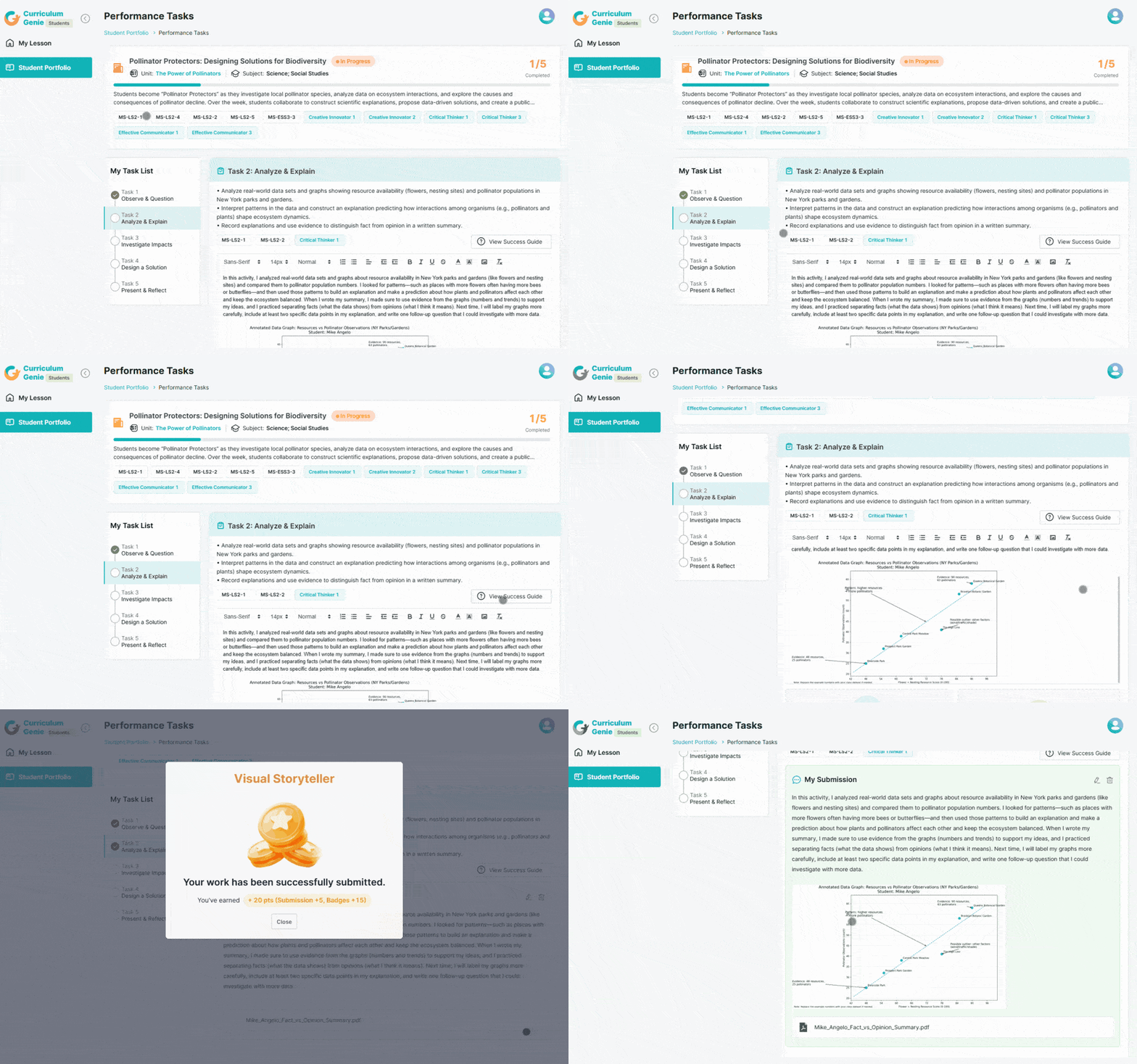
Curriculum Genie helps educators design performance-based tasks connected to standards, Portrait of a Graduate competencies, and student-facing success criteria. It also supports editable rubrics and portfolio-ready workflows where students can submit multimodal evidence and teachers can review progress.
Curriculum Genie does not replace district calibration or BOCES-led validation. It helps create the conditions for more coherent task design, clearer expectations, and more organized evidence review.
Priority 3: Prepare for Pathways, CTE, and Transcript Readiness
NY Inspires also changes how districts think about learning pathways and credit. The planning summary points toward a shift from traditional seat-time models toward more competency-based learning experiences.
For the 2027 freshman cohort, districts should prepare for new credit distribution expectations, including the planning summary’s reference to a one-credit CTE requirement that may include financial literacy instruction. Districts should continue to follow official NYSED guidance as final implementation details are issued.
This has practical implications for:
- Master schedules
- Course catalogs
- CTE access
- Work-based learning opportunities
- Interdisciplinary pathways
- Counselor guidance
- Smaller or less-resourced districts that may need regional support
- Future transcript and reporting expectations
Looking ahead to Phase 3, districts will also need to prepare for a statewide transcript that documents student proficiency in both academic standards and Portrait of a Graduate attributes. That means curriculum, assessment, grading, SIS, and counseling teams should begin collaborating now. The districts that organize evidence early will be better prepared later.
How Curriculum Genie Supports Pathway and Evidence Readiness
Curriculum Genie helps districts connect standards, Portrait of a Graduate competencies, performance tasks, rubrics, and student evidence within a more coherent curriculum workflow. This can support pathway planning by helping educators design interdisciplinary, career-connected, and competency-based learning experiences that generate meaningful evidence of proficiency.
As districts prepare for future transcript and reporting expectations, Curriculum Genie can also help teams organize the instructional artifacts that matter most: unit goals, lesson objectives, student-facing expectations, performance tasks, rubrics, feedback, reflections, and portfolio-ready evidence.

Curriculum Genie does not replace SIS, transcript, or reporting systems. Instead, it helps districts strengthen the curriculum and assessment foundation that those future systems will depend on.
The Role of BOCES in NY Inspires Readiness
BOCES will be important partners in NY Inspires implementation. The planning summary describes BOCES as regional implementation hubs and transformation anchors that help translate state policy into local practice.
For districts, BOCES support may be especially important for:
- Regional professional learning
- Cross-district calibration
- Assessment validation
- Shared scoring protocols
- Model performance tasks
- Capstone and work-based learning examples
- CTE and WBL pathway expansion
- SIS and transcript transition planning
- Higher education and workforce alignment
NY Inspires readiness should not happen in isolation. Regional collaboration can reduce duplication, strengthen consistency, and support districts that may not be able to build every pathway independently.
What Districts Should Do During Phase 1
Phase 1 is the time to build readiness. Districts do not need every answer yet, but they do need a clear starting point.
Phase 1 Readiness Checklist
1. Audit curriculum for Portrait of a Graduate alignment
Identify where graduate attributes already appear in units, lessons, projects, assessments, CTE experiences, capstones, and work-based learning opportunities.
2. Crosswalk local graduate profiles with the state model
Compare local portraits, strategic plans, and competency frameworks with the New York State Portrait of a Graduate.
3. Review current assessment and PBL practices
Determine which assessments measure recall, which measure application, and which provide meaningful evidence of proficiency. Identify existing PBL, capstone, portfolio, CTE, and work-based learning practices that could support a stronger evidence system.
4. Strengthen rubrics, success criteria, and scoring calibration
Begin developing shared expectations for what proficiency looks like across classrooms and grade levels. Create time for educators to review student work together and align scoring expectations.
5. Prepare 2027 cohort pathways, CTE, WBL, and Financial Literacy planning
Review credit distribution, scheduling pathways, CTE opportunities, work-based learning access, Financial Literacy planning, counseling supports, and family communication.
6. Plan evidence collection and transcript-readiness workflows
Decide how student artifacts, feedback, reflections, rubrics, and performance evidence will be collected and reviewed over time.
7. Build cross-functional implementation and communication routines
Bring together curriculum, assessment, counseling, special education, multilingual learners, technology/SIS, communications, and BOCES partners. Develop clear messaging for families and Boards of Education about what is changing, what is not changing, and how students will be supported.
How Curriculum Genie Supports NY Inspires Readiness
Curriculum Genie helps districts translate complex policy expectations into classroom-ready curriculum and assessment workflows.

The goal is not automation for its own sake. The goal is capacity building.
Curriculum Genie helps educators spend less time starting from scratch and more time doing the professional work that matters most: designing meaningful learning, reviewing student evidence, refining instruction, and building shared expectations for proficiency.
Ready to move from readiness planning to classroom-ready workflows?
Book a demo to see how Curriculum Genie supports PoG-aligned unit planning, performance-based assessment design, editable rubrics, and evidence workflows.
Prepare Your District for NY Inspires
NY Inspires is changing more than graduation requirements.
It is changing the systems around graduation: curriculum, assessment, learning pathways, student evidence, grading practices, transcript readiness, and communication with families, higher education, and workforce partners.
The districts that will be best prepared are the districts that begin building coherence now.
That means moving beyond scattered documents, isolated rubrics, disconnected curriculum maps, and one-time compliance checklists. It means creating a curriculum and assessment infrastructure that helps educators design meaningful learning experiences, measure proficiency consistently, and document student readiness over time.
Curriculum Genie helps districts move from policy language to classroom-ready practice by supporting Portrait of a Graduate alignment, performance-based assessment design, standards-based planning, differentiated supports, and AI-assisted curriculum development.
As New York moves toward a more proficiency-based future, the question for districts is not only whether they understand NY Inspires.
The question is whether they have the systems to implement it well.
Ready to Prepare for NY Inspires?
Book a demo with Curriculum Genie to see how your district can map Portrait of a Graduate competencies, design performance-based assessments, create editable rubrics, and build portfolio-ready evidence workflows for the next era of student readiness.
Book a Demo with Curriculum Genie
Policy note: This article is based on the NY Inspires District Superintendent planning summary dated 4/20/26 and is intended to support curriculum and assessment readiness planning. Districts should continue to consult official NYSED guidance, BOCES support structures, and local counsel for final regulatory requirements and implementation decisions.
Frequently Asked Questions About NY Inspires
Q: What is NY Inspires?
A: NY Inspires is New York State’s phased plan to transform graduation requirements. It focuses on four major shifts: adopting a New York State Portrait of a Graduate, redefining credits and learning experiences, sunsetting diploma assessment requirements, and moving to one New York State high school diploma.
Q: When does the NY Inspires implementation begin?
A: Phase 1 runs from Fall 2025 through Summer 2027. Phase 2 runs from Fall 2027 through Summer 2029. Phase 3 begins in Fall 2029.
Q: What should districts do during Phase 1?
A: During Phase 1, districts should audit curriculum, crosswalk local graduate profiles with the state Portrait of a Graduate, review assessment systems, prepare for multiple measures of proficiency, plan for the 2027 cohort, and develop communication plans for families and Boards of Education.
Q: How can Curriculum Genie help districts prepare?
A: Curriculum Genie helps districts create standards-aligned units, embed Portrait of a Graduate competencies, design performance-based tasks, draft success criteria and rubrics, support differentiated instruction, and organize portfolio-ready evidence. Educators and district leaders remain responsible for reviewing, refining, approving, calibrating, and implementing instructional and assessment materials.