Portrait of a Graduate Implementation: From Poster to Daily Practice
Transform your Portrait of a Graduate (PoG) from a high-level vision into measurable classroom evidence. This roadmap bridges the gap between district aspirations and daily instruction—ensuring 21st-century skills are built without increasing teacher planning load or compromising standards.
Districts and states have invested heavily in defining a PoG, but the challenge remains: how do these competencies show up in everyday teaching? In our latest session, we demonstrated how Curriculum Genie moves these goals from polished posters to consistent practice, ensuring that standards alignment and teacher workload stay balanced. For a step-by-step district model, see our PoG implementation guide.
Why PoG Often Stalls at “The Poster” Stage
Across K–12 systems, many PoG efforts end up in what educators often describe as “pockets of practice”: a few teams and classrooms integrate the competencies consistently, while others struggle to connect the initiative to daily instruction. In the session, participants were asked to rate their current PoG implementation from 1 (still on the poster) to 10 (fully immersed). Responses clustered between 2 and 6—an honest reflection of how difficult it is to scale.
One reason is practical: PoG is a system-level aspiration, but teachers experience it at the point of planning tomorrow’s lesson. When the initiative lands on a teacher’s desk, the question becomes, “How do I build this into my lesson plans—and where do I find the time?” Even experienced teams can get stuck here, especially when teachers are already balancing standards, pacing, and the instructional routines they’ve relied on for years.
At the same time, leaders can’t manage what they can’t see. A core principle shared in the session was: what gets measured gets done. If you’re aligning PoG to 21st-century skills and daily evidence, this overview shows how districts operationalize PoG competencies across instruction. Districts routinely prioritize state test outcomes because those outcomes are measured. If PoG skills aren’t measured and revisited, it’s easy for them to remain a vision statement rather than an observable set of outcomes students can demonstrate. A practical measurement system makes Student Growth visible over time by linking daily evidence to shared criteria—so Performance-Based Learning results (projects, presentations, products) can be reviewed consistently across classrooms.
Where Curriculum Genie Fits in the Workflow
Curriculum Genie is positioned as planning and implementation infrastructure: it helps districts connect PoG competencies to everyday Curriculum work—rubrics, Unit Plan creation, daily Lesson Plan details, formative checks, and artifacts that can later support portfolios and capstones.In practice, PoG measurement comes down to three consistent elements: shared rubrics/“look-fors,” recurring evidence checkpoints inside units/lessons, and a lightweight portfolio trail that lets teams calibrate scoring and compare implementation signals across schools.
The workflow shown in the session follows an “end in mind” approach: define the graduate skills, make them measurable, prepare teachers and students, embed the skills into units and lessons, and then use ongoing evidence and iteration to move from partial implementation to consistent practice over time. The key shift is that PoG stops being “extra,” and instead becomes intentionally embedded into standards-aligned instruction.
From Measurement to Daily Instruction: Making PoG Teachable and Visible
A recurring challenge for district curriculum leaders is that PoG language can be inspiring, but not instruction-ready. In the session, a rubric example (“creative thinker and innovator”) was used to illustrate the amount of work it can take to translate broad competencies into measurable expectations—work that previously took extensive team time to build.
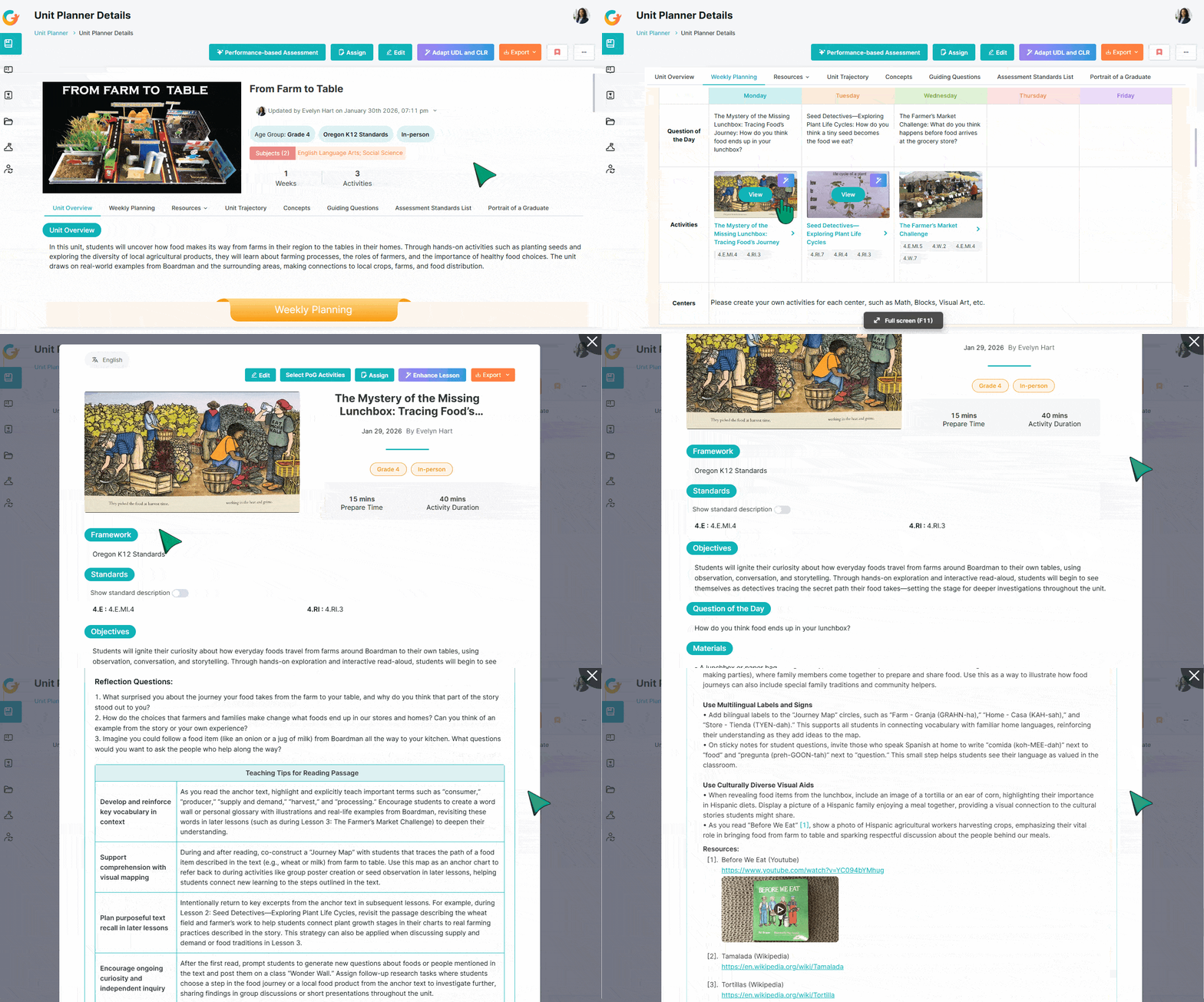
Curriculum Genie addresses this measurement-to-instruction gap by allowing an organization to load a state or district PoG and then work with an articulated view of what the competencies can look like across age levels. In the workflow shown, educators select PoG competencies via checkboxes while building a unit, so the competencies aren’t an afterthought—they are part of the planning inputs.
The practical difference is what happens next: instead of expecting every teacher to independently translate PoG language into classroom moves, the tool generates lesson-level prompts and teacher-facing guidance that align to the selected competencies. In the session example, this included concrete suggestions tied to the activity context—such as prompting metaphorical thinking to support “creative innovator,” or modeling active listening and paraphrasing to support “effective communicator.” The intent is not to claim these practices are entirely new, but to make them purposeful and repeatable “with every kid in every lesson.”
Embedding PoG in a Standards-Aligned Unit Without Adding Planning Hours
The most common point of failure in PoG implementation is unit and lesson planning under real constraints. Curriculum Genie was used to demonstrate an AI-supported workflow that reduces that friction while preserving alignment to standards.
In the demo, a Grade 9 English language arts unit titled “Who am I” was created around narrative writing and identity. The creator entered a unit title and description, selected grade level and timeframe, and then let the tool auto-adapt standards (with the option to hand-select standards if desired). This positioned PoG integration inside a Standards-Aligned Curriculum workflow rather than as a separate initiative.
From there, the unit generated an overview, key concepts, and guiding questions designed to drive discussion and inquiry. It also generated a sequence of lessons, including an “identity gallery walk,” along with optional thinking protocols (e.g., EduProtocols-style routines) and ready-to-use slide decks for those protocols. Here’s a step-by-step guide to creating high-quality units with AI.
Just as importantly for teacher workflow, the lesson plans included implementation steps and embedded resources—reducing the need for teachers to search for materials elsewhere. A starter slide deck was also generated to support classroom delivery and help shift the lesson rhythm toward brief direct instruction followed by active student work and discussion.
Formative Checks and Evidence: Assessing Skills at the Intended Level of Rigor
Once PoG skills are embedded in daily instruction, educators still need a reliable way to check progress—quickly and at the right level of rigor. In the session, the workflow highlighted the need for better formative assessment and Performance-Based Assessment that match expectations for the standards being taught. Ohio’s use of DOK was referenced, with an acknowledgment that other contexts may use Bloom’s.
Curriculum Genie demonstrated an AI-Powered Assessment workflow where a teacher can specify the intended rigor level and generate (or regenerate) a formative question aligned to that level. The example generated a higher-order prompt asking students to compare and contrast classmates’ identity collages and analyze how symbols and images communicate identity. Used as an exit ticket or other formative check, this creates more consistent evidence for instructional adjustment—without turning every check into a graded “quiz.”
The workflow also included supports connected to Universal Design for Learning (UDL) and practical classroom differentiation—such as the ability to adjust reading passages to a target Lexile level and include supports for English language learners. These elements matter because PoG success depends on every student engaging with the competencies, not only those already thriving in traditional academic routines.

What This Means for Leaders, Curriculum Teams, and Teachers
For district and school leaders, the takeaway is that PoG implementation becomes more feasible when it is operationalized in the same places educators already work: unit planning, lesson design, formative evidence, and iterative improvement. For curriculum leaders, it creates a pathway to make PoG measurable and coherent across grade levels and content areas. For teachers, it reduces the “blank page problem” and helps translate graduate competencies into daily, teachable actions.
If you’re trying to move from pockets of practice toward consistent implementation, Curriculum Genie supports decisions and actions such as:
- Creating Unit Plan and Lesson Plan materials where PoG Skills are intentionally embedded, not retrofitted
- Keeping instruction grounded in Standards-Aligned Curriculum expectations while building graduate competencies
- Generating formative checks with AI-Powered Assessment aligned to an intended rigor level
- Providing ready-to-use lesson resources and slide decks that teachers can adapt with their own approach
- Supporting systemwide conversations about evidence and progress by making PoG expectations more visible in daily planning
PoG work is often described as a multi-year journey. The difference between “poster” and “practice” is whether the skills are measurable, teachable, and repeated often enough for students to truly transfer them into what comes after graduation. Curriculum Genie’s role is to make that daily integration—and the evidence it produces—more practical for the people who carry the work forward.
Frequently Asked Questions
Curriculum Genie embeds Portrait of a Graduate (PoG) competencies directly into unit planning, so teachers aren’t left translating high-level language on their own. By selecting PoG competencies during planning, schools can make expectations more consistent across classrooms and content areas.
Curriculum Genie supports the shift from aspiration to measurement by letting organizations load their PoG and connect it to planning artifacts teachers use every day. That creates a practical bridge from PoG language to lesson-level prompts, activities, and expectations.
Curriculum Genie generates lesson plans with implementation steps, embedded resources, and starter slide decks that teachers can export to Google Drive and then adapt. This reduces material-hunting and planning time while keeping PoG competencies visible inside daily instruction.
Ready to Transform Your District?
Schedule a Demo with Curriculum Genie to see how Agentic AI can support your curriculum goals.