AI-Enabled Student Co-Creation for Standards-Aligned K–12 Learning
Key Information Overview
- AI’s highest instructional value is replacing planning and material-production time, so teachers can focus on judgment, feedback, and student support.
- Agency-based learning is not “open-ended”—it is bounded co-creation: students contribute questions and interests, while educators set standards and structure to protect rigor.
- A repeatable co-creation cycle (capture curiosity → prioritize → standards-first generation → refine with students → look for transfer) scales from TK through AP contexts.
- A standards-aligned workflow can function like an AI unit planner and AI lesson plan generator, producing a classroom-ready one-week sequence—including UDL elements, formative checks, questions/answers, and student-ready activities—with support for batch generation once quality is verified.
From Student Voice to Standards-Aligned Units in Minutes
Student voice is easy to invite—until you’re staring at a wall of ideas and wondering how to turn it into a standards-aligned week of instruction by Monday.
Student agency is one of the most reliable drivers of engagement. When students help shape what they learn, buy-in rises and transfer improves. Yet translating student curiosity into a coherent, standards-aligned pathway can easily consume hours: aligning standards, designing a lesson sequence, building activities, differentiating, and creating assessable items.
Curriculum Genie is built for this exact challenge—an AI-powered planning tool for teachers. It helps educators run bounded co-creation at scale: students contribute voice and direction, while teachers protect rigor through clear constraints and reviewable outputs.
Why this works: AI should replace production, not professional judgment
AI is most valuable in classrooms when it removes planning friction—the hours spent aligning standards, drafting lessons, building activities, and differentiating—so educators can spend more time teaching, conferencing, and responding to students in real time.
At the same time, agency only works at scale when it has structure. Without guardrails, learning can drift; without student voice, ownership drops. The key is designing agency with structure. Curriculum Genie supports this by making co-creation standards-first and constraint-driven—so you can invite student voice while keeping academic rigor protected.
What “Co-Creation” Actually Means in Practice
Co-creation is not a free-for-all. It is directed student voice inside clear guardrails:
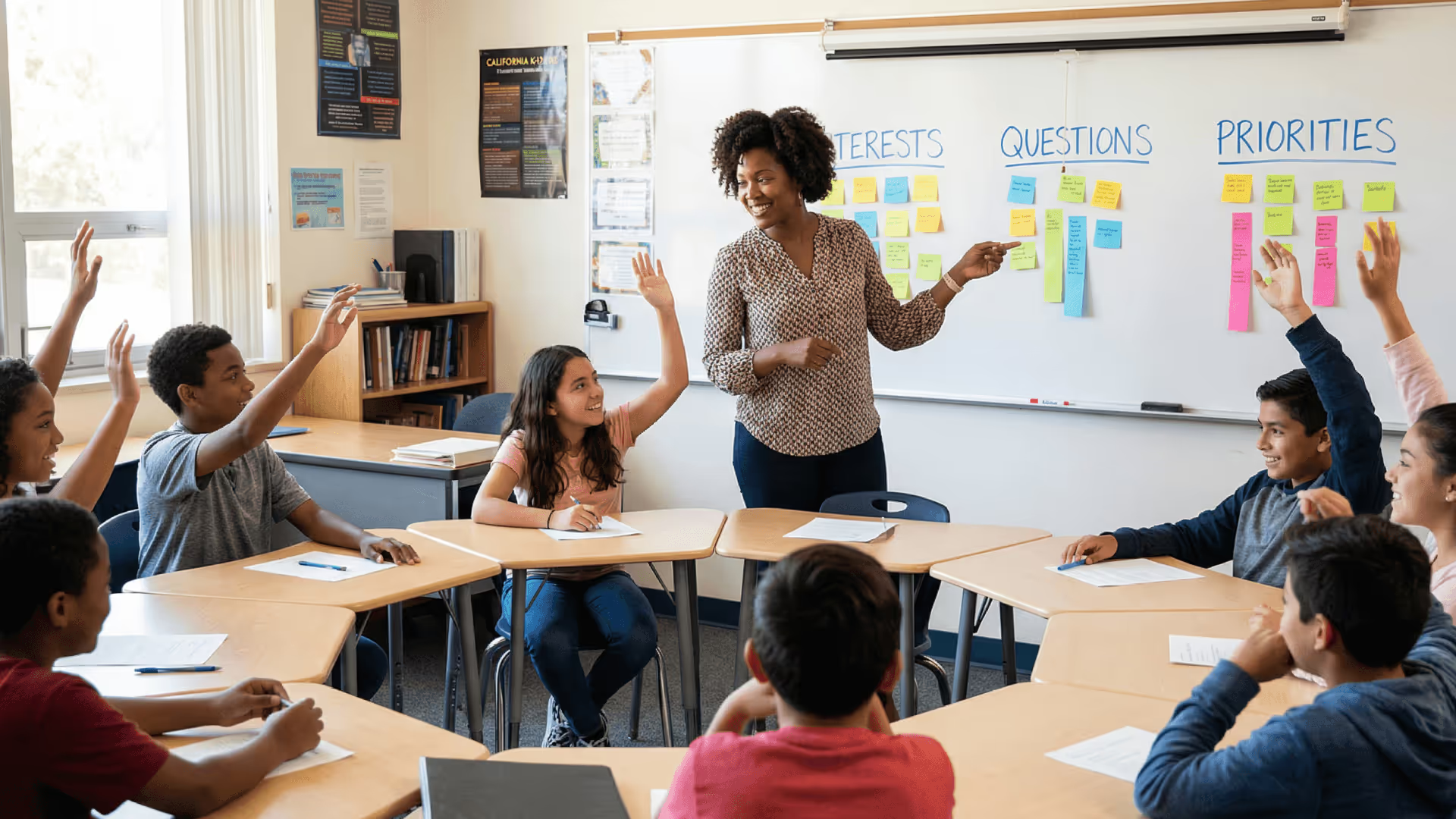
- Educators invite student interests, questions, and priorities.
- Educators set constraints (time, grade, unit length, required standards, safety, available materials).
- AI accelerates the heavy lift: turning student input into a structured plan aligned to standards and goals within minutes.
In other words: students influence direction; educators design the system; AI handles the throughput.
You can also think of this as curriculum co-design with students: educators set the standards and guardrails, and students help shape questions, priorities, and evidence of learning.
The Non-Negotiable Foundation: Trust and “Releasing Control”
The shift required is less technical than cultural.
- Students must trust the process is meaningful (not performative).
- Educators must trust that students are curious and capable.
- Both sides often have “unlearning” to do—especially in secondary grades where students are accustomed to teacher-controlled learning.
A practical way to build trust is to start small, then scale. Begin with a 3-day or 1-week co-created sequence to establish routines and show students that their input leads to real instructional decisions—while teachers remain actively involved and standards stay protected.
The Core Model: A Co-Creation Cycle That Works Across Grades
This cycle shows up repeatedly across grade bands, even though it looks different developmentally.
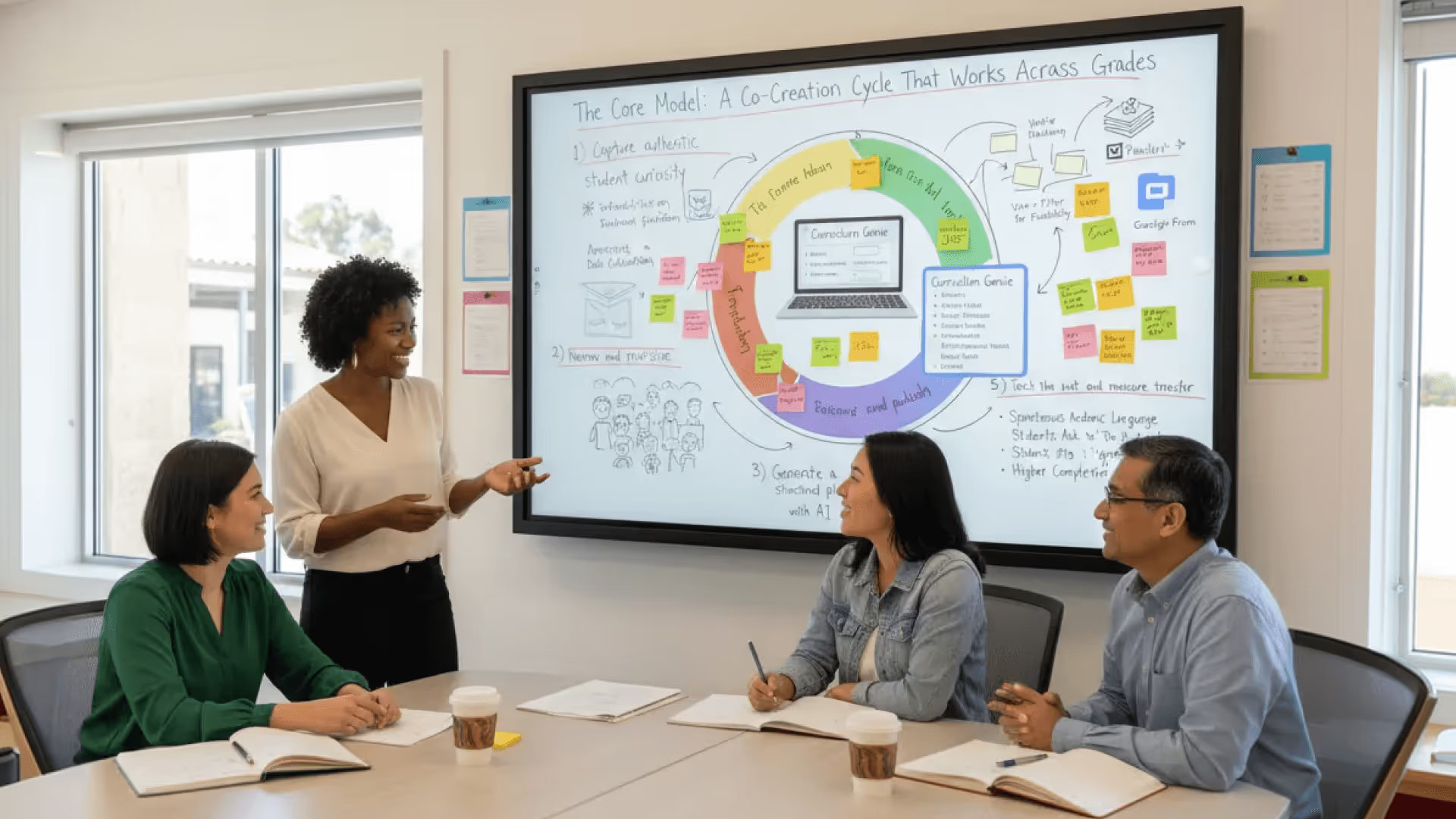
1) Capture authentic student curiosity (not just “topics”)
Use the age-appropriate method:
- Early childhood: observe play, talk, and what repeatedly captures attention.
- Upper elementary: structured brainstorm + whole-class collection.
- Middle/high school: question protocols + anonymous data collection (forms, boards).
Tools and routines can be simple: Padlet, chart paper, sticky notes, table-group brainstorms, and Google Forms—anything that helps you capture what students “would like to know most.”For additional classroom-ready co-creation examples, see AI-powered co-creation strategies.
2) Narrow and prioritize (so the work stays teachable)
Students vote, cluster, or select subtopics/questions.
- Direction stays guided: teachers can filter for feasibility (time, safety, materials) before students vote, so the outcome remains teachable.
3) Generate a structured plan with AI under explicit constraints
Educators specify:
- grade level\
- duration (one week, two weeks, etc.)
- focus areas (e.g., literacy + science + arts)
- standards to align to (including state foundations)
- differentiation needs (including accommodations and IEP-related goals, when relevant)
Then, Curriculum Genie turns those constraints into a complete, standards-aligned unit plan in minutes—along with teach-ready supports (such as UDL options, formative checks, and questions with answer keys). This keeps lesson planning focused on review and refinement, not building everything from scratch.For responsible use and review protocols, follow these best practices for using Curriculum Genie appropriately.
4) Review, modify, and publish the plan with students
Older students can critique and refine AI drafts.
- In secondary settings, students can compare multiple AI-generated options and identify what to keep, modify, or add—making co-creation tangible and instructional.
5) Teach the unit and measure transfer
Evidence of success included:
- spontaneous academic language use outside class (e.g., students applying “thermal energy” vocabulary in real-life contexts)
- students asking to “do it again” and requesting the next co-created lesson
- higher completion without repeated teacher prompting
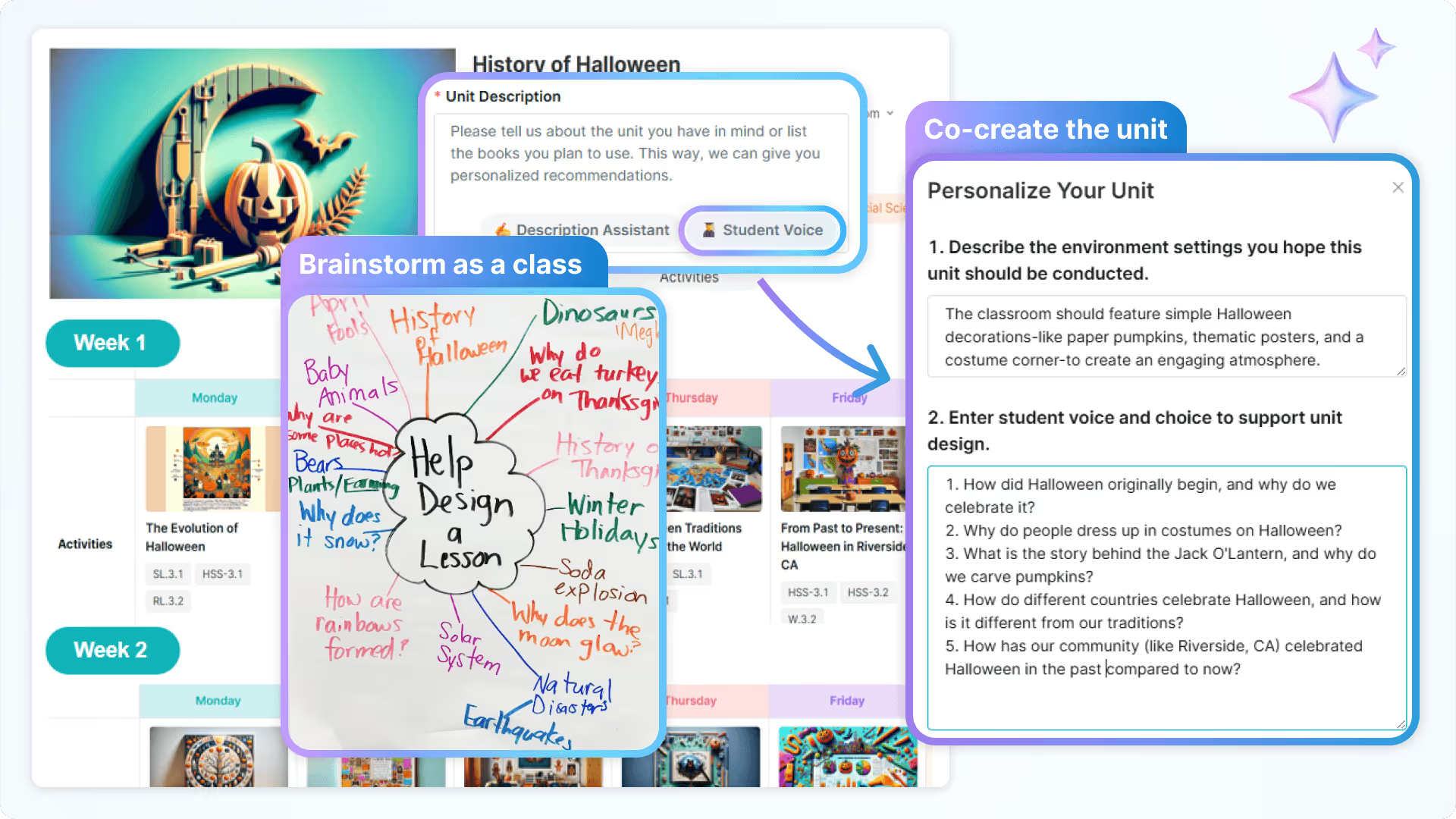
Case Study: Grade 3 “History of Halloween”
Design problem
Schedules are “very impacted,” so the teacher carved out 30 minutes a day and temporarily replaced parts of existing ELA and writing blocks to run the co-creation process.
The four-day process (student voice with constraints)
- Day 1: table-group brainstorm of nonfiction topics; whole-class capture of ideas
- Day 2: narrowed to seven feasible topics selected by the teacher; secret-ballot vote and tally (high energy, visible buy-in)
- Day 3: students selected subtopics/questions (costumes, jack-o’-lanterns, “trick-or-treat,” etc.)
- Day 4: teacher projected the AI planner, entered student subtopics, selected standards focus (ELA, writing, art), set duration (two weeks), and generated the unit in front of students—who were “mesmerized.”
Outcome
Engagement remained high because students had ownership; the planning process itself was treated as instruction, not overhead.
Safeguarding Academic Rigor: Interest-Led Learning Still Aligns to Standards
A common fear is that agency undermines rigor. In practice, co-creation changes inputs (student curiosity) while protecting outputs (standards, goals, structured practice).
With a standards-first workflow, teachers lock the non-negotiables up front—standards, outcomes, and time—then review and refine what’s generated. That’s how interest-led learning stays rigorous: the work remains structured and auditable
A Realistic Time Model: Co-Creation Can Reduce Total Workload
Co-creation introduces visible time at the outset for gathering input, prioritizing ideas, and narrowing focus. However, AI significantly compresses the overall planning effort—reducing what would traditionally take hours into minutes. :

- In practice, complete weekly plans can be produced rapidly, including instructional guidance, guiding questions, assessment supports, and student activities, with the ability to generate content at scale across multiple lessons.
- The practical implication is that lesson planning shifts into the instructional day itself rather than extending into after-hours work.
The trade-off educators made was not “more work,” but shifting minutes from manual production to facilitated decision-making.
From a Wall of Ideas to Monday-Ready Instruction
Bounded co-creation doesn’t ask teachers to give up rigor—it makes rigor the guardrail that lets student voice matter.
Start with one week: capture curiosity, narrow to teachable priorities, lock standards and constraints, then use an AI tool for teachers—such as Curriculum Genie—to generate a reviewable draft that can be refined with students. 原文:Start with one week: capture curiosity, narrow to teachable priorities, lock standards and constraints, then use Curriculum Genie to generate a reviewable draft you can refine with students.
Once quality is verified, the same workflow scales across units—without scaling the planning burden.
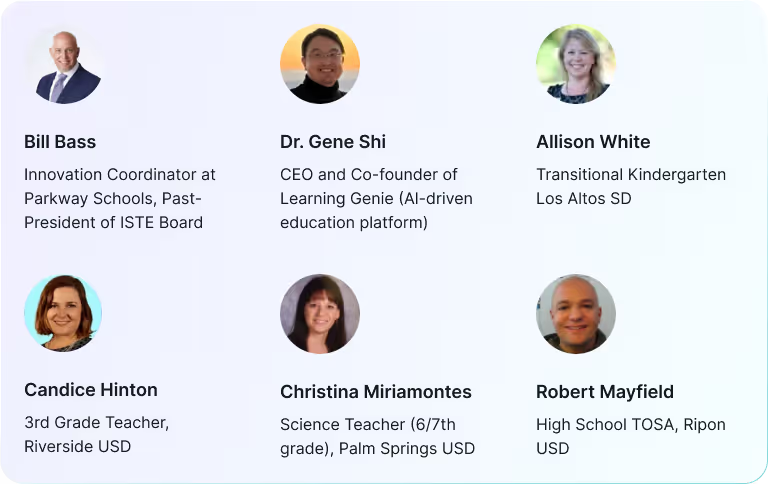
Moderators
Frequently Asked Questions
No. Directed choice within constraints: educators shape the feasible options, required standards, and the final structure. Students contribute priorities and questions; educators remain actively involved throughout instruction.
Yes, but the mechanism is developmental. In TK, co-creation is driven by observation of play and oral language routines rather than students editing a projected unit planner.
Districts scale student co-creation by standardizing the constraints—including standards, unit goals, and assessment expectations—rather than standardizing student outcomes. When co-creation operates within a standards-aligned workflow, classrooms remain coherent while still allowing meaningful student voice. AI tools help make this approach repeatable across schools instead of dependent on individual teachers (see ESSA Tier 3 evidence).
An AI tool for teachers such as Curriculum Genie supports bounded co-creation by generating standards-aligned units, lessons, and formative checks within clearly defined instructional constraints. This allows teachers and students to co-create learning experiences without sacrificing academic rigor or alignment. The result is faster planning with transparent, reviewable outputs that districts can trust.
Ready to Transform Your District?
Schedule a Demo with Curriculum Genie to see how Agentic AI can support your curriculum goals.