Chance in Action: Design a Fair Game
How can probability, simulations, and samples help us make and justify conclusions about events and populations?
Free for educators. The PDF includes the staged student tasks, alignment to New York standards and the Portrait of a Graduate, and success criteria.
The big idea behind this assessment
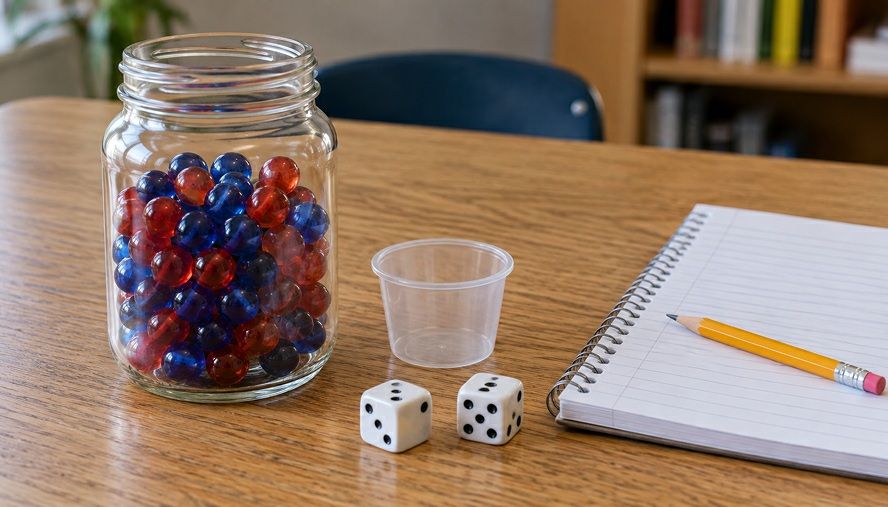
Probability and simulations help us model chance and estimate how likely events are, while sample spaces provide organized ways to determine probabilities of compound events. Random, representative samples can support estimates and comparisons of populations, with variability informing how confidently we interpret the results.
How Portrait of a Graduate skills are embedded
Each skill is tied to specific student work in this assessment. Here is what students do and what that work shows.
What students do, stage by stage
The performance-based assessment moves through clear stages. Each stage ends in a student task with the standard or skill it shows.
New York standards assessed
Mini Masteries: lesson-level performance tasks
Short Portrait of a Graduate tasks built into the unit's lessons, so students practice the skills before the final assessment. Each one is in the lesson PDF.
Download the assessment and unit materials
Unit Performance-Based Assessment
Chance in Action: Design a Fair Game
The full assessment: essential question, staged student tasks, alignment notes and success criteria.
Download the PBALessons with Mini Masteries
Every lesson, each with its Mini Mastery task, plus the weekly planners.
Open the folderBuild performance-based assessments for your district
Curriculum Genie helps your team create unit PBAs and lesson-level Mini Masteries aligned to your standards and your Portrait of a Graduate.